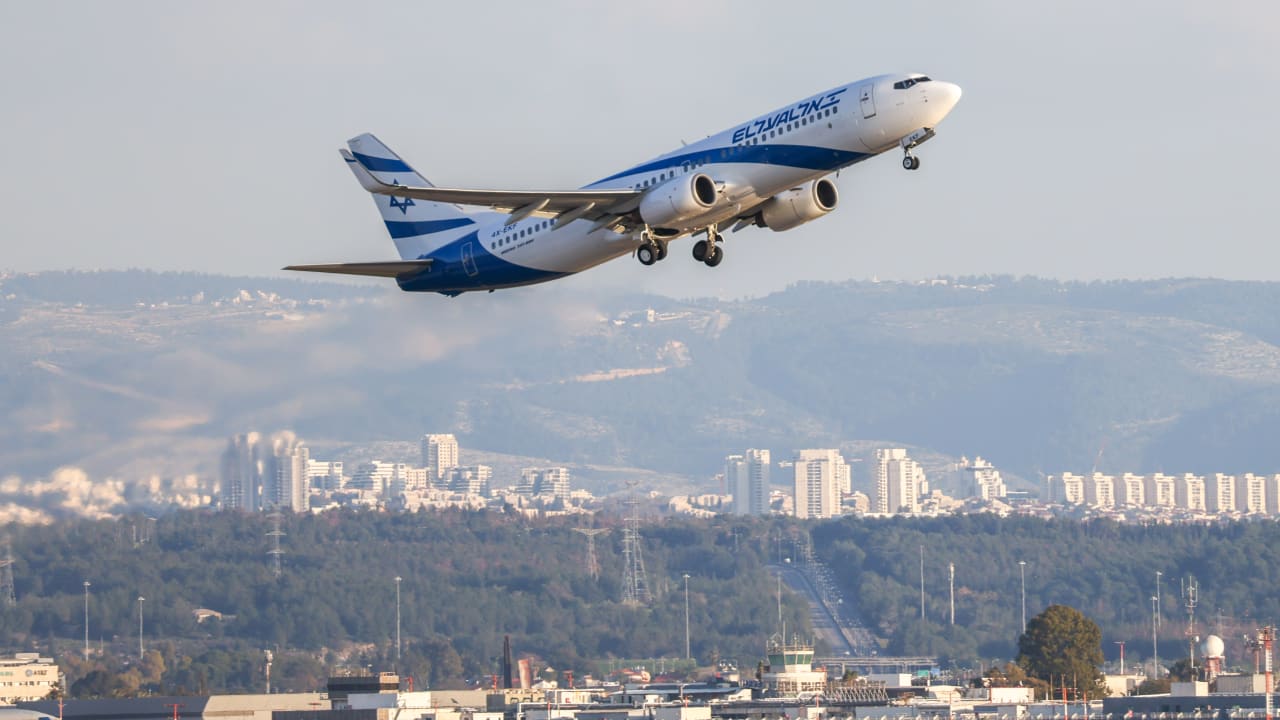
Israeli airlines are drawing up operational plans for the moment Israel’s airspace fully reopens after the fighting with Iran ends, with the main focus being the effort to return thousands of stranded Israelis and rebuild international flight schedules from the ground up.
Since the outbreak of the war, nearly all flights to and from Israel have been canceled due to the closure of the country’s airspace. Although limited rescue flights and a small number of outbound departures from Ben-Gurion Airport have resumed over the past week, thousands of passengers whose trips were scheduled during the past two weeks were left without a viable solution after last-minute cancellations.
According to conversations with senior Israeli airline officials, each carrier is expected to publish a new flight schedule once the war ends and airspace is formally reopened. That schedule will be based on regular prewar operations, subject to takeoff and landing authorizations from the Israel Airports Authority.
Passengers whose future flights have not been officially canceled are, for now, expected to remain on their original itineraries if operations stabilize in time. By contrast, travelers who already received refunds for cancellations during the fighting will likely have to rebook based on whatever seats become available under the new schedules.
Airlines to try and increase the number of daily flights
It is still unclear whether passengers whose flights were canceled during the war will receive priority access when new tickets are released, or whether rebooking will proceed on a first-come, first-served basis. Airline officials said discussions on the issue are still ongoing.

Industry executives said airlines will try to increase the number of daily flights as much as possible to reduce the backlog and limit disruption to passengers. Still, those plans remain dependent on security developments, as most of Israel’s airspace remains closed to regular civilian traffic.
One idea now under serious review is the use of leased foreign aircraft operated on behalf of Israeli carriers. Such a move could significantly increase seat capacity and help fill the gap created by the wave of canceled flights, while enabling airlines to restore service to a broad range of destinations more quickly.
Ticket prices for the small number of available seats rose sharply during the crisis because of overwhelming demand and limited supply.
Senior industry officials now estimate that fares could return to pre-crisis levels once operations normalize and schedules stabilize, though no exact timetable has yet been set.
El Al, Israir, and Arkia also face major staffing and logistics challenges as they work to reorganize crews, maintenance teams, and ground operations, with some employees still called up for reserve duty or affected by forced leave.
Some companies are also said to be considering an “air bridge” to nearby destinations such as Cyprus and Greece, which could serve as transit hubs for travelers who urgently need to reach Europe or the United States if long-haul service takes longer to restore.
What passengers should do now
For passengers, uncertainty remains high, but the emerging framework offers a clearer sense of what may happen next. Industry officials said airlines are trying to ensure that no passenger is left behind for long, while advising the public to keep monitoring official cancellation notices.
As long as no formal cancellation notice has been issued, a future flight is still considered active in the airline’s system. That may spare some travelers the need to compete for seats once demand surges back onto airline websites after the all-clear is given.
Israel’s aviation market has shown a capacity for rapid recovery after crises, and the industry expects the skies to reopen quickly once the fighting ends. For now, the strongest fact remains that any full restoration of regular service depends entirely on the security situation and the formal reopening of Israeli airspace.