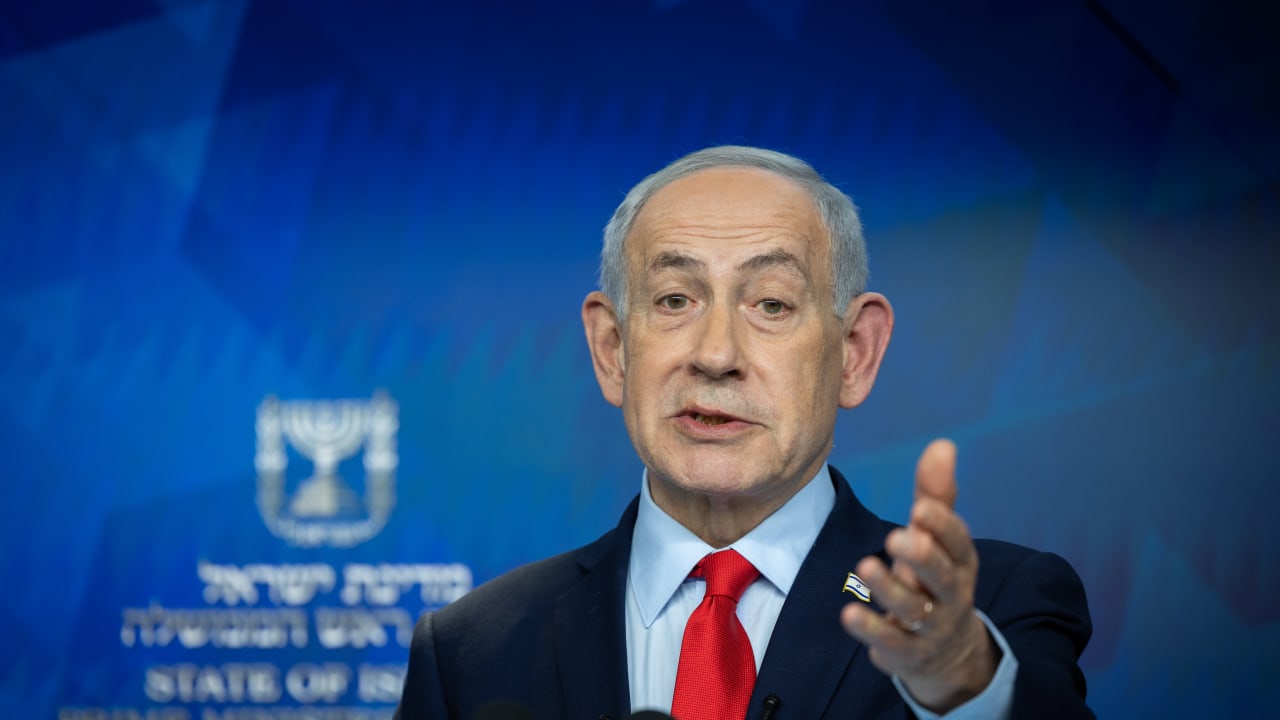
Prime Minister Benjamin Netanyahu on Thursday announced that his cabinet would begin ceasefire and Hezbollah disarmament talks with Lebanon “as soon as possible,” in light of the current active warfront between the IDF and Hezbollah and the upcoming peace talks with Iran in Islamabad.
Netanyahu’s decision was motivated by “Lebanon’s repeated requests to open direct negotiations with Israel,” the prime minister said, adding that “negotiations will focus on disarming Hezbollah and establishing peaceful relations between Israel and Lebanon.”
This announcement came just minutes before Hezbollah launched a barrage of rockets, triggering sirens in northern Israel.
In a video statement later on Thursday, Netanyahu reiterated these points, adding: “I have already brokered peace with Arab countries four times, and I intend to do it again.”
Hezbollah lawmaker Ali Fayyad said on Thursday that the group rejected direct negotiations with Israel and that the Lebanese government should demand a ceasefire as a precondition before any further steps are taken.

The negotiations, expected to begin on Tuesday, will be conducted between Israeli ambassador to the United States Yechiel Leiter and Lebanese ambassador to the United States Nada Hamadeh Moawad, Israeli sources told The Jerusalem Post.
Michel Issa, the US ambassador to Lebanon, is expected to mediate the talks, sources said.
Israeli sources stated that there is currently no ceasefire and that Israeli forces will remain on the ground in Lebanon in the immediate future to act against any threat from Hezbollah.

An hour before Netanyahu’s statement, Lebanese President Joseph Aoun said he was pursuing a diplomatic track on this matter that was beginning to be seen “positively” by international actors, according to Reuters.
A senior Lebanese official also told Reuters that Lebanon had spent the last day pushing for a temporary ceasefire to allow for broader talks with Israel, describing the effort as a “separate track but the same model” as the US-Iran truce.
The official said no date or location had been set yet, according to Reuters, but that Lebanon needed the US as a mediator and guarantor of any agreement.
Lebanon has been attempting to initiate negotiations with Israel for weeks
Sources told the Post that, in recent weeks, Lebanon sought to negotiate with Israel, mainly to prevent further IDF incursions into Lebanese territory. Negotiation requests with Israel had been passed through officials in both US President Donald Trump’s administration and the French government.
The Trump administration reportedly told the Lebanese government to “first act seriously to disarm Hezbollah, and then we’ll talk with Israel,” the sources added.
The French government, on the other hand, attempted to promote talks between Lebanon and Israel. Israel turned down these talks, the source said, as it accused Lebanon of not preventing Hezbollah from attacking, forcing the IDF to act within Lebanon’s territory.
Trump asks Netanyahu to scale back Lebanon strikes
Trump asked Netanyahu to scale back Israel’s strikes in Lebanon in a phone conversation on Wednesday, NBC News reported on Thursday.
NBC cited an unnamed senior administration official as saying that Trump made the request to help ensure the success of negotiations with Iran.
Continued IDF ops. in Lebanon will ruin Iran peace talks in Islamabad, Iranian officials claim
Continued IDF operations in Lebanon will ruin Iran's peace talks in Islamabad, Iranian officials claim.
Israel’s strikes in Lebanon are a “blatant violation of the initial ceasefire agreement,” Iranian President Masoud Pezeshkian said in a Thursday post on X/Twitter.
“The continuation of these aggressions will render negotiations meaningless. Our finger remains on the trigger. Iran will never abandon its Lebanese brothers and sisters,” the Iranian president wrote.
Also on Thursday, Iran’s Parliament Speaker Mohammad Bagher Ghalibaf called for a halt to IDF operations in Lebanon in an X post, linking the issue to the upcoming talks in Islamabad, saying, “Lebanon and the entire Resistance Axis, as Iran’s allies, form an inseparable part of the ceasefire.”
“[Pakistani] PM Shehbaz Sharif publicly and clearly stressed the Lebanon issue; there is no room for denial and backtracking,” Ghalibaf continued. “Ceasefire violations carry explicit costs and STRONG responses,” he wrote. “Extinguish the fire immediately.”
In yesterday’s Israeli security cabinet meeting on the situation in Lebanon and on the question of how to proceed, several ministers advocated for an aggressive approach that would directly target Lebanese state infrastructure, arguing that Beirut must be held accountable for the actions of Hezbollah.
Energy Minister Eli Cohen said there is a need to target critical infrastructure. “They must pay through their infrastructure,” he said, calling for strikes on energy facilities, refineries, and transportation links. “A state must take responsibility. Enough with hiding behind Hezbollah.”
Finance Minister Bezalel Smotrich suggested that territorial expansion could be a decisive factor in weakening Hezbollah. “Hezbollah will only learn if we seize more territory,” he said. “We need to expand as much as possible and take control of more areas.”
In contrast, Foreign Minister Gideon Sa’ar urged a more targeted and diplomatic approach. He argued that Israel should focus its efforts directly on Hezbollah rather than the Lebanese state, and that negotiations with Lebanon could be beneficial under current circumstances. “We should challenge them to deal with Hezbollah,” Sa’ar said.
Reuters contributed to this report.