
IDF Maj.-Gen. Roman Gofman, Prime Minister Benjamin Netanyahu’s nominee to head the Mossad, was cleared Monday to lead the agency, after the High Court of Justice rejected petitions challenging his appointment.
The decision came one day before Gofman’s planned transition ceremony, where he is set to take over from outgoing Mossad Director David Barnea on Tuesday.
The petitions against the appointment were rejected by a majority vote, with Justices Ofer Grosskopf and Alex Stein in the majority. Justice Dafna Barak-Erez dissented, saying significant questions remained open and should still be examined before the appointment takes effect.
Grosskopf, who authored the main opinion, wrote that, given the full body of material before the court, including classified material, Gofman’s conduct in the Ori Elmakayes affair did not cast an ethical stain on him, “certainly not one that could disqualify him from serving as Mossad chief.”
“The existing evidence shows that the Elmakayes affair does not place an ethical stain on Maj.-Gen. Gofman’s impressive career,” Grosskopf wrote. “Accordingly, it does not justify disqualifying him from serving as Mossad chief.”
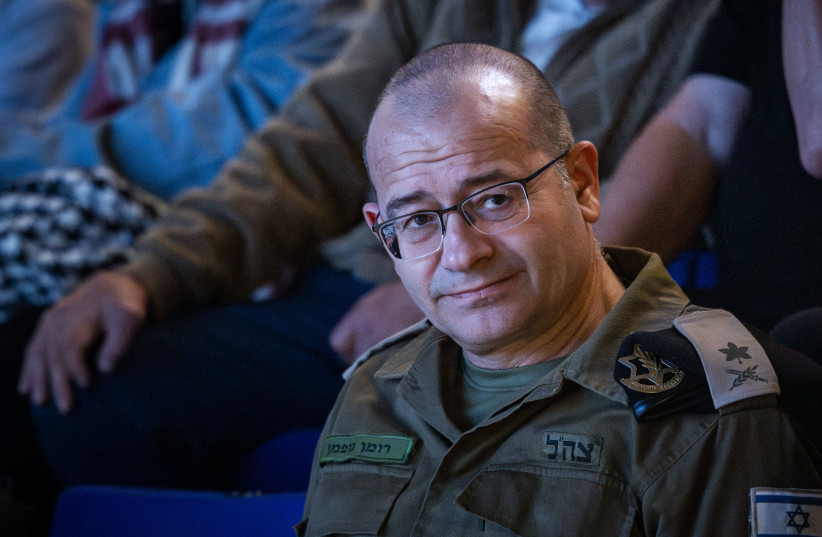
Netanyahu first announced his intention to appoint Gofman, his military secretary of two years, to the senior role in December, referring the matter to the Senior Appointments Advisory Committee. The committee vets candidates for Israel’s most senior public positions, examining whether there is any issue of integrity, conduct, or propriety that could make an appointment improper.
The committee approved the appointment, and Netanyahu formally approved it in April.
The appointment then faced intense legal hurdles, with two petitions filed against it. One was filed by Ori Elmakayes and the Movement for Integrity in Government, and the other by the Movement for Quality Government in Israel and Forum Homat Magen LeIsrael.
The petitions asked the court to cancel Gofman’s appointment, or at least order the senior appointments committee and Netanyahu to revisit it, arguing that the committee’s original approval was based on an incomplete factual picture. Attorney-General Gali Baharav-Miara also opposed the appointment before the court, arguing that the committee majority’s renewed approval still could not serve as a valid basis for Netanyahu’s decision.
Details on the 'Elmakayes affair'
At the center of the case was the Elmakayes affair.
Elmakayes, a former IDF soldier who was 17 at the time of the events in 2022, operated a Telegram channel called “World News on Telegram,” where he published security-related information he had gathered from various sources, covering both the activities of Israeli security bodies and those of terrorist organizations and enemy states.
According to the ruling, while Gofman commanded the IDF’s 210th “Bashan” Division, he instructed Maj. Tzur, an intelligence officer in the division, to contact social media activists who focused on Syria, both for intelligence-gathering purposes and for influence efforts, after Gofman expressed dissatisfaction with how the matter was being handled by the military.
The connection between Tzur and Elmakayes was made in early 2022. For several months, Tzur transferred materials to Elmakayes for publication. The court noted that the contact between Tzur and civilian social media actors was carried out with Gofman’s knowledge and approval, but not through, or with the approval of, the authorized intelligence bodies.
On April 10, 2022, the Shin Bet was alerted that sensitive and classified information had appeared on Telegram, and a security investigation was opened. According to the ruling, the investigation focused primarily on an alleged intelligence leak from IDF Military Intelligence, not from Division 210.
As the investigation progressed, Brig.-Gen. “G,” the head of the IDF Intelligence Directorate’s Operational Activation Division, was asked to examine whether those involved had acted under commanders’ instructions as part of an influence effort.
In a May 2022 phone call, “G” told Gofman that a sensitive investigation was underway into the transfer of intelligence materials to a Telegram channel and that one possible offshoot of the affair might relate to Division 210. “G” asked Gofman whether he knew of any connection, direct or indirect, to a security-news Telegram channel, and whether the name “World News” was familiar to him. Gofman answered in the negative, according to the ruling.
Gofman also said any use of intelligence material was personally approved by him, and that it was almost certain that such a connection would not exist without his knowledge. When Gofman offered to look into the matter with his subordinates, “G” told him not to speak to anyone so as not to harm the ongoing investigation.
A few days later, the IDF’s information security body issued a document saying no evidence had been found linking the relevant Telegram or Twitter channels, or the people suspected in the leak, to influence or deception efforts.
Elmakayes was arrested on May 24, 2022, and was later indicted on serious offenses of obtaining, collecting, preparing and possessing secret information, and transmitting secret information. He was held behind bars until July 6, 2022, and was then released to alternative detention. He remained under electronic monitoring and house arrest for about a year, and under additional restrictions for several months afterward.
On December 14, 2023, the state withdrew the indictment before Elmakayes had filed a response to it, and the indictment was canceled three days later.
The issue reached the High Court after Elmakayes and the other petitioners argued that Gofman had acted improperly in connection with the affair, and that the senior appointments committee had cleared him without fully examining the matter or hearing from key witnesses.
After reviewing the petitions, the court ordered additional materials to be submitted and later recommended that the committee reconvene. The committee then held additional hearings, heard from Elmakayes for the first time, heard from Brig.-Gen. “G,” and reviewed new material, including the IDF inquiry into the incident.
A majority of the committee ultimately reaffirmed its support for Gofman, saying the new material strengthened rather than weakened its position. Committee chairman Asher Grunis dissented, saying further examination was still needed.
Grosskopf rejected the claim that Gofman had “abandoned” Elmakayes, writing that the argument was based on a “false presentation of the heart of the affair” and a “complete disregard” of the limited role Division 210 played in the security and criminal investigation.
“There is no debate that there were failures in Gofman’s conduct in this case,” Grosskopf wrote, noting that Gofman had received a disciplinary note from the then-head of Northern Command. But those failures, he said, did not relate to integrity, which was the question the senior appointments committee was tasked with examining.
Stein joined Grosskopf’s conclusion and said that, while the committee’s evidence-gathering process “was not at its best,” the flaws did not go to the root of the matter or justify canceling its decision. He wrote that Gofman’s conduct in the Elmakayes affair did not contain any blemish amounting to a deviation from integrity.
Stein also sharply criticized allegations made against Gofman by the Movement for Quality Government’s attorney during the hearing, including the description of him as a “serial offender,” calling the accusation baseless. Stein said he would have ordered the movement to pay Gofman NIS 70,000 in costs, though that position remained a minority view and no costs were ultimately imposed.
Barak-Erez, in dissent, said she would not have rejected the petitions at this stage. She agreed with much of Grosskopf’s legal framework, but said the flaws in the committee’s work, particularly in the majority opinion, could not be cured by the court’s own review of an incomplete factual foundation.
She said two significant questions remained unresolved: first, whether Gofman told the truth during “G’s” May 2022 inquiry, when he said he did not know of a connection between Division 210 and Telegram channels in general or Elmakayes’s channel in particular; and second, the question of “standing by” after Gofman learned of Elmakayes’s arrest - the abandonment question.
Barak-Erez stressed that the existing material did not provide a basis to cast aspersions on Gofman. However, she wrote that this was a case in which doubts should be resolved, both in the public interest and from Gofman’s own perspective. Had her view been accepted, Barak-Erez said she would have ordered the state to justify the appointment and temporarily delayed Gofman’s entry into office while the matter was further examined.
Following the ruling, the Attorney-General’s Office said it had examined Grunis’s position and the evidence in the case professionally, and had formed its view based on the factual record.
“Our position was rejected by the court, and it goes without saying that we respect the court’s ruling,” the office said. It added that the attorney-general and the entire legal advisory system would assist Gofman “as necessary and as possible” in carrying out his important role as Mossad chief, and wished him success.
The Movement for Quality Government called the decision “disappointing,” saying the court had been asked to rule on an appointment to one of the most sensitive security posts in the country while Grunis, Barnea, the attorney-general, and the movement all opposed the appointment over what it described as unresolved integrity flaws.
Elmakayes said after the ruling that his High Court battle had ended, but that he was “at peace” with the struggle and its achievements.
He said the ruling had acknowledged that Gofman was negligent and failed in his conduct in the affair, and that the petition had led the committee to hear him for the first time. He said he hoped the petition’s greatest achievement would be to restrain Gofman going forward and make clear that “failures like this cannot happen again.”
“If I am the last case of an abandoned agent, then the struggle succeeded,” Elmakayes said. He added that state security had always been and would always remain his top priority, and wished the men and women of the Mossad success in their work.
Barnea encouarges Mossad operatives to stand by Gofman
Upon the High Court’s approval of Gofman as the next head of the Mossad, Barnea, who had publicly opposed his appointment, sent a letter to all Mossad operatives saying, “I expect all of you to stand by Maj.-Gen. Gofman and to continue to support his entry into the role in the best way possible.”
“We have complex challenges before us that go to the heart of the security of the State of Israel, and the Mossad will have a central and influential role in addressing them,” Barnea wrote. “The success of Maj.-Gen. Gofman is the success of the Mossad and the success of the entire State of Israel.”
Barnea concluded, “Tomorrow we will hold the changeover ceremony at Mossad headquarters” which will be attended by President Isaac Herzog and Netanyahu.
The Jerusalem Post understands that Barnea is firm that, despite his opposition prior to the High Court ruling and obvious tensions between himself and Gofman, given his respect for the ruling, he will do all he can to ensure that the changeover ceremony runs smoothly, as in past such ceremonies.