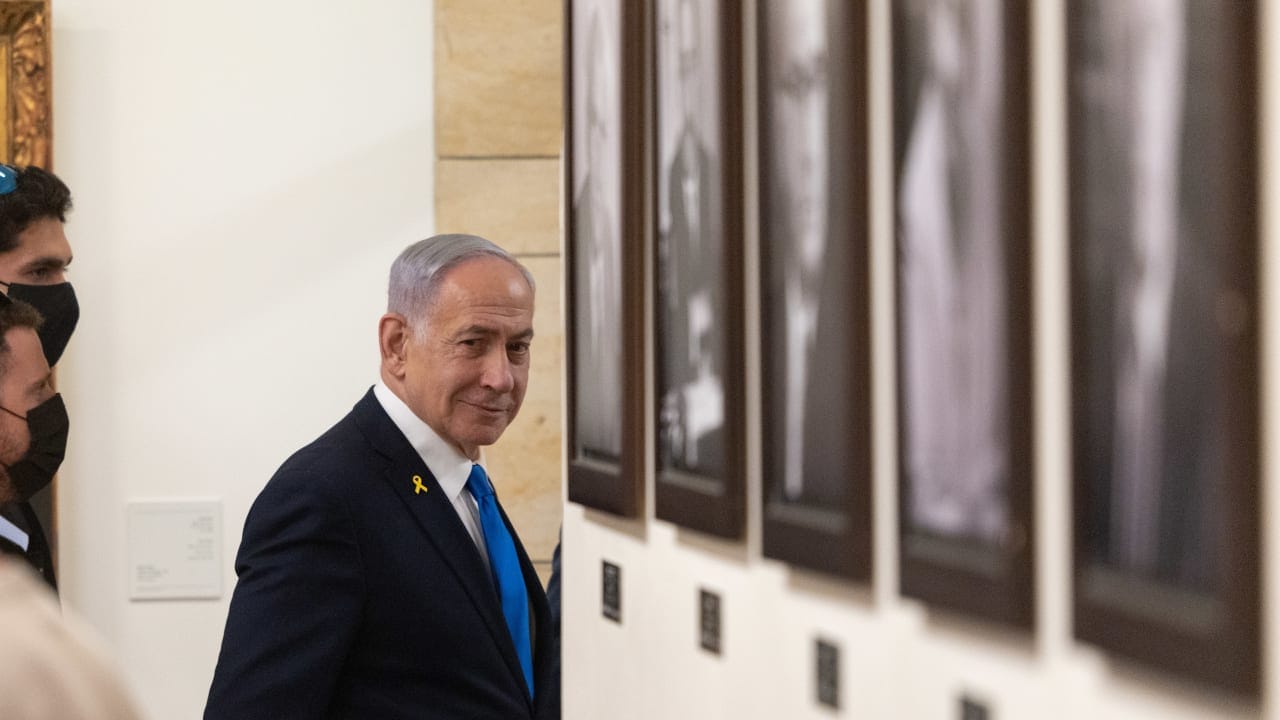
The state prosecution on Wednesday tried to negate aspects of Prime Minister Benjamin Netanyahu’s defense narrative in Case 1000, the Illegal Gifts Affair, most notably his claim that he bought many of his own expensive cigars as opposed to being dependent on tycoon billionaire friends at the center of the case.
Cross-examining Netanyahu before the Jerusalem District Court, which, for security reasons, sits in Tel Aviv for his testimony, prosecutor Yonatan Tadmor confronted Netanyahu for prior statements he made that he had documentation of having spent extensive sums of his own funds to purchase expensive cigars.
The prime minister wanted to present this argument to undermine the idea that he needed tycoon billionaires like Arnon Milchan and James Packer to purchase his cigars, and instead, to characterize them as rich friends who just liked giving fancy gifts.
Responding, Netanyahu said that when he said documentation, really, he was loosely referring to the fact that the prosecution could question his office aides and drivers who handled purchasing cigars with his personal funds that he gave them.
Tadmor tried to corner him, saying that Netanyahu himself chose the word “documentation,” and that this is not the same as questioning witnesses.

Prosecution tries to catch Netanyahu on wording in cross-examination
Further, Tadmor said that it was not a question of Netanyahu producing some documentation and then also relying on witnesses, but rather that he had not produced any documentation at all.
Another issue where Tadmor tried to catch Netanyahu based on wording he himself volunteered was a prior statement where he said that he had sought to conceal his expensive cigar gifts from neighbors, “who might not understand the Gifts Law.”
Tadmor jumped on this, saying that the prime minister’s mentioning of the Gifts Law showed that he was knowingly trying to conceal his gifts because he knew he was violating the Gifts Law by accepting such extensive and expensive gifts from billionaires who also wanted him to further their various interests.
Netanyahu responded that his mentioning of the Gifts Law had no legal significance for this trial.
Rather, he said that various neighbors might sometimes try to take pictures of him in order to embarrass him in the media or that law enforcement might wrongly go after him, misunderstanding the situation, which is exactly what he said was now happening with this trial.
Finally, Milchan and his chief aide, Hadas Klein, have testified that Packer gave Netanyahu expensive cigars because they told him exactly what kind to buy, and to lift the financial burden off of them from having to buy the cigars for Netanyahu.
Tadmor raised this as a sign that Milchan and Packer were not buying cigars for Netanyahu as friends, but under pressure and to achieve certain interests they thought he would help them with as prime minister.
Netanyahu acknowledged that Packer bought him specific expensive cigars that he wanted, but contended that Packer asked him what kind he wanted and that this was how Packer knew what to buy.
The prime minister asserted that Milchan and Klein had not asked Packer to buy him cigars and said that he does not understand why Milchan has made some of the statements he made and has accused Klein of hating him and lying to try to ruin him.
Tadmor also said on Wednesday that within around two weeks, he would finish cross-examining Netanyahu in Case 1000 and that the prosecution would move toward Case 4000, the Bezeq-Walla Affair.
Netanyahu was indicted in 2020, and the trial’s first witness was called in April 2021. The prosecution brought witnesses from April 2021 to summer 2024, and after a several-month recess – granted to Netanyahu’s lawyers to prepare – the prime minister presented his side of the case from December 2024 until June of this year, when the prosecution started to cross-examine him.