Israel’s cultural world, only beginning to recover after the last year and a half, now finds itself once again under orders to shut down. Auditoriums have gone dark, museums closed their doors, and the sounds of festivals have been silenced. Carefully crafted performances were shelved, exhibitions postponed, and artists, eager to meet their audiences, faced another wave of cancellations.
This isn’t merely a disruption of schedules; it is a rupture of shared moments, of the inspiration and hope that art brings, and a sobering reminder of the role culture plays in our lives.
The impact is felt across the shifting schedules of Israel’s major cultural events.
The Israel Festival, one of the country’s oldest and most significant, was forced to postpone its opening. Festival Director Eyal Sher announced that due to the security situation, “the festival will not open on its original date in early July.” He added, “We are exploring new options on the calendar, praying for the war to end as soon as possible.” Despite the upheaval, the festival remains committed to artistic creation “as a unique force for strengthening the shared fabric of life in Israel,” and plans to present performances not only in Jerusalem but also in the western Negev, Upper Galilee, and the Golan Heights.
Sher’s words carry a blend of sorrow and resolve: “Our hearts are with the families of the fallen. We send strength to our soldiers. We long for quiet days and the immediate return of all the hostages, now! And for the days when culture can once again take the stage.”

A similar blow was dealt to the Meridiano Festival in Ashdod, which was set to open this week. Attorney Yossi Atar, the festival’s director, said, “We had planned major productions, including international acts like the Gypsy Kings, set to headline a massive amphitheater concert that sold thousands of tickets in advance.” He also cited Kesem Hamizrach (Magic of the East), a large-scale original production featuring The Revivo Project, Haim Moshe, Yoav Yitzhak, and Avner Gadassi, which had been “all sold out.” The lineup also included Yehuda Poliker and Zehu Ze, all expected to perform for thousands in the Ashdod amphitheater.
“We had dozens of additional shows, plays, film screenings, and a gourmet food festival with leading chefs,” Atar added.
Once it became clear the festival couldn’t go ahead, a mass cancellation process began, involving hundreds of suppliers and artists from Israel and abroad, some of whom had already arrived.
“Over 20,000 tickets had been sold in advance,” Atar says proudly, “and we expected around 45,000 visitors. The festival will happen. It will take time, but we’ll get through this. Music and culture always prevail.”
Other anticipated festivals have also been pushed aside. Effie Benaya, director of the Confederation House in Jerusalem, confirmed the postponement of Hullegeb, the festival celebrating Israeli-Ethiopian creativity: “Due to the security situation, we are postponing Hullegeb to a quieter, happier time, later this year.” The delay underlines the broader loss, the silencing of diverse voices and unique narratives that the festival seeks to amplify.
Not just logistics
THE CRISIS isn’t just about logistics. It strikes at the heart of artistic life. For dance companies, grounded flights and closed airspace are particularly crippling. Noa Wertheim, Artistic Director of Vertigo Dance Company, describes a sense of paralysis: “These are hard days. Everything stopped. Performances in Israel and abroad were canceled, one after the other.” The company was scheduled to open the Chemnitz Opera House Festival in Germany last week with their work Mana, a sold-out show, followed by a performance at the Sibiu Festival in Romania.
“None of it is happening,” she says, visibly pained. Creative efforts to find alternate travel routes “via the sea, via Jordan,” failed, “no route is safe. It hurts. It hurts not to be there, not to spread the light we carry.” Even their healing initiative, Resilience through Vertigo, which supports wounded soldiers, was disrupted, though they quickly pivoted to Zoom and home visits to maintain it.
While acknowledging the heavy financial toll, Wertheim adds: “What truly matters is the wellbeing of Israel’s citizens.” She ends with a heartfelt message: “I send love and a blessing to everyone. May we soon return to creating, to moving, and to being light, here and in the world.”
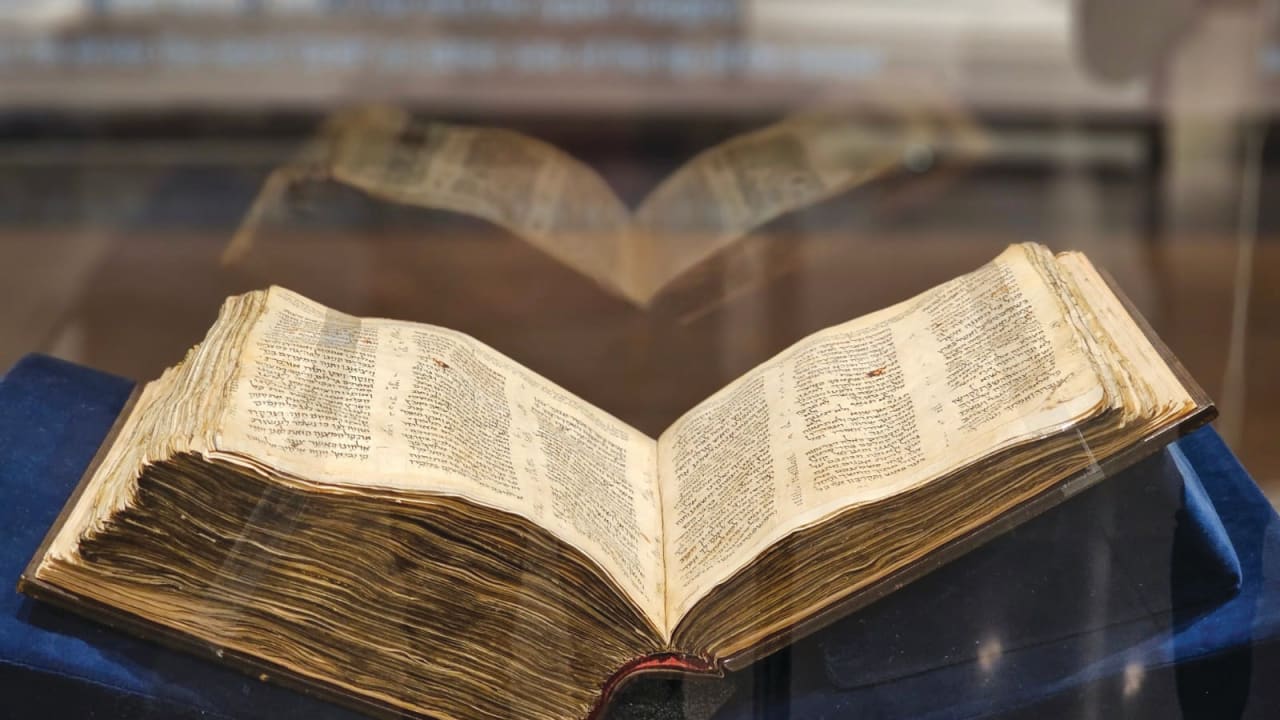
Museums, which plan exhibits months in advance, now stand empty. Oded Revivi, CEO of ANU – Museum of the Jewish People, revealed that the Codex Sassoon, the oldest complete Hebrew Bible, purchased for $38 million, arrived in Israel just two days before October 7.
“When the war with Iran began, we returned the codex to the vault until it’s safe to display it,” Revivi says, a stark illustration of how even treasured cultural artifacts are affected.
In addition, a gallery talk with renowned Israeli-American photographer Elinor Carucci, tied to the museum’s new women photographers’ exhibition, was canceled.
Cultural institutions located near active combat zones face even greater challenges. Amira Teomi, director of the Kibbutz Contemporary Dance Company based in Kibbutz Ga’aton, near the Lebanese border, explains: “After a difficult year and a half of cancellations across our international dance village, we find ourselves once again suspending performances, productions, and overseas tours that took months to arrange.”
She adds that even their prestigious summer course, drawing hundreds of dance students from around the world, is now in jeopardy, as is the professional training program due to start in September.
“This current crisis, like the last, is an enormous challenge for all cultural institutions, but especially for a company located less than 10 kilometers from the border,” she says. “It demands flexibility, resilience, and above all, hope. We are doing our best to weather this storm, too.”
And yet, even in these dark days, culture in Israel is far from dormant. Recognizing the public’s need for comfort and continuity, many institutions are turning to the digital sphere to maintain a connection with audiences.
Yair Mashiach, Secretary General of the Israel Philharmonic, emphasized the importance of music: “In these turbulent times, our music brings solace and stability, especially to children and families stuck at home.” The Philharmonic continues to operate online, offering educational and musical content for immediate streaming. “Culture is a crucial anchor,” Mashiach says, “especially in times of crisis.”
The Tower of David Jerusalem Museum announced that it had reopened on Thursday in full coordination with the Home Front Command and the Culture and Sport Ministry. The museum will operate during its regular opening hours, and all gallery spaces throughout the site serve as reinforced, secure areas.
At the Israeli Opera, disappointment lingers over the postponement of the grand-scale production of Turandot, which featured hundreds of performers and dozens of international artists who, according to the opera’s general director Tali Barash-Gutlieb, “have shown moving resilience and solidarity.”
Still, the work continues. “We opened all our VOD channels for the public,” she says, “with full opera productions, Hebrew songs reimagined operatically, jazz-infused arias, children’s programming, and more.”
She adds that the opera film Theodor, part of their recent production, will soon air on HOT and Yes through the ARIA channel. “It was screened at the Kennedy Center in Washington,” she notes, “dedicated to the victims of terror and war, highlighting the urgent call to bring the hostages home.”
Despite the uncertainty, she concludes with determination: “We continue planning for both near and distant futures, with the flexibility the situation demands.”
Even long-standing institutions, such as the Suzanne Dellal Center in Tel Aviv, cling to hope. CEO Anat Fischer-Leventon reflects: “We are going through a period unlike any we’ve experienced. In every moment of instability, cultural institutions must pause, cancel, and regroup, and sadly, this has become a recurring part of our reality.” Still, she insists, “As in the past, we are moving forward with hope.”
Plans for summer remain in motion: “We had prepared a variety of events: nightly performances, a children’s festival in July, and Tel Aviv Dance Festival in August.” Her wish is simple and heartfelt: “May this war end soon, may we return to our routine, and may the halls once again fill with life, movement, and moments of beauty and inspiration.”
This moment poses a formidable challenge to Israeli culture, a continued toll of cancellations, financial losses, and blows to creative freedom.
Yet the voices of cultural leaders echo with genuine pain and fierce resolve: to adapt, to persist, and to keep the cultural flame alive. Whether through screens, pop-up performances, or firm promises to return, the Israeli cultural world, time and again, proves its resilience. And clinging to hope, it waits for the curtain to rise once more, on quieter, safer days.