On the evening of October 7, 2023, as Israel was thrust into war, Rachel Azaria sat at her computer and typed out a simple Facebook post. The words were urgent and human: a call for neighbors to support reservist families who were suddenly facing the absence of a parent. “If you want to do this in your city, contact me,” she wrote.
Within hours, WhatsApp groups sprouted across the country. Within days, what started as a grassroots effort grew into “HaOgen for Reservist Families,” a national volunteer network now supporting nearly 40,000 families in 700 communities.
“We thought it would last a week or two, maybe a month,” recalls Azaria, the organization’s founding CEO and a former Member of Knesset. “But very quickly, it became clear this would be a long journey. That realization was overwhelming, but it also made the mission even more meaningful.”
Azaria isn’t alone on this journey. HaOgen has become a tapestry woven from thousands of stories as volunteers stepped forward with whatever they could offer for reservist families, who represent the breadth of Israeli society.

For Pazit, a physiotherapist who retired just months before the war, it was the urge to act that drew her in to volunteer with HaOgen. “At the start of the war, I saw a post asking for volunteers,” she says. “I joined right away. Since then, I mostly cook – for families, for kids, sometimes late at night when I have time. It’s what I can do.” With three grown children serving in reserves, she adds, “Who am I not to help? This is my call to duty.”
One mother sent her a video of her children opening a delivery, Pazit recalls with a subtle smile. “ ‘Teach Mom to cook like this! it’s so tasty!’ they said.”
“That is true gratitude,” Pazit noted, “and it’s overwhelming.”
Tehila, a new immigrant to Israel and the wife of a reservist, joined HaOgen without really knowing what the organization did. She very quickly understood that HaOgen’s help would be critical to her, having moved her family to Raanana shortly before the war and not yet being a part of the local community.
“A lot of people say, ‘Oh I don’t need help. My parents bring me meals, my parents babysit my kids and come over in the evening so I can have a breather.’ For people like me, who don’t have family in Israel, HaOgen helps us if we need volunteers to come be with our kids, if we need meals for Shabbat, they also set us up with other families, and help us with whatever we need, through a very active WhatsApp group.”
Anchor in the Storm
A Jerusalem-based family supported by Hila, one of the organization’s city coordinators, left a mark she will never forget. “I was with this woman from the start. She was pregnant, and her husband, a deputy battalion commander, was rarely home. She sent me a picture from the delivery room: ‘Look, he made it just in time.’ He left again, came back for the circumcision, then left again. We were there with her constantly. That bond, it’s indescribable.”
A recent request for help from the mother of a platoon commander illustrates just how critical HaOgen’s activities are. Her daughter-in-law is a doctor and the mother of three young children. Having just finished maternity leave, this woman was at a loss of what to do, as her husband is being called up later in January for three months. So, her mother-in-law connected her with HaOgen.

“As a doctor, I need to leave the house at 6:30 a.m.,” she said. “But the nurseries aren’t open yet, and I’m left alone trying to get three small children ready. We’re racking our brains trying to figure out how to cope.”
While both sets of grandparents are willing to help, distance makes it impossible to rely on them daily. “My parents can come for one day, his mother for another,” she explained, “but the rest of the days, there is simply no solution.”
HaOgen stepped up and arranged for volunteers– “adopted grandparents” – to come early in the mornings to care for the children and take them to their nurseries on the days when the kids would otherwise be alone. This made it possible for her to continue working and maintain her career as a physician.
These stories serve as testimony for the organization’s real-life impact. “Reservist families often feel invisible,” Azaria explains. “Soldiers in uniform get hugs on the street. Families at home don’t. Our job is to show them we see them, and that their sacrifice is appreciated.”
This past year, that recognition went national when HaOgen received Israel’s prestigious Presidential Award in Volunteering, honoring its 20,000-strong network. “It was incredibly moving,” says Azaria. “When the President called to tell me, I thought, this is exactly what we need, especially when morale dips. It reminds us that what we’re doing matters.”
“Nobody does this for recognition,” says Pazit. “But it matters that the families know we see them. It also means the country sees us.”
Azaria recalls the story of one volunteer, a man who simply delivered food, and a reservist. “One day, as the volunteer carried a box of food up the stairs, the reservist, whose family he delivered to, was coming home. They hugged right there on the landing of the apartment, both crying. That’s what this is about.”
Holding on together
HaOgen's scale today is impressive: some 20,000 volunteers aiding almost 40,000 families across Israel, from Eilat to Kiryat Shemonah.
Azaria recalls realizing the war would be longer than expected. "A reserve commander told me bluntly: a year. I went home feeling completely overwhelmed. How do you tell volunteers who came for a month that they’re needed for a year? But we did. And miraculously, they stayed."
She believes the key is meaning. “People feel important, that they’re doing something vital, not just a nice gesture. That keeps them here."
Hila emphasizes partnerships. “At the war’s start, companies, municipalities, and institutions rushed to help. But that faded. We need ongoing support. The families still need it."
Azaria offers a message to families: "Don’t face this alone. Join us. There’s space for everyone. This prolonged reserve duty shouldn’t be dealt with alone; it’s our shared responsibility."
Reflecting on the critical help she has received from HaOgen, Tehila noted, “They’ve helped me with food, with activities for my children, which has been a godsend when my husband is away. We’ll have an event to go to, something fun for them to do, and they look forward to it. Or maybe it’s the treat they will usually get as well,” she adds, smiling.
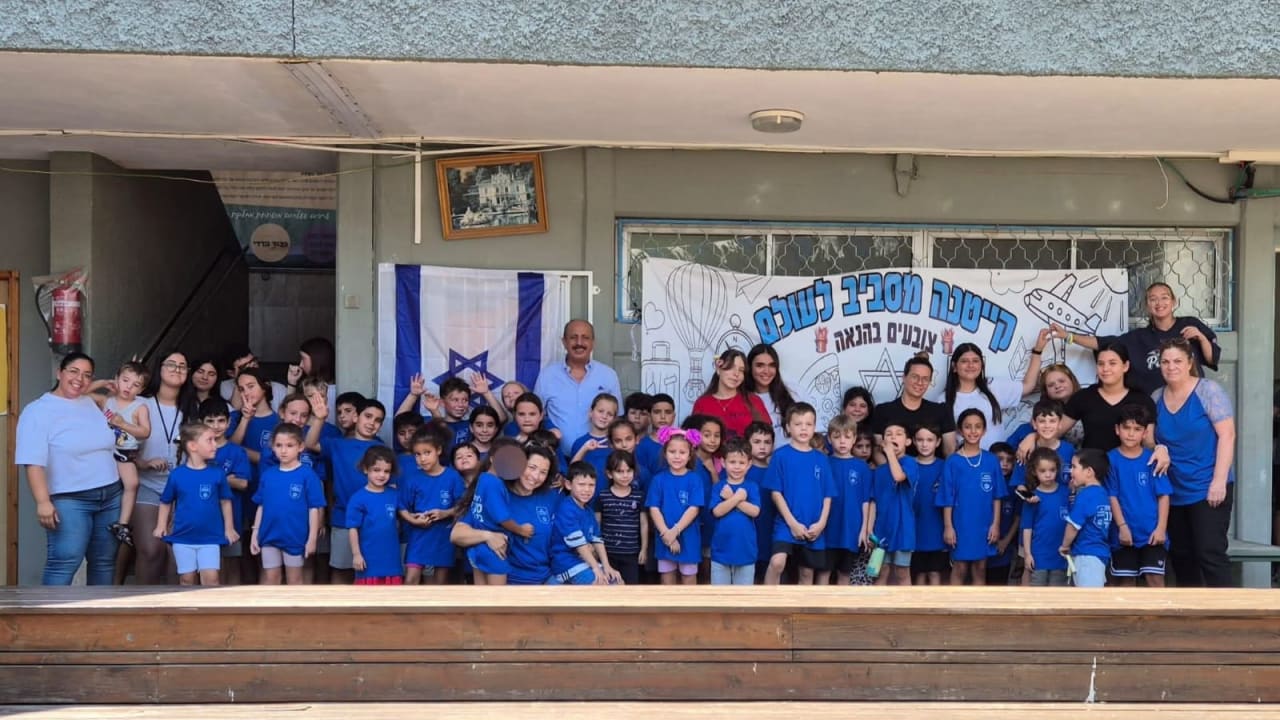
“It makes us feel good to be part of a family that’s not like any other family. My girls used to ask, ‘Why is it only our father who goes on miluim’ and I would say, ‘It’s not just your father, there are lots of fathers who go on miluim,’ and they get the opportunity to see other children whose fathers have gone to reserve duty.”
This feeling – being seen and heard, being surrounded and embraced by a supportive community, goes far beyond practical help. It’s a pillar of absolute certainty in the rough seas of our current reality, a true, unrivaled, stable anchor.
Written in collaboration with HaOgen