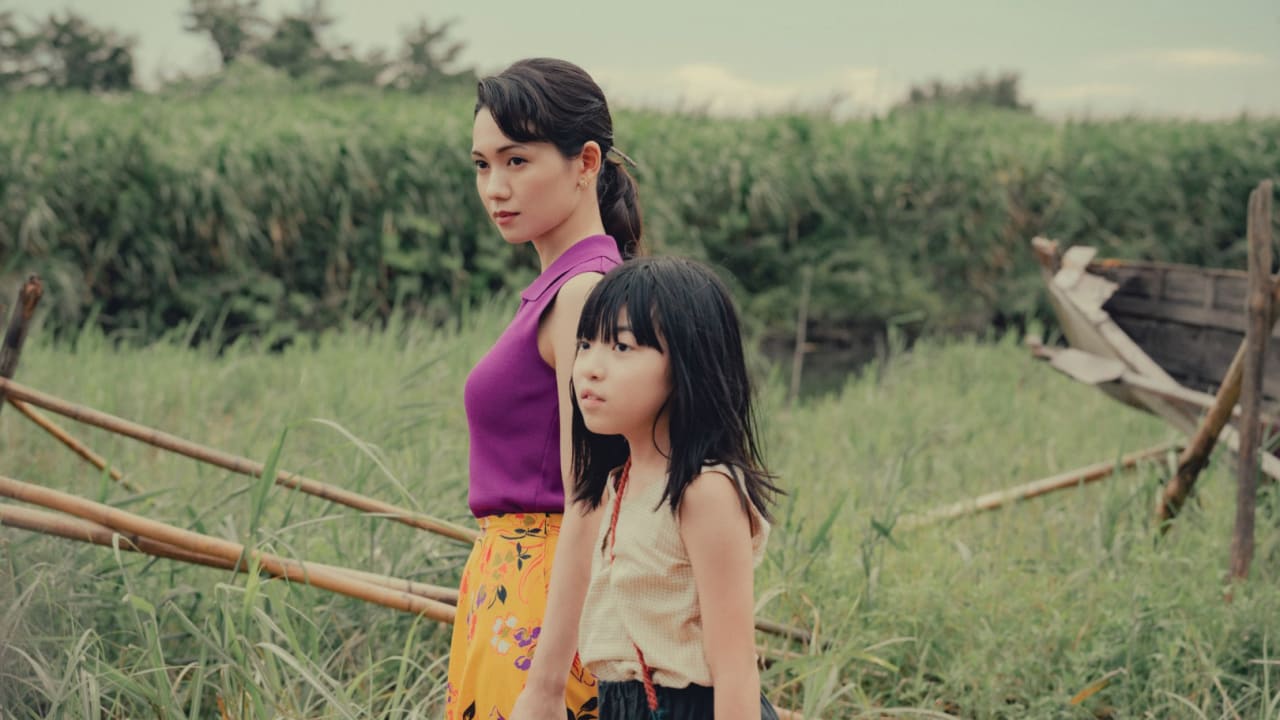
For those who love Japanese cinema, Kei Ishikawa’s A Pale View of Hills, which just opened in theaters around Israel – coincidentally while the Aki-no Japanese film festival is running at the Jerusalem Cinematheque – sounds like a treat.
It’s an adaptation of the first novel by Kazuo Ishiguro, a Japanese-British novelist who won the Nobel Prize for Literature in 2017, and it stars some of Japan’s best-loved actors, including Suzu Hirose, who played the title role in Hirokazu Kore-eda’s beautiful 2015 film, Our Little Sister.
The title promises a poetic film with great scenery, but the movie is a missed opportunity that will try your patience and likely annoy you with an outlandish third-act twist that renders much of what we have seen before meaningless or, at least, distorted.
The movie had its world premiere in 2025 at the Cannes Film Festival, where Ishiguro introduced it, saying he felt now that A Pale View of Hills was a bad novel, although he also pointed out that great films are sometimes adapted from subpar books. Unfortunately, that didn’t happen here.
It’s a true shame because there is a compelling story struggling to get out from under the muddled plot about survivors of the atomic bombing of Nagasaki by the US at the end of World War II.

A great deal has been written about the bombing itself but much less about its aftermath and what it was like for survivors a few years afterward, a period that is at the core of the story. The movie is set in two periods, Nagasaki in the early 1950s and Britain in the 80s. The Japanese sections are far more compelling.
In 1952 in Nagasaki, Etsuko (Suzu Hirose), a pregnant housewife, tries in every way to please her businessman husband, Jiro (Kohei Matsushita).
Jiro works long hours, and his single-minded devotion to his career and his remoteness from his young bride can be seen as a metaphor for a devastated city trying to recover from the attack that destroyed so much of it, without taking a moment to take stock of what has happened and trying to heal.
‘A Pale View of Hills’ falters as a post-war Japan drama
Lonely, Etsuko befriends Sachiko (Fumi Nikaido, who was in Shogun), a bold, sexy single mother who is the subject of condemnation and gossip because she had a relationship with an American soldier. Her young daughter is wild, almost feral.
Gradually, Etsuko learns that although Sachiko claims to have been nowhere near the bombing, she is a survivor of the attack. Such survivors are regarded by many with revulsion, so it makes sense that Sachiko would try to hide her experience.
The Nagasaki scenes alternate with a section set in a country house in the UK in 1982, where Etsuko (Yoh Yoshida), now a widow in her 50s, and her daughter, Niki (Camilla Aiko), are cleaning out the family home. It turns out that Etsuko left Jiro and married a British man, taking her child with her.
Niki, the daughter she had with her British husband, is now a journalism student and aspiring novelist who wants to use the time she and her reticent mother are spending together to learn about her mother’s life in Japan, but Etsuko is not comfortable talking about it.
Their relationship is shadowed by the memory of Niki’s older sister, Jiro’s daughter, who recently committed suicide. She was never fully integrated into British life, and her torment haunts her mother and her sister.
While both of these storylines sound good on paper, the British scenes are especially flat, almost falling into a TV movie-of-the-week level of predictability. The Nagasaki section is more beautifully photographed and more convincingly acted. What we learn about the fear and suspicion with which survivors were regarded and the very real dangers of the no-go atomic waste zones is fascinating and frightening.
But as the film goes on and the parallels between Etsuko and Sachiko’s stories become more evident, it also becomes apparent that Etsuko is a highly unreliable narrator, and the truth begins to seem increasingly murky.
What might have seemed like a poetic gambit in the novel becomes more of a gimmick in the movie, and I left wishing I could have learned more about a survivor like Sachiko and what surviving the bomb blast really meant to her.