Under the shadow of war, Israel recently crossed a symbolic census threshold when it reached the 10 million citizens mark.
The event arrived silently as reports of loss of life rolled out weekly, storefronts bore signs noting “Back after reserve duty,” and Israel’s 10 million were struggling for survival.
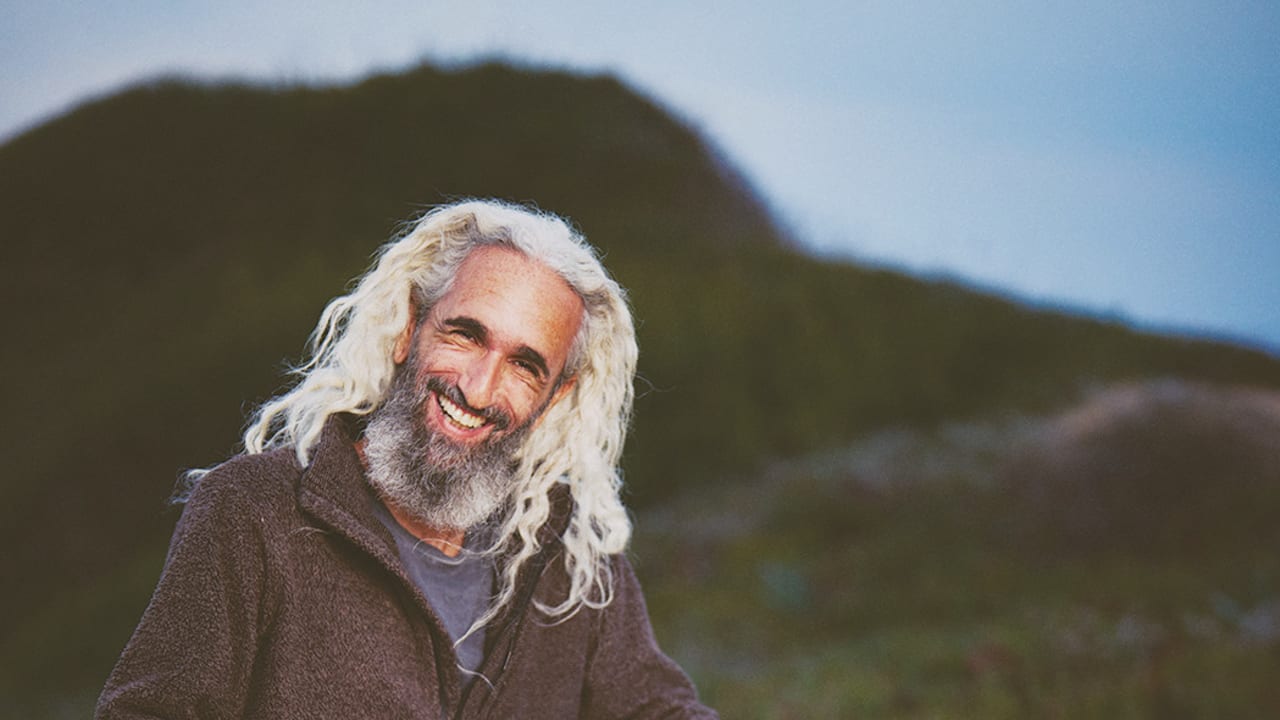
During that time, Dave Shlachter, a Jewish photographer from California, was among those who grabbed their gear and their families and made aliyah. Putting his work on hold, he elected to serve the Jewish people by learning Hebrew and compiling an English-language coffee table book that offers a peek into the lives of 100 citizens of the Holy Land.
Hinenu: Israel at Ten Million (Hinenu is Hebrew for “Here we are”) captures the Israeli spirit through photographs and stories about the lives of 100 people chosen to precisely mirror the country’s latest census data.
Intentionally apolitical, Hinenu is not a manifesto. It is a true and engaged act of listening, which interviewees noted helped them share their stories.

Many reported surprise at the details that came up for them during the interviews. Shlachter spent up to a maximum of seven hours with each interviewee, often driving the length and breadth of the country for hours to photograph and interview the subjects at their homes.
Rather than spotlight politicians, celebrities, or public figures, Shlachter sought out the “ordinary people” who compose the demographic mosaic of the nation, a balance of men and women, young and old, immigrants from across the globe, including 21 Arab Israelis and 13 ultra-Orthodox Jewish Israelis, and people from all the ethnic backgrounds that compose the modern-day Israeli society.
Hinenu is organized by age, starting with a Holocaust survivor and ending with an eight-day-old baby at his bris.
Shlachter built a spreadsheet with 100 demographic slots based on data from Israel’s Bureau of Statistics census: age, gender, religion, ethnicity, geography, country of origin. Then he began his search.
“I’d literally have a box [drawn on paper] that read: [for example] ‘female, Sephardi Jewish, aged 70-79, from the Northern District, originally from North Africa.’
“Then I’d call someone in the town and ask, ‘Do you know anyone like this?’”
Within 48 hours, he would have found two perfect matches. It happened again and again.
As his project neared its end, finding interviewees became progressively harder. Earlier, there was room to make changes on the fly.
For example, if Shlachter found an interviewee who matched most of the demographic markers on a target profile but was male instead of female, he could usually find a way to swap in that gender marker from a different profile, while keeping the dataset collectively accurate. For the last 20 profiles, however, those changes were no longer possible.
One of the final profiles he sought was a Jewish, Sephardi/Mizrahi woman in her 70s from the Northern District, born in the Middle East or North Africa. Eventually, Shlachter’s team was able to come up with all of the 100 population representatives he sought.
A radical commitment to listening
Shlachter, who’s known for being upbeat and high energy, noted that he sometimes ended up with dozens of pages of notes after his interviews. “The first part was really developing trust because I wanted them to be super honest and vulnerable,” he said. “And so the first part was getting to know each other.”
Shlachter said that most people had never actually been asked about their personal stories.
He noted that it didn’t matter “how good of an experience one has [in life] or how terrible; it becomes normal to the person experiencing it. Many people thought their lives were just very unremarkable. But once they started answering questions, I would get really excited. I would just keep digging, and they would really open up by the end.”
Upon completion of the interviews, he drafted the narratives from a first-person perspective and “sent every story back to them [for approval]. Sometimes they accepted it right away. Sometimes they wanted changes. But nothing was published until they loved it – not just liked it, but loved it. This wasn’t my book. I wasn’t the author. There are 100 authors in this book,” he explained.
After Hamas’s violent massacre of 1,200 and kidnapping of 251 on Oct. 7, 2023, Shlachter witnessed people abroad trying to simplify the situation by making generalizations about Israelis. He wanted to challenge those simplifications, especially for those who, while never having set foot in Israel, felt certain they understood the situation there.
Throughout the interview process, Shlachter found that his subjects began to take more pride in their collective as Israelis. His aim was to shift the world’s understanding of what Israel is.
“If I can move someone even one degree – from certainty to curiosity – then I’ve done my job,” he said.

Following the question, not the narrative
Inspired by American record producer Rick Rubin’s concept of artistic creation (asking a question and following it wherever it leads), Shlachter let the stories shape the book. And he actively avoided politics.
“There are endless places you can go to read about Israeli politics. That’s the loudest signal in the world right now,” he said. “I wanted to create a quiet signal – stories of the lived human experience that anyone could relate to.”
He reported that “One hundred out of 100 people said, ‘Thank God. I don’t want to talk about politics, either.’”
Some stories focus on family lineage. Others zoom in on a single defining moment, such as a soldier who, though terrified, took command of a tank to rescue wounded civilians under fire.

A healing encounter
Shlachter had arrived in Israel carrying heavy emotional baggage. After Oct. 7, he had faced antisemitism in his California community and felt deeply alienated.
Nevertheless, he said, when he began interviewing Arab Israelis, he experienced something new. “I’d never really had a Palestinian friend. I was shaking before my first interview.” Two minutes later, the fear had dissolved.
“I met this young, brilliant, hip Palestinian guy who welcomed me with warmth. From that moment on, every Arab household I visited treated me like family, offering tea, hospitality, and generosity,” Shlachter said. “They were dressed and ready for their photo when I arrived. It was surprisingly healing.”

However, he recalled one encounter that broke him, like a method actor who actually becomes the character through months of dedication.
One day after a shoot, Shlachter felt himself having thoughts that reflected the perspective of his subject. He interviewed an 18-year-old Arab boy whose mentor was murdered in front of his parents’ shop in Haifa. The killing was caught on camera but an arrest was never made.
“I felt the hopelessness that he felt about his own future here,” Shlachter recalled.
“I was stuck in traffic, and I saw a young Ashkenazi woman in her car drinking an iced latte. She was bouncing and dancing to loud music.” He said he put himself in the shoes of Arab boy who when seeing such a scene would likely have thought: “I wish I could be a part of that. I wish I could be in the majority.”
This was the point at which, Shlachter said, he became remarkably non-judgmental.

Ortal Pelleg: Surf, music, and unexpected intimacy
Ortal Pelleg, an Israeli musician and energy psychologist, is highlighted in the book. The 39-year-old connected to the author through surfing, a sport Pelleg has practiced around the world.
“He’s such a fun guy. Good vibes, high energy,” Pelleg said of his time being interviewed by Shlachter. “I really like him. He asks good questions. And he’s interested. And he’s feeling it. It was a pleasure to be a part of that vision – of sharing the commonalities of different stories of what’s going on over here in this part of the world.”
Pelleg’s daughter was born with a unique condition that limits her functioning. He discussed it unexpectedly during the interview. By the end, he had revealed that even through the difficulty, caring for his daughter had reshaped his understanding of freedom.

When asked about the most surprising element of the interview experience, Pelleg said he was impressed by how deeply he opened up. “Usually, I don’t speak about my daughter so much. I have been interviewed before [about work]. And it felt quite natural to speak with Dave.”
Pelleg’s message to everyone is: “Stress is the real enemy. If we could all breathe slower, we’d live better.”
Musa and Jessica: Life in the gray
Musa Barhum is an Israeli Arab farmer who fell in love with a British woman he met during her stay in Israel. Eventually, Jessica Thelwall converted to Islam, learned Hebrew and Arabic, and changed her name to Yasmin, and they married. They moved to the village of Ein Rafa just outside Abu Ghosh, near Jerusalem. Barhum’s is one of the book’s most complex stories.
Barhum grew up in Ein Rafa because his father and family had been “pushed out” of their original home in the village of Suba in 1948, when Israel became a state. Abu Ghosh had good relations with Israel’s early government, and Barhum’s family had land there, so they moved. He remembers growing up poor in a one-bedroom apartment.
Shlachter was able to connect with Barhum through mutual contacts. For the past 20 years, Barhum and his wife have welcomed tourists into their home to experience their hospitality and to see what life is like in an Arab village in Israel.
“We’re used to telling our story, but not like this,” he told Shlachter.
Barhum told the Magazine that their son had faced discrimination when applying to a trade school. “When they heard his name was Ali, suddenly there was ‘no space,’” Barhum recounted.
“His Jewish teacher was shocked and tried to help – but the institution still blocked him. It makes you feel unwanted. And then you have to find your way. And that’s not going to be easy,” he explained. “Unless you give up and send your boy to work with no qualifications.”
Barhum had experimented with changing his name for professional matters earlier in his career. He said it simply made his life easier.
Yasmin chimed in on the conversation. “Our experience of living here is that the racist situations – like what happened to our son; those are the provocative situations that are caused by bad policies from the top that filter down,” she said.
“But most of our encounters with people in everyday life are not racist,” she added.
Yasmin said that she sees Shlachter’s book as more honest than headlines. “It struck me that the book… finding a variety of people representing statistics. It’s actually the true picture of what Israel is.”
She noted eloquently that Israel is, first and foremost, a state for the Jews, but the actual tapestry on the ground is so much richer, as Shlachter has attempted to portray.
“He [Shlacter] moved here after Oct. 7. His book is a positive contribution to our collective trauma… And the title says it all. Hinenu. Here we are,” she said.
Yasmin’s message is that though in Israel there is much demonization of “the other,” she encourages everyone not to be too quick to judge.
Morgane Koresh: A name, a nation, and belonging
French-Israeli street artist Morgane Koresh’s story centers on identity and begins with her surname. Where she’s from, having a Jewish name was no help at all. Her mother, the daughter of Holocaust survivors, deliberately gave her children a non-Jewish father, hoping to protect them from antisemitism; and with that came a non-Jewish and very French-sounding last name – Portheault.
Being interviewed by Shlachter made her revisit parts of her past that she rarely discusses, such as her name. When Koresh moved to Israel, the authorities tried to convince her to remove her many French middle names. None of them sounded Jewish.
“I was really stubborn, and I told them I was already moving away from my parents … ’And you’re asking me to remove names that remind me of them?’” she recalled.
When she got married, she adopted her husband’s name, Koresh, adding it to her name, but keeping the French ones, too. “It’s who I am,” she said.
She said she felt honored to be selected for inclusion in the book: “To have something to show for the diversity we speak about …that no one [who is anti-Israel] wants to hear... and that it is based on statistics and data and is not just an idea... I was honored to be a part of it. It’s flattering, I guess,” she said.
A teaspoon of water
Famed Israeli novelist Amos Oz once wrote that when you see a raging dumpster fire, you have choices: Protest it, ignore it, or try to put it out with whatever water you have – even if it’s just a teaspoon.
“This book is my teaspoon,” Shlachter said. “Everyone has a little teaspoon.”
Shlachter hopes that his book will help readers move from certainty to curiosity. He said he wants everyone to be a tiny bit more curious about the other and not afraid to smile at others and ask them: “What’s your story?”
Shlachter just wrapped up an international book tour that began in Jaffa. The strong turnout in major cities across the United States reflects a growing hunger for meaningful cultural dialogue, the organizers say.
Speaking from the road, where each stop blended conversation, film screenings (a short film about the book), and discussions that engage Jewish communities and the wider public alike, the author described the response as “overwhelming,” with people “going absolutely crazy” about the events, the film, and the book. The next round will likely include Detroit, New York, Miami, and Toronto in late October, with a few sessions in the San Francisco Bay Area in March.