“I consider Judaism to be a world heritage, not just something that belongs to the Jewish people, but something that others can relate to as well,” says Professor Youval Rotman, Academic Director and founder of the Koret Center for Jewish Civilization at Tel Aviv University.
Founded through a partnership between the Koret Foundation, Tel Aviv University, and ANU, the Museum of the Jewish People, the Koret Center for Jewish Civilization strengthens Jewish civilization as a global cultural asset and fosters dialogue within the diverse Jewish community by creating innovative connections between academia and society.
“Especially since October 7th, it's become clear that there is an important relationship between Israel and the diaspora that must be safeguarded,” adds Dr. Anita Friedman, President of the Koret Foundation. “TAU is perfectly primed to provide leadership in this area, as it excels in both education of students and academic research. Through the Koret Center, we wanted to also strengthen Tel Aviv University as a force for good in the Jewish community.”
Friedman, who has dedicated her life to strengthening the Jewish community in the US and Israel, plays various important roles at the University: she’s Vice Chairperson of the TAU Board of Governors, Chair of the Comprehensive Campaign, and received an Honorary Doctorate from the university in 2024.
Professor Rotman says that Judaism is much more than a religion – it’s a civilization. “It’s not just people, it’s not just a nation, and it’s not just a religion. All of these are correct terms, but Judaism is a new type of civilization that developed throughout the centuries without a physical center and greatly influenced all other civilizations with which it came into contact and gave rise to brilliant ideas throughout history,” he explains.
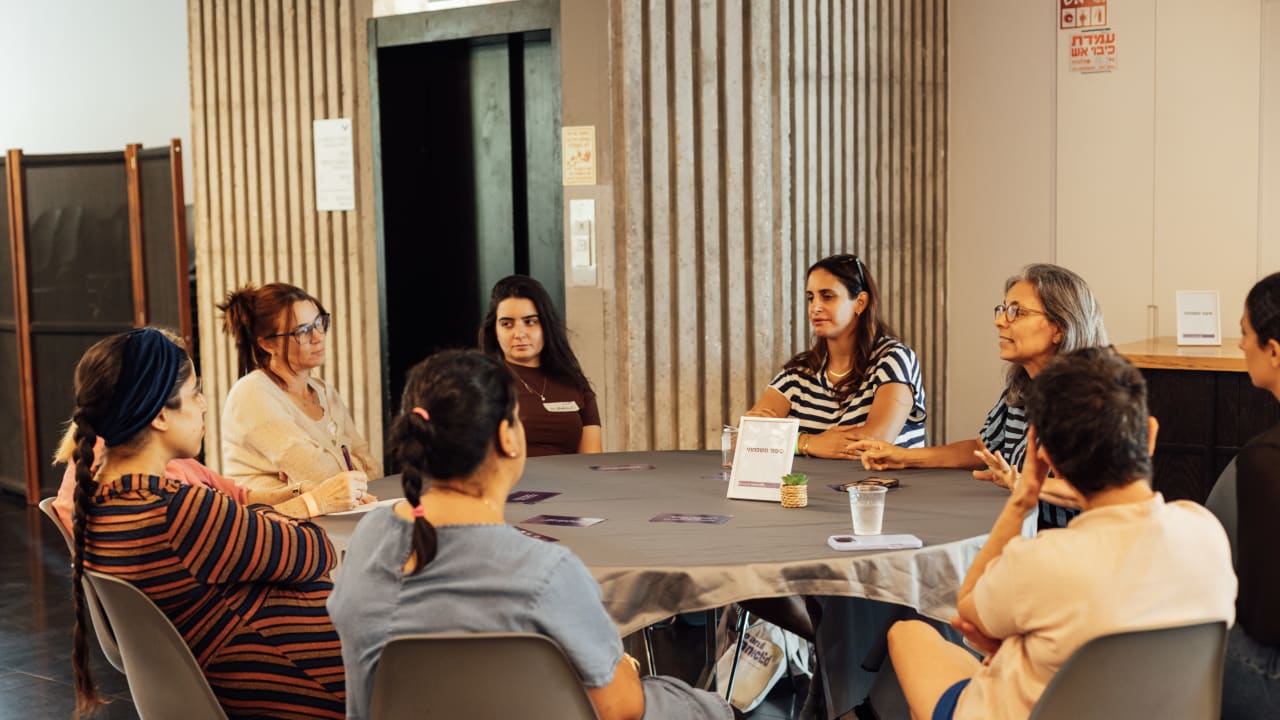
The Koret Center offers three different tracks – academic programs, educational programs operated by the ANU Museum, and joint educational programs developed together with TAU and ANU.
The academic track offers a postdoctoral fellowship program for outstanding young scholars from outside Tel Aviv University; an international MA program in Jewish studies offered in English in collaboration with Frankfurt University; an MA program in Biblical Studies focusing on the sacred books of the Beta Israel community; a Hebrew Language Olympiad for Youth, journals, publications, and support for research groups.
Educational programs operated by ANU include the Koret International School for Jewish Peoplehood, which teaches Jewish Peoplehood Studies, trains the museum guides, develops educational curricula and activity programs, and offers enrichment programs and a variety of programs in this field for educators, students, soldiers, schools, informal education groups, and educational groups visiting Israel on both short- and long-term programs.
The third track offered by the Koret Center consists of joint programs developed together with TAU and ANU, and includes such projects as the Professional Training Program in Project Management in the Jewish World, enabling participants to develop project management skills within international Jewish community contexts, and ConnectEd, aimed at strengthening Jewish civilization, nurturing and promoting Jewish peoplehood among educators from Israel and around the world.
Another outstanding joint Koret-TAU-ANU program is ‘Reacting to the Jewish Past,’ an educational and research initiative designed to enrich the teaching of Jewish history through immersive role-playing experiences. Participants develop deep historical understanding, critical thinking skills, and cross-cultural empathy. The games bring key moments in Jewish history to life, from the Return to Zion and the building of Jewish solidarity across the Mediterranean to the challenges of founding the State of Israel.
Studying history means comparing the past with the present, and Rotman offers a specific example of how it can help people address a contemporary challenge. In years past, he researched Jewish sources on ransom and the redemption of captives and traced its development as a religious precept and a social norm, comparing sources in Jewish law (halakha) with sources from the Cairo Geniza, as well as Christian and Muslim sources. After Hamas kidnapped 251 hostages on October 7, the subject assumed new relevance.
Rotman adds that the events of October 7 emphasized the need for a stronger connection between Israel and the Diaspora. “There was a growing need ever since the war began for more connection and more solidarity, to have more programs that support one another, and to have some framework to develop a shared language for a shared future. October 7 changed how Jews living in the Diaspora feel. They’re looking for answers, and the answer is engagement. The Koret Center provides answers to increase this engagement by providing content and this type of framework.”
Written in collaboration with Tel Aviv University