A scientist working to repair heart attack damage and a student filmmaker preparing a first production may seem to have little in common. At Tel Aviv University, both benefit from a belief that has guided Len Blavatnik’s philanthropy: talented people, given the right support, can accomplish extraordinary things.
Across drug discovery, computer science, artificial intelligence, cybersecurity and film production, the Blavatnik Family Foundation has helped TAU develop the people and capabilities that will shape Israel’s future. The University calls this far-reaching influence “The Len Effect.”

It is an apt description of a partnership whose significance extends well beyond campus. Supporting researchers, equipping laboratories, and helping students realize their ambitions strengthen the foundations of Israel’s scientific, economic, and cultural leadership.
The partnership gained momentum with the establishment of the Blavatnik Initiative in 2014. A substantial gift launched programs in drug discovery, computing, cyber research, student filmmaking, and faculty recruitment. In 2018, the Foundation announced a further grant to advance the initiative’s work.
For Blavatnik, the purpose was clear. In the 2018 announcement, he described the Foundation’s goal as helping “advance the next discoveries and support future generations of Israeli scientists and researchers.”
That investment in future generations takes particularly tangible form in drug discovery, where an exciting finding can face a long and expensive journey toward a potential treatment.
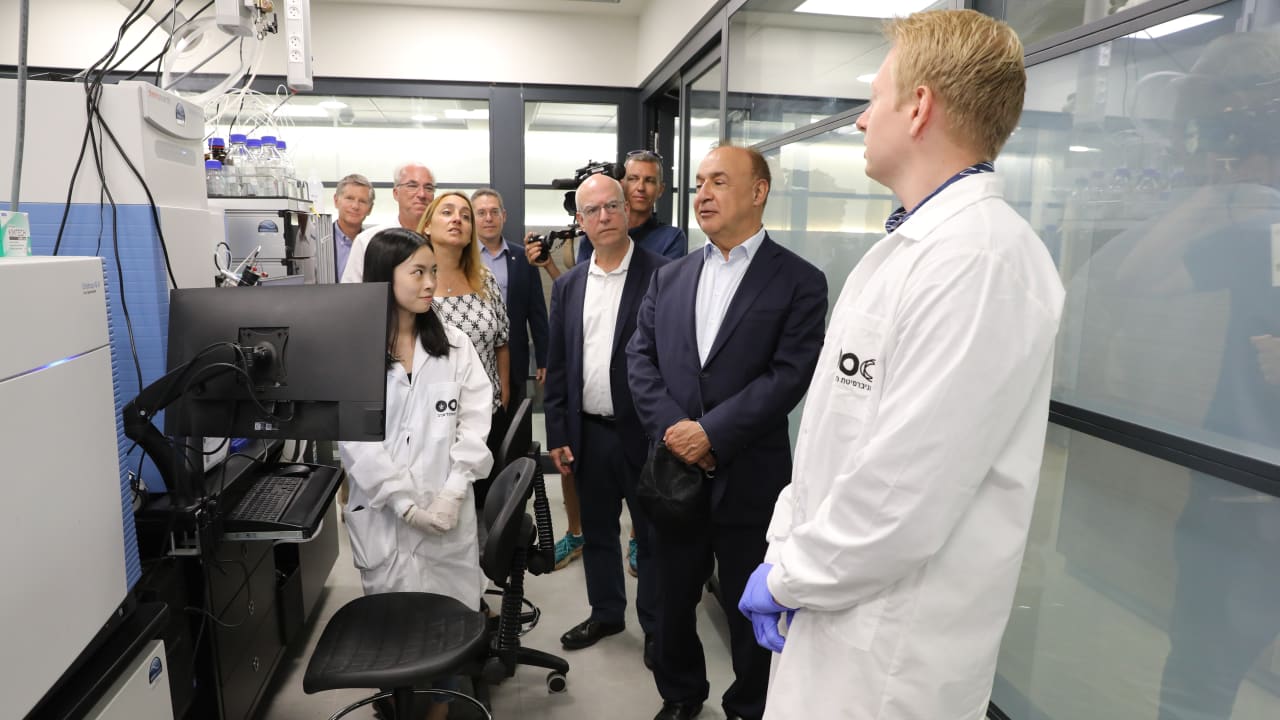
Launched in 2016, the Blavatnik Center for Drug Discovery provides equipment and expertise to help researchers navigate the crucial early stages of development. By bringing academic discoveries closer to clinical application and commercialization, it helps promising work progress beyond the laboratory.
One example emerged from its collaboration with TAU-affiliated Tel Aviv Sourasky Medical Center, known as Ichilov Hospital. In January 2020, TAU announced that the partners had secured a competitive NIS 2 million grant from the Israel Innovation Authority’s Kamin Program to research a potential treatment for damage following a heart attack.
The project aimed to improve recovery of damaged cardiac tissue and reduce scarring that impairs heart function. It illustrated the value of connecting laboratory expertise with the clinical knowledge of hospital physicians—and the opportunity to address a pressing medical need. The announcement concerned research toward a treatment, an important step on the demanding path of drug development.
For Israel, such collaborations translate scientific strength into medical and commercial opportunity. For patients, they offer the possibility that today's discoveries may eventually improve lives.
Computer science offers another route through which Blavatnik’s support helps TAU contribute to the country’s future. The Blavatnik Computer Science Research Fund backs advanced work in algorithms, computer systems, networks, information security, bioinformatics and software engineering. It also supports outstanding graduate students preparing for careers in research and industry. Additionally, the Blavatnik School of Computer Science and Artificial Intelligence at TAU is a leading academic institution dedicated to cutting-edge research and advanced degree programs in computer science, machine learning, and computational theory.
These fields supply essential knowledge for a technology-driven economy. Their influence reaches from the systems businesses use every day to the tools scientists employ to understand complex biological processes.
Supporting graduate students strengthens that contribution over time. A young researcher gains the opportunity to explore a difficult question, develop expertise, and build the foundations of a career whose influence may reach well beyond the original project.
Artificial intelligence has broadened those possibilities still further. In 2022, Blavatnik pledged a major gift to TAU’s Center for AI and Data Science, helping expand an initiative designed to bring computational approaches into research and teaching across campus.
The University’s announcement included AI and data science minors for students in economics, law, psychology, and biology. The ambition was to equip students in varied disciplines to work with methods increasingly relevant to their professions.
Israel’s ability to lead in AI will depend on people who can connect technical capabilities with a deep understanding of particular problems. TAU’s breadth offers fertile ground for those connections, allowing expertise in computing to inform work across science and society.
As digital capabilities expand, protecting them becomes increasingly important. The Blavatnik Interdisciplinary Cyber Research Center, established in 2014 in partnership with the Israel National Cyber Directorate, addresses challenges that affect individuals, businesses and governments.
Its work spans technical questions alongside the political, legal and social dimensions of cybersecurity. Through its role as a founding host of Cyber Week, the Center also helps bring the international cyber community to TAU. Research and dialogue reinforce one another, connecting academic inquiry with the challenges confronting practitioners.
This combination helps position Tel Aviv University as a place where Israel contributes to global thinking about digital security while preparing researchers to confront emerging threats.
Blavatnik’s support for film production brings a creative dimension to the same confidence in Israeli talent. At TAU’s Steve Tisch School of Film and Television, the Blavatnik Student Film Production Fund helps students take their ideas from script to screen.
For an emerging filmmaker, production support creates the opportunity to practice a craft, complete a substantial work, and reach an audience. Those early opportunities can help establish a voice and open the way to a career.
In its September 2021 assessment of the partnership, TAU reported 663 film scholarships, 208 festival entries and 79 film awards. The figures offer a measure of the creative activity encouraged by sustained support—and of the opportunities for Israeli stories to travel.
Taken together, these investments express a broad vision of national achievement. Scientific discovery, technological expertise, digital security and cultural creativity each contribute to Israel’s standing and capacity to grow.
At Tel Aviv University, Blavatnik’s philanthropy gives that vision practical expression. It helps researchers pursue promising questions and students develop their abilities. The next medicine, technological advance, or internationally acclaimed film begins with someone receiving the opportunity to try.
Written in collaboration with Tel Aviv University