Research
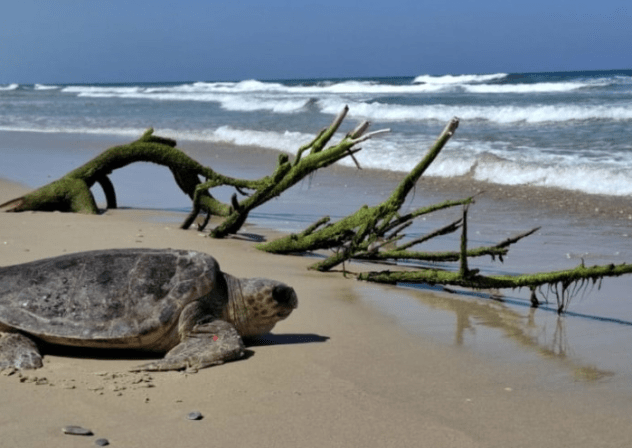
Sea levels rising: The new threat that could displace sea turtles from Israel's beaches
A new study warns rising sea levels could shrink Israel's sea turtle nesting areas by 2100, erasing up to 96% of beach width between Tel Aviv Marina and Port.

Brain drain: Israel’s medical exodus grows as nearly 1,400 doctors leave inside three years

Ahead of Rosh Hashanah, Israeli scientists find carp can resist a deadly virus

Straight from the horse’s mouth: New Israeli AI helps horses tell us when they are in pain
Many women suffer from arm pain after breast cancer surgery – and now a solution has been found
A new Israeli study found that most women who underwent surgery for breast cancer suffered from pain, restricted movement, or impaired function. The study's findings will help improve rehabilitation.

The Race to Microseconds: Rethinking Observability in RDMA Systems
As RDMA brings computing into the microsecond era, smarter observability is needed to uncover hidden bottlenecks and keep ultra-low-latency systems reliable.

When evidence expires: Building AI systems that can be audited
The senior AI engineer and researcher examines the career experiences that shaped his approach to document intelligence, computational efficiency and evidence-grounded AI.

Jerusalem hospital performs first-ever alpha radiation treatment for recurring brain tumors
The technology, which emits highly bioefficient alpha particles that deliver concentrated radiation, was developed in collaboration with the Sharett Institute of Oncology and ALPHA Tau.

Pentagon demands audit of 30 universities, investigating Russian, Chinese, Iranian research ties
The Defense Department did not publicly list the 30 US schools to be reviewed for suspected ties to 130 research institutes based in Russia, China, and Iran, including civilian universities.

SIL204 treatment may help immune system attack KRAS-driven tumors, research finds - exclusive
This comes just after SIL204 advanced into Phase 2/3 clinical evaluation at the end of July, beginning its first clinical trial at Tel Aviv Sourasky Medical Center.

Does smoking outside protect your children from cigarette smoke? Israeli study says no
'Many parents believe that smoking outdoors protects their children,” said Prof. Ariel Tarasiuk. 'Our findings suggest that this is not always the case.'

Some parts of your body age faster than others, Israeli study finds
Hebrew University researchers say the discovery could pave the way for new cancer treatments and earlier detection of dozens of diseases.

Tel Aviv University ranked first in Israel in Taiwan ranking for research excellence
The National Taiwan University Ranking (NTU) is considered one of the leading international measures for evaluating research quality at universities.

Adapting to heat: Will we soon see air conditioners at the Colosseum and the Acropolis?
A new study found that while heat affects visits to Southern Europe's heritage sites, tourists keep coming and adapt without reducing satisfaction,
