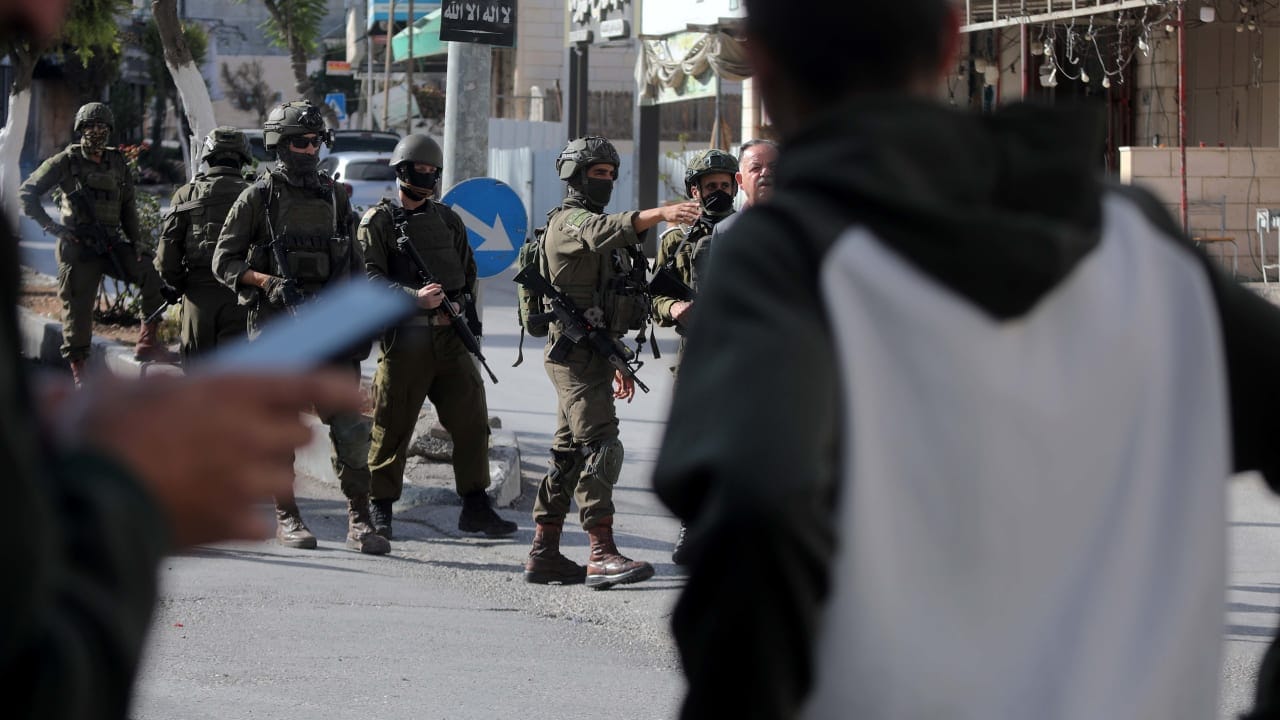
The IDF on Monday announced that it was withdrawing its forces from the Hebron neighborhood it had occupied since last weekend.
The Jerusalem Post reported on Thursday that this might occur as early as the past weekend. None of this was certain, however.
Until last week’s elections, Prime Minister Benjamin Netanyahu rejected IDF Chief of Staff Lt.-Gen. Eyal Zamir’s recommendation to leave the area and to allow the 2,000 evacuated Palestinians to return to their homes.
This led to a confrontation between Netanyahu and Zamir, which eventually leaked to the media. IDF sources who discussed the withdrawal avoided any reference to the disagreements between the two.
The military apparently presented the withdrawal as timed to coincide with another demolition of a terrorist’s home.
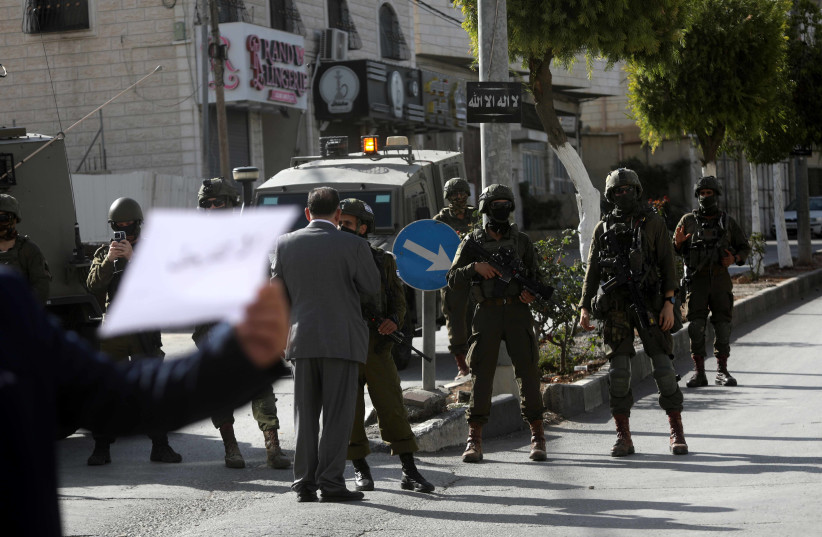
These IDF sources also said that the paratroopers brigade would leave the area as its presence was meant to be temporary. Usually, the paratroopers are reserved for worse threats in the North or the South. Furthermore, IDF sources have noted that IDF forces are needed for protecting the large number of tourists expected to visit Hebron on Saturday.
This coming Saturday is the anniversary of the portion of the Bible that recounts the biblical Abraham purchasing the Tomb of the Patriarchs from Efron the Hittite.
The IDF occupied the area in response to a deadly Hamas attack on October 23. It explained that the terrorists were connected to a broader Hamas clan in the Hebron neighborhood in question, though it never presented concrete evidence of how most of the 2,000 evacuees could be connected to any specific crime.
IDF recommended return of evacuated Palestinians last week
Already by October 25, the IDF was recommending that the evacuated Palestinians should be allowed to return, saying that it had inspected all of the relevant areas and that there was no clear reason to remain.
The forced evacuations from Hebron were different from other recent incidents.
In early 2025, Israel cleared areas of Jenin, Tulkarm, and Nur al-Shams in the West Bank, evacuating close to 40,000 Palestinians. Notably, these three areas had experienced a wide array of terror incidents, dating back to early 2022. At the time, the IDF carried out multiple temporary evacuations. The military even sent in the Palestinian Authority to fight the terror groups before it enforced mass evacuations and destroyed several structures.
This time, however, the IDF provided little information about the offenses of the 2,000 evacuated Palestinians. Its only claim was that they were connected to the Hamas-linked Gaza clan. And although Hebron had once been one of the most violent and unstable areas, it hasn’t been one of the leading problem spots.
In addition, the IDF said it destroyed illegal structures that pose a threat to future security operations. The military, notably, was extremely vague about what those operations were and why entire buildings needed to be destroyed to carry them out.
When pressed about how many of the 2,000 hamula (“clan”) members have records linking them to terror acts (or, at a minimum, to rock-throwing), multiple IDF sources did not appear to have specific information on the topic.
Rather, the operation seemed to be motivated by public statements made by Netanyahu and Defense Minister Israel Katz about clearing or destroying the neighborhood of the two men involved in the October 23 terror incident – apparently a collective punishment measure.
While Israel has placed closures on problematic areas in the past, it has not carried out mass evacuations and building demolitions to such an extent without a specific reason or terror connection.
In its response filed with the court on Monday, the state said that, following security developments, “There is no longer a security or humanitarian need that justifies preventing the return of the residents to their homes.”
The court said that the same applied to the movement restrictions that had been imposed.
The state said the Civil Administration had informed residents of the changes at 6 a.m. According to information provided by the relevant officials, residents began returning to their homes shortly after that time.
The state therefore asked the court to dismiss the petition as moot, arguing that it was no longer necessary following the changes.
Adalah attorney Muna Haddad, who co-led the petition, said: “For 10 days, the Israeli military forced some 5,000 Palestinians from their homes, demolished buildings, turned houses into military posts, and sealed off an entire city to ‘exact a price.’”
“These acts constitute collective punishment and forcible transfer – both war crimes. It is good to see families finally returning to homes they should never have been forced to leave. But their return does not erase the crimes committed or absolve the state of responsibility. Israel cannot use its unlawful occupation as a license to punish and displace Palestinians,” Haddad said.
He added, “The Supreme Court enabled these violations to continue. We petitioned the court while families were being driven from their homes and buildings were being demolished. Rather than intervening to stop the violations, the court gave the state days to respond, allowing the military to continue its ‘operation.’”
“By the time the state responded, the damage was done, and it could claim there was nothing left for the court to decide. This is how judicial inaction allows violations to become irreversible facts on the ground,” Haddad said.
Adalah petitioned the High Court of Justice last Thursday on behalf of Hebron’s municipality and seven residents, seeking to halt what it described as forced evacuations and demolitions during an IDF operation and to secure the return of residents ordered out of their homes.
According to the petition, troops ordered families in the Ein Deir Baha and al-Jalda neighborhoods of western Hebron to leave their homes at around 12:30-1 a.m. on the night of October 23-24. Orders were announced over loudspeakers, leaving residents insufficient time to prepare, the petitioners said.
Residents were told they could not return until further notice, without being given a timetable or conditions for their return, the petition alleged. It said some families spent the night outside and some residents were unable to take their vehicles with them.
The petition said that troops took over some homes and turned them into military positions while demolishing civilian buildings and requiring traders to remove goods from their businesses at short notice.
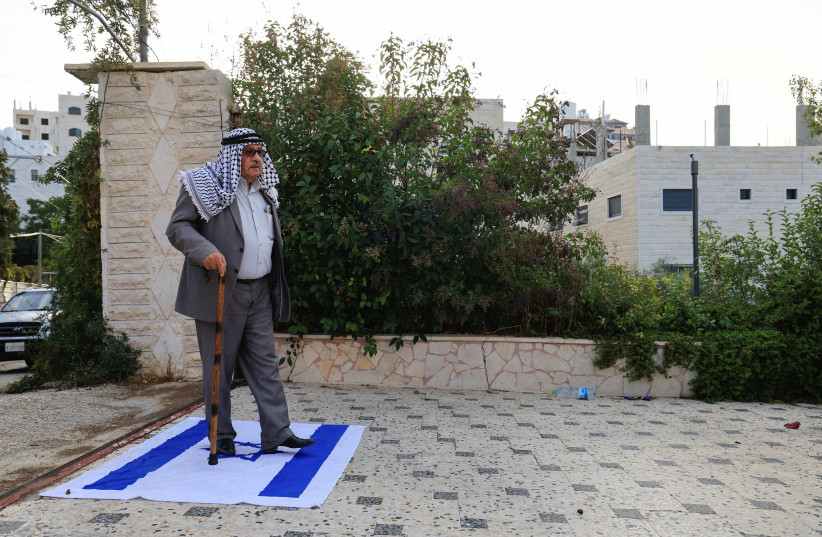
Petition alleges troops seized homes, demolished civilian infrastructure
It alleged that restrictions had hindered access to medical treatment and the movement of ambulances and emergency vehicles. According to the municipality’s figures cited in the filing, blocked access routes had prevented rubbish collection and left approximately 1,200 tons of waste accumulating across the city by Wednesday of last week.
Adalah argued that the scale and open-ended nature of the evacuations violated international humanitarian law. Article 49 of the Fourth Geneva Convention permits temporary evacuation where civilian safety or imperative military reasons require it, and requires evacuees to be returned once hostilities in the area have ended.
The petitioners contended that no specific justification had been provided for evacuations on this scale. They argued that barring residents’ return indefinitely while damaging or taking over their homes risked making their displacement lasting.