
Walking into Intelligence Minister Eli Cohen’s Tel Aviv office this week, one can’t help but notice an enormous, long and narrow red padded box right behind the door.
The box has a window in its lid, displaying an imitation M-16 rifle, and a small label that says “gift” on it in English and Arabic, as well as “Military Industry Corp.” and “Yarmouk Industrial Complex.”
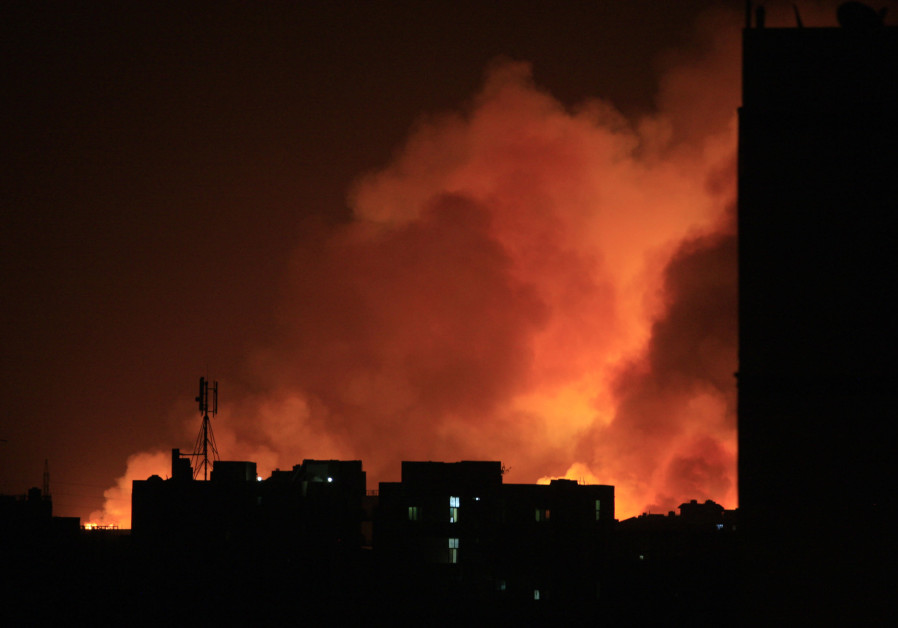
The Yarmouk munitions plant in the Sudanese capital of Khartoum was the site of a massive explosion in October 2012, which foreign sources say was due to an Israeli airstrike. That plant belonged to Iran’s Revolutionary Guard and was on Tehran’s smuggling route to Hamas in Gaza. Iran then sent warships to guard Sudan.
That was just over eight years ago, emphasizing just how groundbreaking peace and normalization between Israel and Sudan really is.
“It was exciting,” Cohen recounted. “Just a year ago, the distance between Ben-Gurion Airport and Khartoum was endless. Following the leadership of [Prime Minister Benjamin] Netanyahu and [Sudanese leader Abdel Fattah] al-Burhan, the distance is now only two-and-a-half hours.”
Cohen pointed out that not only was Sudan a way station for Iran-sponsored terrorist attacks on Israel, but Sudanese soldiers fought against Israel in the War of Independence and the Yom Kippur War.
“I have a friend who’s a lawyer who called me over the weekend to tell me how, during the Yom Kippur War, he was at the Suez Canal and was told to watch out for ‘tall Sudanese soldiers,’” Cohen said. “Israelis remember the war as being against Syria and Egypt, but there were Sudanese soldiers there, fighting Israelis.”
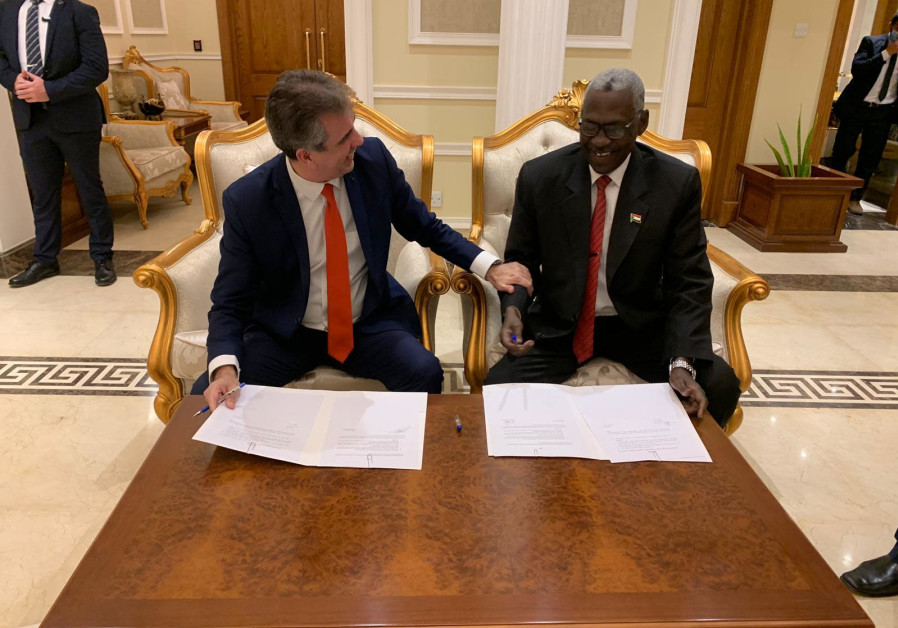
The transformation from a supporter of terrorism against Israel to a country that has forged peace with Israel is only a minor part of what has happened in Sudan in recent years. Dictator Omar al-Bashir was toppled in 2019, and since then, the African state has been attempting to transition toward democracy. Late last year, the US removed Sudan’s state sponsor of terror designation with bipartisan support, an important step toward its economic rehabilitation and international partnerships.
“I had a pretty long meeting with the president, and he said he plans to promote peace with Israel, that it is in the interest of the Sudanese people, and of their economy and security. He understands that cooperation with Israel will increase stability in the region,” Cohen said.
The minister also pointed out that relations with Khartoum are of importance to Israel, as Sudan is one of the biggest countries in Africa and has a strategic location on the banks of the Red Sea.
Israel also needs to work with countries that turned away from Tehran, Cohen said.
“Sudan made a strategic decision every country in the region must make,” the minister added. “If you want to protect your country, get Iran away from you. Every place Iran enters, it behaves like a cancer and destroys it by bringing in Islamist extremist factors… The good of Lebanon is different from what Hezbollah wants, the Houthis aren’t helping Yemen. Look at Gaza as opposed to Judea and Samaria. Where do people suffer more? Of course, in Gaza, where they have Islamic Jihad funded by Iran.”
Conversely, Cohen said, the latest peace agreements between Israel and states in Africa and the Middle East increase regional stability.
Israel has official relations with only three of those countries, yet Cohen argued “it’s in their interest that we join. Israel’s intelligence capabilities will contribute to them, because they need to defend themselves from Islamist extremists no less than we do, if not more.”
Cohen and Yassin signed a memorandum of understanding on security and intelligence cooperation, “to work together to stop terrorism and exchange defense strategies and knowledge.”
The minister also promoted Israel’s know-how in agriculture and water use, and says Israel will likely train Sudanese farmers in best practices, especially in Sudan’s large dairy industry.
LOOKING TOWARD Washington, Cohen credited former president Donald Trump with Israel’s four peace and normalization agreements and turning “the Middle East into a more open place,” saying that now “there is great hope from the peace agreements and an expectation for more… in one of the most sensitive regions in the world.”
Cohen expressed hope that new US President Joe Biden would act to expand that circle of peace, but pointed out that there are a lot of domestic issues, such as the coronavirus pandemic, that come first in the US.
Still, the minister pointed to several other countries that could be close to establishing ties with Israel, in Africa, Southeast Asia and the Gulf.
In Africa and Asia, Cohen hoped that seeing how well ties with Israel are going for other countries will create the momentum for Indonesia, Chad, Niger, Mauritania and others to normalize relations.
But in the Gulf, states like Oman, Saudi Arabia and even Qatar are looking to see what the new US administration’s policies toward Iran will be, Cohen said.
“A policy of compromises with Iran and lifting sanctions will create obstacles for future peace agreements,” Cohen said. “When in recent years the US acted determinedly towards Iran, left the nuclear deal, enacted sanctions and military operations, they felt comfortable getting closer to the West… A strong policy against Iran will mean a good chance we will see these three countries join the peace agreements.”
Gulf states “are more concerned than Israel,” he added. “Israel is strong in security and intelligence and has defensive and offensive capabilities.”
When it comes to what Israel would like to see in future US-Iran negotiations, “Iran cannot have a nuclear program at all. A good agreement is one without a nuclear program,” said the minister.
“Up until now, the agreements with Iran weren’t worth the paper on which they were written,” Cohen asserted. “Biden, who was [former US president Barack] Obama’s vice president, saw the Iranians fool the world and the Americans… They continued building nuclear facilities, developing precise missiles, establishing themselves militarily in Syria and sending money to terrorist groups… Iran never abandoned its intention to attain weapons of mass destruction.”
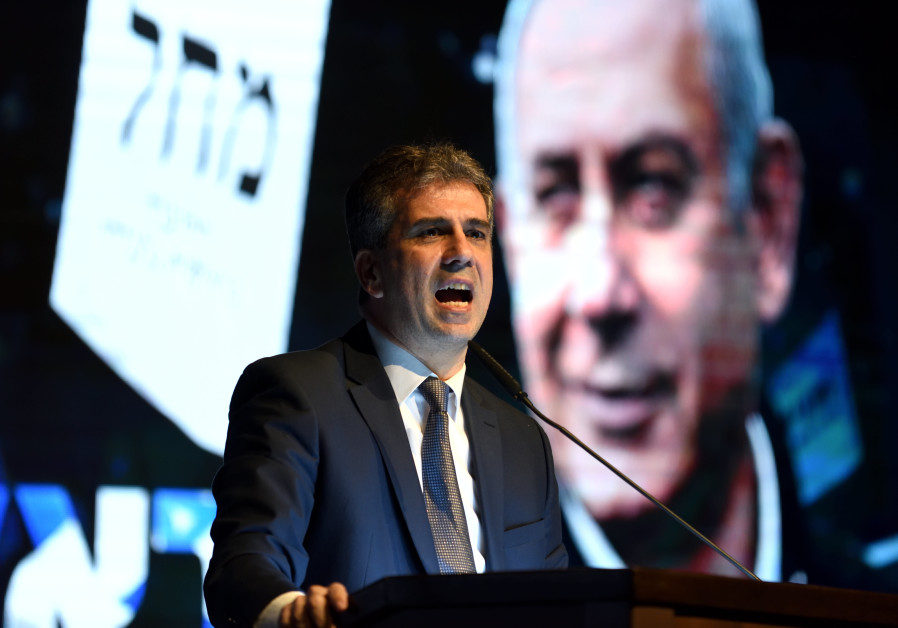
WITH AN election coming up, Cohen is running in the Likud and has choice words for the parties that refuse to sit in a coalition with Netanyahu.
“Just like we don’t tell other parties who will lead them, no one will dictate it to Likud,” he said.
Those parties must “respect the democratic results” of the election, Cohen added, pointing out that “in every poll, Likud is twice as large as the next party and Netanyahu is viewed as the best choice to lead the country.”
Cohen said he believes Israel’s biggest challenges in the short term will be working with the Biden administration on countering Iran and promoting domestic policies to lower unemployment after it spiked due to the pandemic, and that Netanyahu is the best candidate to address both.
The minister pushed back against arguments that Netanyahu has been weak on equal enforcement of coronavirus lockdown rules, allowing haredi schools to remain open against the law, among other violations.
“The Likud’s determined policies led [UTJ leader Ya’acov] Litzman to resign from the government, because we decided to close synagogues,” Cohen said. “The law to raise fines [for violators] wasn’t proposed by Blue and White, it was by Health Minister Yuli Edelstein [from Likud].”
______________________________________________________________________________________________________
– L.H.