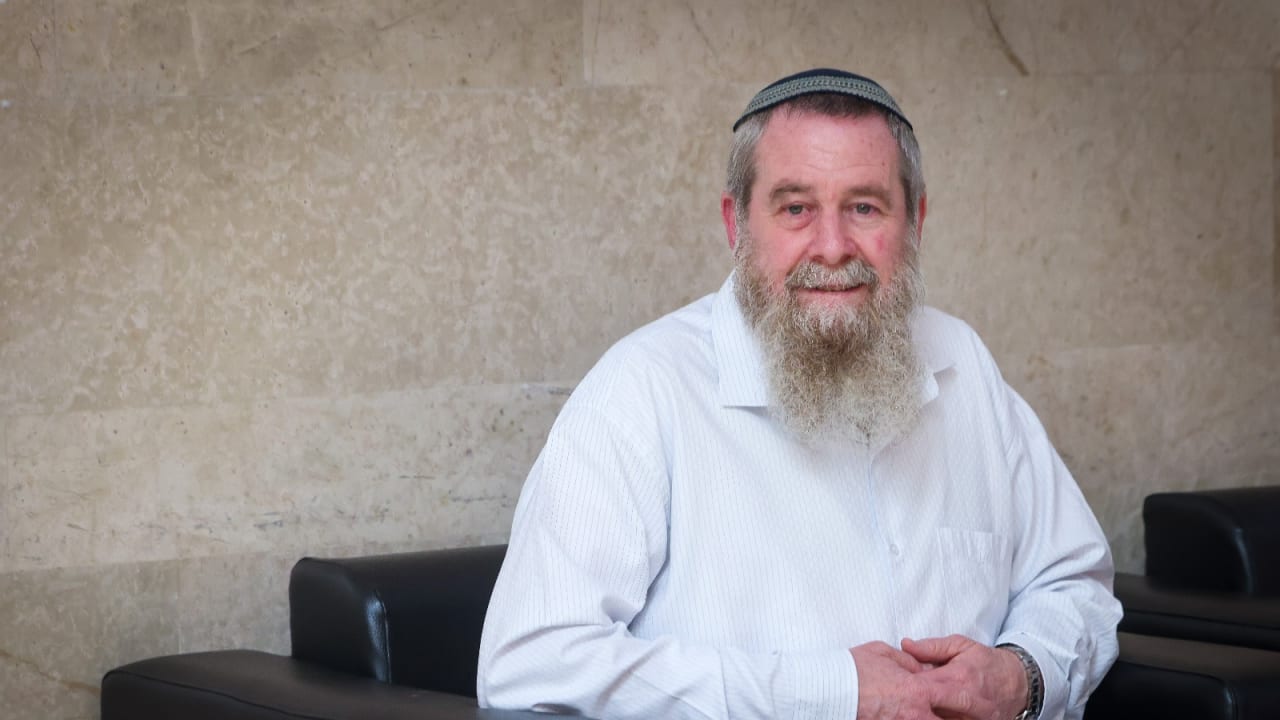
The controversial bill to place the Western Wall under the authority of the Chief Rabbinate is expected to advance rapidly in the Knesset and is the only way for the holy site to be protected in accordance with Jewish law, leader of the far-right Noam party, MK Avi Maoz, told The Jerusalem Post in a Sunday interview.
Moaz sponsored the legislation, which is scheduled to advance in the Knesset’s Constitution, Law and Justice Committee on Wednesday after passing its preliminary reading in February.
“We have one Western Wall, and we have one Judaism'
The bill seeks to grant the Chief Rabbinate authority to determine prayer arrangements at the Western Wall. It also proposes the rabbinate as the official representative of Judaism and says that the Religious Affairs Ministry would need to consult it regarding the enactment of regulations.
“We have one Western Wall, and we have one Judaism, and we will not allow the Western Wall to be divided into pieces, a Sephardi Wall, an Ashkenazi Wall, a Reform Wall, a Conservative Wall,” Maoz told the Post.
Progressive Jewish groups have strongly condemned the bill, warning that it would significantly undermine religious pluralism and freedom of worship at the holy site.

Critics also say it would essentially undermine the High Court’s ruling to upgrade the site’s egalitarian prayer plaza.
Regarding such comments and claims that the legislation would be divisive, Maoz said that he has received many responses from Diaspora Jews supporting the Rabbinate's ruling on prayer arrangements.
“I think that overall I am protecting the sanctity of the Western Wall according to the will of most of the Jewish people, both those in Zion and those in the Diaspora,” he said.
He added that he was aiming to prevent worshipers from coming to the site and not praying ”according to the custom of Israel for generations.”
Rabbinate to be the only authority to rule on matters relating to Kotel prayer
Maoz said that the Chief Rabbinate would be the only authority best positioned to rule on matters relating to prayer at the Wall.
“The Chief Rabbinate is the highest halachic authority in the State of Israel. It is also the state authority; it is also recognized by the State of Israel in law; therefore, I think it is the one that should determine what is considered behavior in a holy place and what is considered desecration of a holy place,” he said.
Maoz said that he “had no doubt” that after the legislation was passed, the Western Wall would be a unifying place.
He said he hoped the legislation would pass in its first reading before the potential upcoming dissolution of the Knesset amid the crisis in Prime Minister Benjamin Netanyahu’s coalition.
If a bill is passed in its first reading, progress can continue from where it left off, due to the Knesset’s continuity motion policy. If the bill does not pass its first reading, then when the new Knesset is formed, the legislation does not hold that status, and progress on it would be reversed.
Maoz also said that if the Knesset did not dissolve early, it would likely be possible to finalize and pass the legislation in its second and third readings by the end of the summer session in July.
Regarding the Knesset dissolution, Maoz said that he was not in favor of dissolving the Knesset and holding earlier elections.
Maoz not in favor of dissolving the Knesset
Regarding the Knesset dissolution, Maoz said that he is not in favor of dissolving the Knesset and heading to earlier elections.
Maoz became the leader of the ultra-conservative Noam party (opposing homosexuality and the LGBTQ community in general) after its establishment in 2019. He ran jointly with the Religious Zionist Party in the 2022 elections and then split off from the technical bloc. Maoz left the coalition in 2025.
As the sole representative of the Noam faction in the Knesset, he said he did not sign the proposals to dissolve the Knesset, neither those of the coalition nor the opposition.
“I think elections should be held on time. The fixed date is October 27; if not that day, it can be [moved slightly earlier to] October 19 or October 20.”
Speaking about his plans for his party ahead of the elections, Maoz said he hopes to “make connections to different populations, who feel they are not represented today.”
He added that his plans for the next government were to become the education minister.
“In education, there needs to be more Judaism, zero progressivism, and I think we need to restart the status of teachers,” Moaz said. “I think we need to restore the respect of students toward their teachers, and I think we need to raise teachers’ salaries.
“The teaching profession needs to be respected today in the State of Israel, and I am going to make a revolution in education, unlike anything that has been done since the establishment of the state,” he said.
Regarding how his party would run in the elections and whether it would merge with others, Maoz said that he was considering options but that there was still time to decide whether or not to join an alliance.
“We will see if we need alliances or not, but that is still in the future, since I support elections being on time, so we still have at least three-and-a-half months until that date.”
When asked with which parties he would be open to join a coalition, he answered that he belonged to the right-wing and “faith-based” bloc. He did not directly address the question about his plans.
Maoz also noted that, in his opinion, the current government had “tried to do many things that are not so Zionist.” He said, “I think we need to continue the reform, to bring the State of Israel to be a Jewish state.”
Regarding his stance on the West Bank, Moaz said that the bill he had proposed in October, to apply Israeli sovereignty over the area, which had advanced in its preliminary reading, was now “frozen by the government.”
“I think the government is wasting a historic opportunity,” he said, about the bill being stalled.
Speaking on the spike in Jewish settler violence in the West Bank, Maoz said that he was against violence everywhere and that it “must be dealt with.”