

The relationship between France and Israel is often described as complicated. In reality, it is profoundly historical and deeply emotional, shaped as much by political choices as by the lived experience of French Jews. To understand where we stand today, we must first recall where we come from.
The Jewish presence in France spans nearly two millennia. From Roman times through the Middle Ages and into modernity, Jews have been an integral part of French history. One of Judaism’s most influential figures, Rashi of Troyes, lived and taught in France in the 11th century, leaving a legacy that still shapes Jewish learning worldwide. This long history has forged a deep attachment of French Jews to the country they have helped build.
Structural support
France played a decisive role in the creation of the State of Israel. In the years leading up to 1948 and during Israel’s early decades, Paris was one of Jerusalem’s closest allies – politically, diplomatically, and militarily.
This partnership endured until the Six Day War in 1967. That conflict marked a turning point. General Charles de Gaulle’s controversial November 1967 statement describing Jews as “an elite people, self-assured and domineering,” combined with France’s decision to pursue a new Arab policy, fundamentally altered the tone of Franco-Israeli relations. While ties were never broken, something essential was lost.
Throughout this period – and long before it – the Jewish community of France followed a different trajectory. From the early days of the Zionist movement, French Jews were actively involved in the Jewish national project.
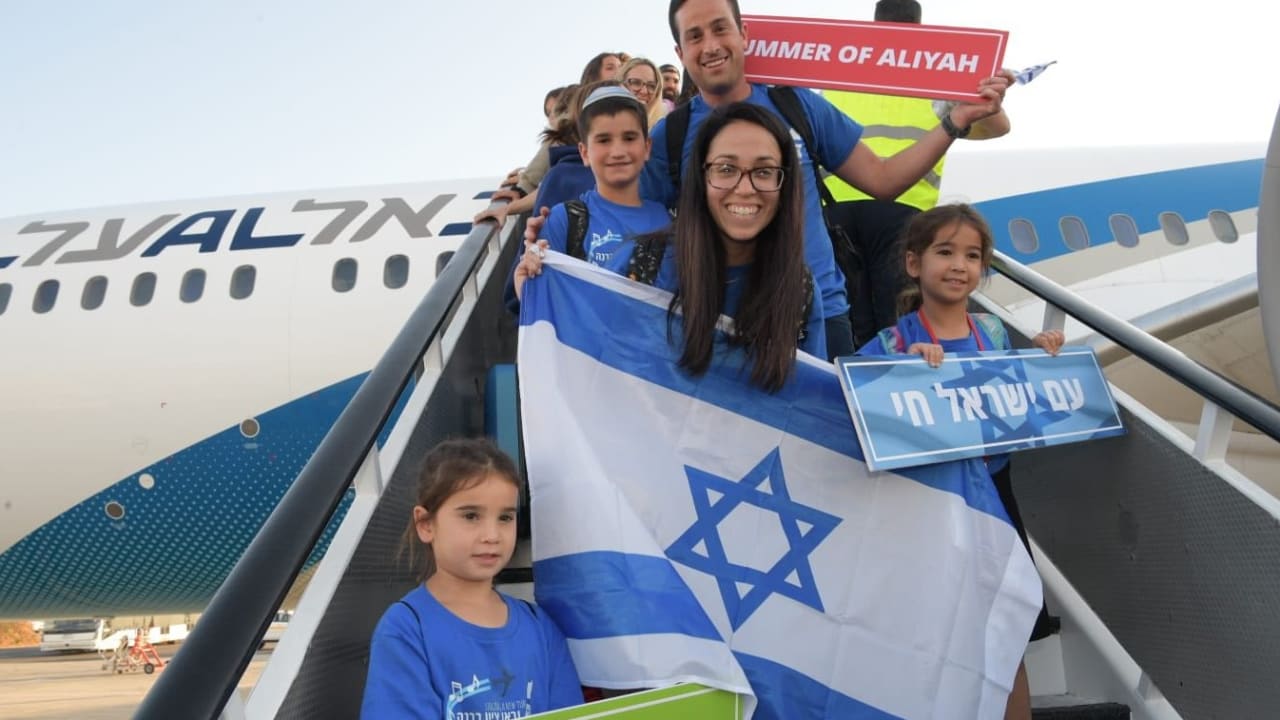
They supported Zionist institutions, helped build political legitimacy for Israel, and after 1948 stood by the young state via financial aid, advocacy, and aliyah. Their commitment was not episodic; it was structural and enduring. Across generations, despite ideological diversity, French Jewry remained deeply attached to Israel as both a refuge and a source of identity.
That bond persisted even as relations between Paris and Jerusalem experienced stark highs and lows. Aliyah from France never stopped. It averaged between 1,500 and 2,000 people per year, with sharp increases following moments of trauma – most notably after the 2012 Islamist attack at a Jewish school in Toulouse that killed three children and a rabbi.
For many French Jews, Israel was not an abstract idea but a concrete, ever-present option, woven into the fabric of communal life.
Jews targeted
However, life in France was also changing. Since 2003, there have been 12 Jews murdered in France by Islamist terrorists, targeted explicitly because they were Jewish. These murders initially left the Jewish community with a deep sense of isolation.
That perception began to shift after France itself was struck by mass-casualty Islamist attacks: the Bataclan, the Stade de France, and Nice on July 14. Terror became a national experience. Jewish suffering was no longer seen as marginal or exceptional. Jews were no longer on the sidelines of the national story, and aliyah began to slow.
October 7 shattered that fragile balance. For French Jews, the Hamas massacre was not a distant event. It was an existential shock that fused the two realities: Israel fighting for its survival, and a sudden, violent surge of antisemitism at home.
Acts and rhetoric multiplied. Demonstrations ostensibly organized around Gaza quickly became spaces of hostility toward Jews. Parts of left-wing parties instrumentalized the war for domestic political purposes, tolerating or amplifying antisemitic narratives under the guise of anti-Zionism.

The antisemitic nature of many so-called pro-Gaza demonstrations was further revealed by their selectivity; there were no comparable mobilizations for the Iranian population, nor for the Druze community or for other victims.
Moral rupture
Faced with this shocking situation, French Jews immediately mobilized. For nearly two years, weekly rallies for the return of the hostages were organized every Friday near the Eiffel Tower by WIZO and CRIF (Conseil représentatif des institutions juives de France). These gatherings became spaces of endurance, dignity, and moral clarity.
Alongside Jews, many non-Jews – including Iranians – regularly joined the demonstrations, united by a shared rejection of Hamas and of the Iranian regime. This solidarity did not remain symbolic; today, Jewish leaders, including CRIF’s leadership, are also present at demonstrations organized by Iranians in France, reflecting a growing alliance among communities confronting the same threats.
At the same time, a deep sense of resentment emerged when French President Emmanuel Macron chose to recognize the State of Palestine without any clear or immediate counterpart – particularly regarding the release of the hostages, Israel’s security, or progress toward mutual recognition.
This decision was made despite warnings and appeals from CRIF and numerous French public figures. For many French Jews, it felt like a moral and political rupture – a gesture made at the wrong moment, with the wrong message, and without regard for Jewish concerns.
Lingering antisemitism
Today, even as a ceasefire has eased international tensions, antisemitism in France has not receded. It has become more normalized and more corrosive, especially for younger Jews in schools and universities, many of whom face insults, discrimination, and social exclusion through the constant conflation of being Jewish with being Israeli.
For the first time in decades, some Jews are questioning their place in French society – not out of ideology but out of exhaustion.
This moment demands lucidity. Over the past two years, French Jews and Israel have functioned like two halves of the same heart, sharing anxiety, resilience, and hope. But shared suffering cannot be the foundation of a long-term relationship.
That is why initiatives such as President Isaac Herzog’s Voice of the People are so important. They recognize that the Israel-Diaspora relationship needs structured spaces for listening, disagreement, and mutual responsibility – not slogans, and not one-way expectations, but a genuine conversation about identity, security, criticism, and solidarity.
Diaspora Jews do not seek lessons, nor distance. They seek recognition of their lived reality and a partnership based on trust. At a time when antisemitism is reshaping Jewish life around the world, and Israel itself is redefining its place on the global stage, this dialogue is not optional. It is essential.
The future of Israel-Diaspora relations will not be built in moments of crisis alone. It must be built deliberately, together – and with the humility to listen.■
Robert Ejnes is executive director of CRIF (Council of French Jewish Institutions), the umbrella organization of French Jewish institutions, and member of the first cohort of Voice of the People.