

When I was a young reporter covering social welfare issues for The Jerusalem Post, I wrote countless stories about women’s rights, equality, and about gender-based violence in Israeli society. I interviewed social workers, heads of women’s rights organizations, and female legislators advocating for change. I also spent time with the victims, who were hoping for that change to materialize.
I ended that role more than 13 years ago. Yet, as I was putting this edition of The Jerusalem Report together, I realized that many of the same issues regarding women’s rights and violence against women remain. For some reason, even when progress appear on the surface, change – particularly concerning the place of women in society – remains slow.
As we approach International Women’s Day on March 8, this edition of the Report is dedicated to women in Israel who, as wives, mothers, sisters, and simply as human beings, have endured so much since Hamas’s brutal October 7 attack and the ensuing war.
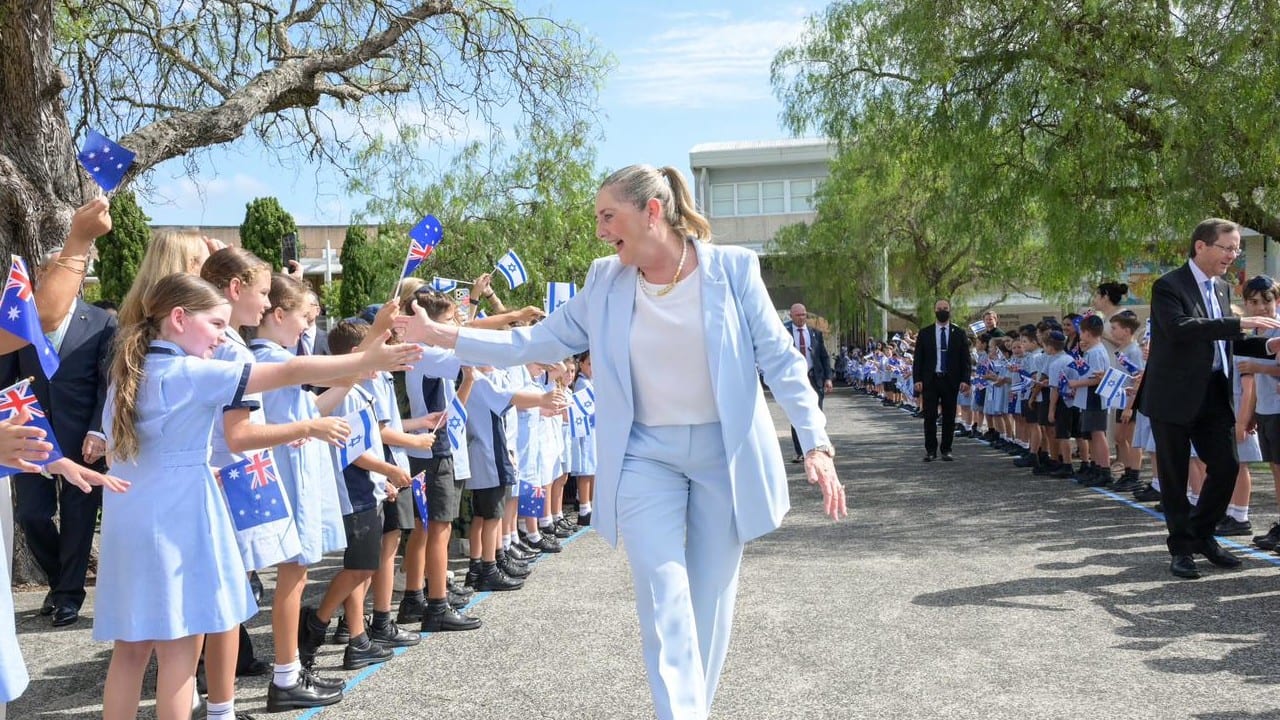
For the cover story, I interviewed Israel’s First Lady, Michal Herzog, who has been a powerful voice raising awareness about the widespread sexual violence perpetrated by Hamas on October 7, and combating the persistent denial expressed by some that Israeli women (and some men) were attacked in this way.
Cochav Elkayam Levy, founder and chair of the Civil Commission on October 7 Crimes by Hamas against Women and Children, reveals details of her upcoming comprehensive report on the atrocities committed that day and the limitations of truth and memory.
The Report’s staff writer, Chani Kaplan, takes a broader look at some of the inequalities facing Israeli women, despite the past two years of war propelling them to the frontlines.
Anat Thon-Ashkenazy, director of the Israel Democracy Institute’s Center for Democratic Values and Institutions, examines the shrinking number of women in key decision-making roles and argues that the upcoming election is the time to address this.
There is some room for optimism, too. The Jerusalem Post’s culture writer, Hannah Brown, explores the success of Israel’s female film directors; Tania Shalom Michaelian outlines Israel’s female heroes both today and in the past; and Eliana Mandell Braner, executive director of the Koby Mandell Foundation, writes about the resilience of Israel’s war widows.
Continuing the theme of brave, successful women, Dana Ben-Shimon profiles Lt. Col. Ella Waweya, the IDF’s new spokesperson for the Arabic-speaking public; Paula Slier talks to Margaret Malka Rawicz, a Jewish woman who followed the biblical Exodus route through the deserts of Egypt, and Jordan; and Rabbi Talia Avnon-Benveniste, director of the Israel Rabbinical Program at Hebrew Union College’s Taube Family Campus in Jerusalem, celebrates female rabbis who are bringing change, despite the challenges. Maya Zanger-Nadis looks at female athletes in Israel who are working to overcome the barriers to competitive sports.
Rounding out the issue, Dr. Eric R. Mandel, director of the Middle East Political Information Network, writes about the dangerous jihadism spreading in Syria; and Andrew Fox, a retired British Army officer and research fellow at the Henry Jackson Society, outlines the misinformation campaign that has been Israel’s Achilles’ heel in the two-year war with Hamas.
So much has changed in our world throughout that war, yet for women’s rights and status the battle remains. I truly hope these articles inspire you all, and together we can think more deeply about how to bring about much-needed that much needed change.
– Ruth Marks Eglash