
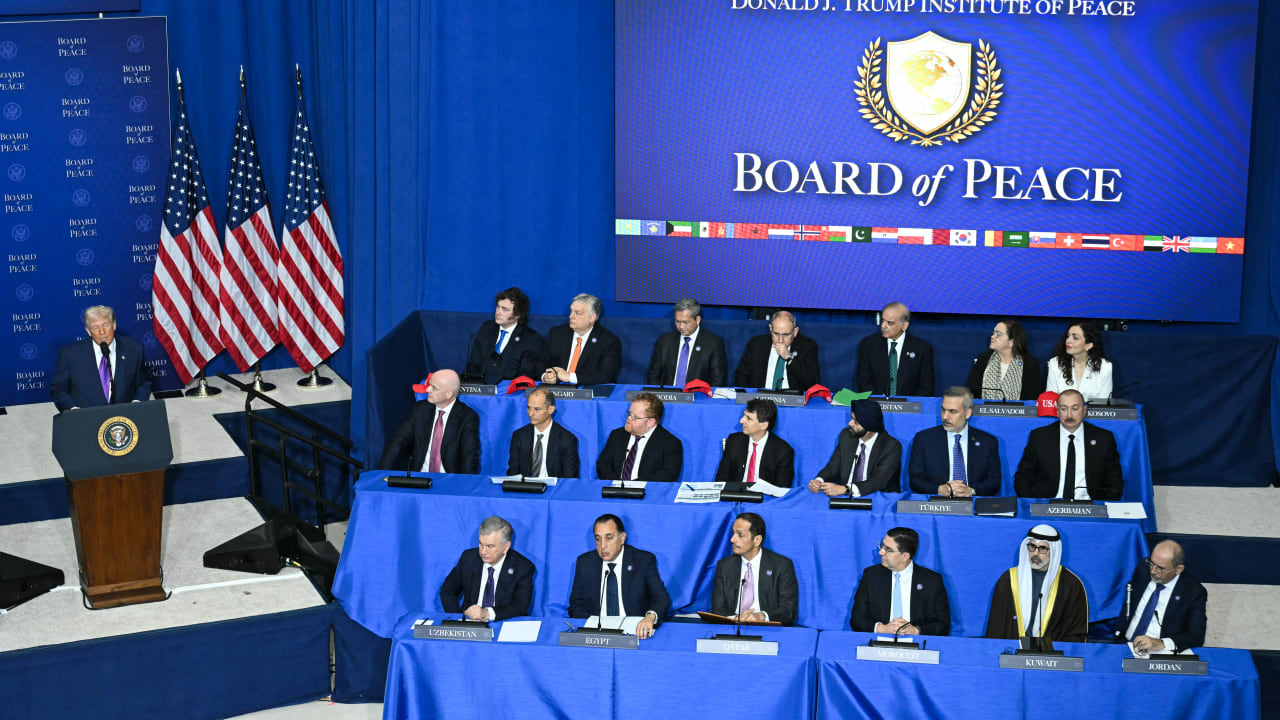

Israel is strategically caught between a rock and a hard place: dependent on the United States for resupply, diplomatic protection, and deterrence, yet forced to adapt as Washington grows more unpredictable. That dilemma now has a name: Trump’s Board of Peace, an invitation-only body marketed as a UN alternative and funded through unaudited billion-dollar buy-ins.
A pay-to-play peace
The Board is a nightmare for liberal democracies because it rewards the kind of politics that democracies are meant to restrain. Trump, as chair, wields extensive executive powers, including veto authority and the ability to remove members. Membership is time-limited unless states pay $1 billion to secure permanent status, making influence effectively purchasable. That suits authoritarian regimes: systems that can write a check without scrutiny and treat legitimacy as something to be bought.
The membership roster underscores the point. Israel stands out on the list like a sore thumb. It sits alongside a range of serial human rights abusers, including Saudi Arabia, Egypt, Qatar, and Belarus, while many Western democratic allies have refused to join. The line-up is heavily composed of authoritarians, strongmen, and dictators; membership appears to be about maintaining favor with Trump and little else.
Gaza’s post-war architecture
For Israel, the nightmare is that this is not just a sideshow. It is becoming integrated into the post-war order of Gaza. The United Nations Security Council welcomed the Board as a transitional administration to oversee redevelopment funding for Gaza and authorized it to deploy a temporary international stabilization force – even if the Board’s remit now appears to extend beyond that original aim.
Israel is therefore not merely choosing between “joining” and “not joining” an abstract institution. It is deciding whether it will have a seat at the table where its immediate security environment is being reshaped.
Israel has limited options. It must participate despite the risk of reputational damage: appearing to legitimize a forum where illiberal regimes can disguise themselves as peace-builders simply by paying the entry fee. The choice is stark – to be part of an unsightly mechanism, or to remain outside one that will influence borders, security arrangements, and reconstruction flows.
The price of dependence
Being left with no option but to participate in this farce only strengthens the case for Israel’s strategic autonomy from the United States. The Gaza war showed how American support can be conditional.

In November 2023, the White House said Israel would implement daily four-hour “humanitarian pauses” in northern Gaza. Washington framed the pauses as something Biden had sought. In May 2024, Biden’s administration paused a weapons shipment amid concern over the Rafah operations, and Biden publicly warned that the US would withhold weapons if Israel launched a major invasion without adequate civilian protection. Washington later resumed some deliveries while continuing to hold back 2,000-pound bombs.
Even under Trump, control over Gaza’s future now sits with Washington, not Jerusalem.
None of this means the alliance is dispensable. It proves it is contingent and depends on US domestic politics and a president’s preferred method of leverage. In a world where the Board of Peace concentrates authority in one American leader and blurs principle into deal-making, Israel cannot rely on the hope that future pressure will never return.
Strategic autonomy does not mean severing ties with America. It means minimizing reliance on any single source. It means increasing domestic production and stockpiles of essential munitions and interceptors; diversifying suppliers and co-production partners; and creating diplomatic flexibility so that politics in Washington cannot become a battlefield constraint in Jerusalem.
The Board of Peace is the reality Israel must navigate. Autonomy is the price of managing this without surrendering agency. Autonomy is how Israel stays allied – without being fatally dependent.■
Andrew Fox is a retired British Army officer and research fellow at the Henry Jackson Society.