

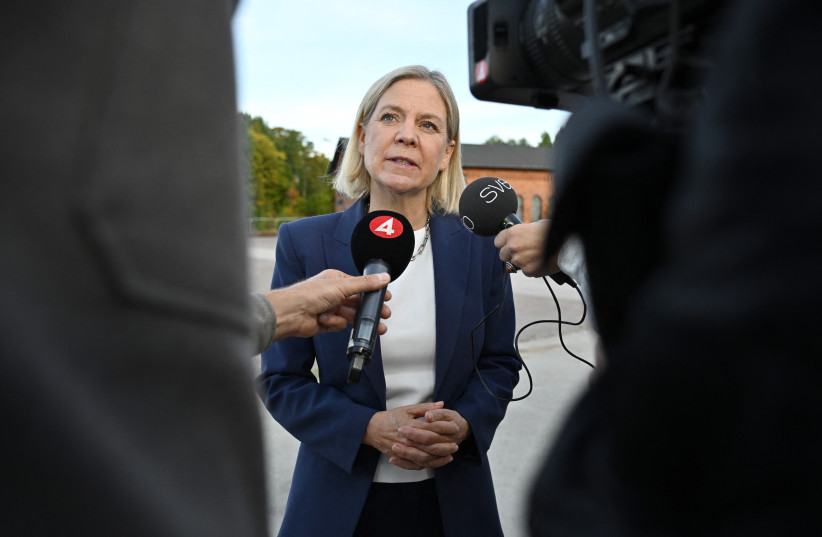
Sweden's general elections took place on September 13, the first since the country joined NATO in 2024. Voters cast three separate ballots: for parliament, regional council; and municipal council. The votes were counted by September 17, with the results shifting favoring former prime minister Magdalena Andersson’s coalition over incumbent Ulf Kristersson’s – in theory.
In practice, Andersson has had two opportunities to form a government, but has yet to succeed.
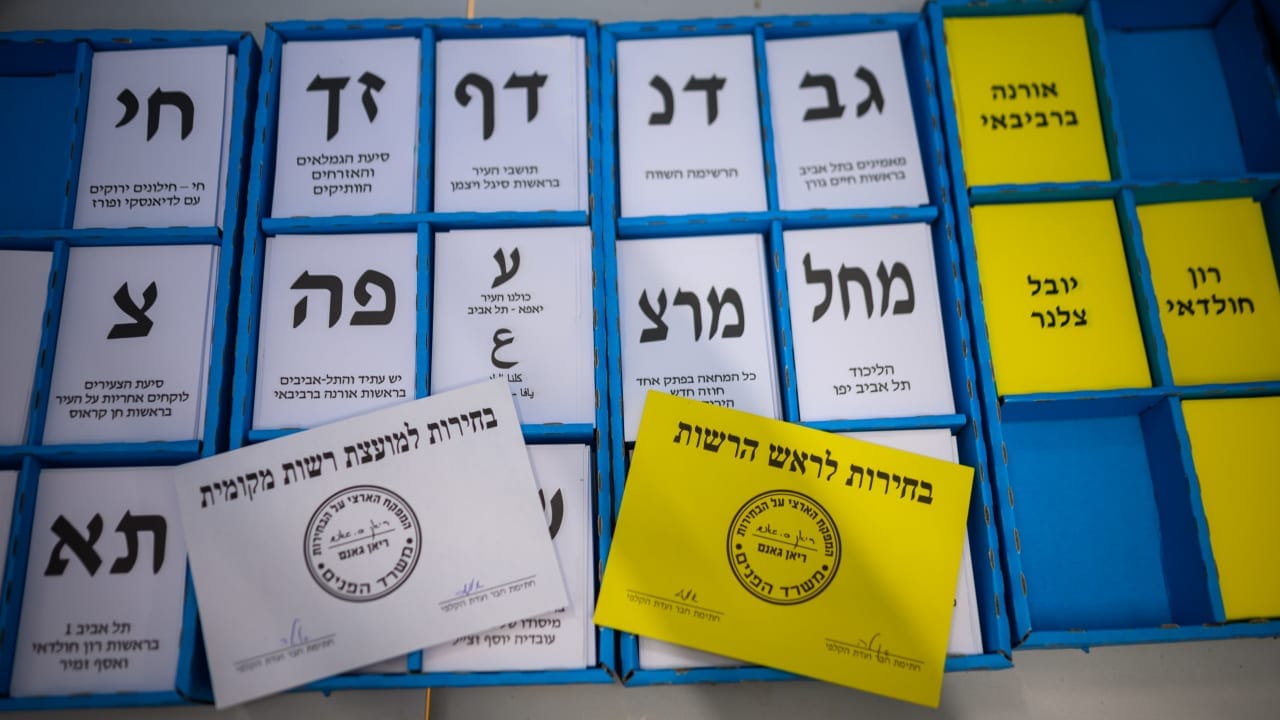
In Israel, the 2026 elections are approaching, and the main question sometimes seems to be not “who will win,” but “will anybody manage to win?” Prime Minister Benjamin Netanyahu’s coalition has lost unity, with the haredi (ultra-Orthodox) parties opposing arrests for draft evasion, and other right-wing parties (such as Ofer Winter’s People of Israel) splitting the potential vote.
Meanwhile, opposition parties appear unlikely to form a majority without allying with an Arab party – something nearly all have ruled out.
These two countries are thousands of kilometers apart, with vastly different cultures, histories, and demographics. Yet during election season, both face similar struggles: the difficulty of forming a government. Why?
Proportional politics
Both Israel and Sweden use party-list proportional representation, in which parties receive seats in parliament – the Knesset or Riksdag – roughly proportional to their share of the vote. Forming a government, requires sufficient parliamentary support, generally through a coalition.
In Israel, the president typically gives the leader of the largest party the first opportunity to form a government. The president, however, has some discretion: if that party is unlikely to secure a governing majority, or fails to do so, the president may turn to another party leader. In extreme cases, where no party can form a government, new elections may be called.
In Sweden, the Riksdag speaker, rather than a president, proposes a prime minister; the parliament has 349 seats, compared with Israel’s 120; and Swedish elections use an “open list” system, allowing voters to influence the order of candidates on a party’s list.
Both systems remain vulnerable to political divisions. In Israel, parties often struggle to form cohesive coalitions, while in Sweden some parties refuse to sit with others. The result can be the same: electoral deadlock.
A familiar stalemate
Between 2019 and 2022, Israel held five elections, as no party was able to form a stable government. Two governments were briefly formed during that time, including one led by Netanyahu and Benny Gantz in 2020 and one led by Naftali Bennett and Yair Lapid in 2021, but neither lasted longer than a year and a half. Only after the 2022 elections, when Netanyahu’s right-wing camp secured a parliamentary majority, did Israel establish a longer-lasting government.
The 2018 Swedish election resulted in a similar, though shorter, deadlock. The final Riksdag tally was 144 seats for the center-left “Red-Greens” group and 143 for the center-right “Alliance” group. With neither bloc holding a majority, negotiations and repeated attempts to form a government lasted 132 days, until the Red-Greens, led by Stefan Lofven’s Social Democratic Party, secured enough support for Lofven to be re-elected prime minister.

Representation’s price
This year’s elections in both countries appear to be heading toward similar difficulties, with parties struggling to gain enough allies and support to form and maintain a stable government.
While party-list proportional representation has several advantages over a two-party system, such as that of the United States, it also has disadvantages. In a two-party system, government formation is generally more straightforward, without the need for multiparty coalition negotiations.
On the flip side, proportional representation brings more voices to the table, allowing for greater minority representation and a broader distribution of political power among different groups.
The more voices are added, however, the more difficult it becomes to form a singular governmental unit amid disagreements, ideological clashes, and the endless struggle for political dominance. ■