
“Two souls unite,” he writes. “I look deep into his eyes, two penetrating eyes, quite similar to the eyes of the Gateshead [yeshiva] rabbi. Are they siblings?”
Tenenbom undertook his six-month exploration of Britain and the British during 2018 and 2019, at the very height of the political storm that followed the Brexit referendum – the nation-wide vote in favor of Britain leaving the European Union. Brexit certainly features prominently in the many discussions and interviews he records both with ordinary folk and also with political figures at the very heart of the frenzy. He delights in stripping away their pretensions and hypocrisies.
Interviewing leading lights in the Labour party, for example, he found it virtually impossible to get any to say outright that Jeremy Corbyn was an antisemite, though they would endorse every such charge against him. After all, Corbyn could possibly have become Britain’s next prime minister. Speaking to Members of Parliament, he found that most had voted to remain in the EU and were now quite prepared to ignore and overturn the Brexit referendum result. Tenenbom throws scorn on the range of specious arguments they advance for doing so.
Traveling throughout the UK, and spending time in each of the four nations that comprise it – England, Scotland, Wales and Northern Ireland – one common phenomenon that Tenenbom encountered was strong pro-Palestinian feeling. He found it in every corner of the British Isles, and indeed beyond, for he included a tour of Eire (Ireland outside the United Kingdom), in his journey.
He records this widely held sentiment dispassionately, together with the anti-Zionist, anti-Israel or frankly antisemitic views which often accompanied it and which, when probed very gently, were clearly based on falsehoods or frightening ignorance. He also records finding the Palestinian flag fluttering across the land in the most unlikely venues – on pubs, outside shops, atop municipal buildings.
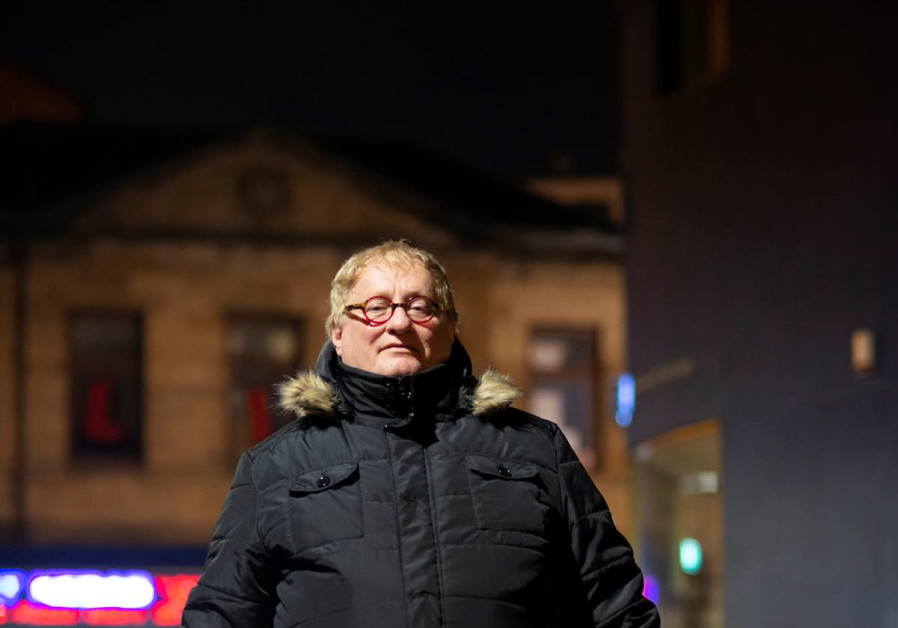
Tuvia Tenenbom is a man of many parts. Born in Israel, he now resides mainly in Germany and the US. A graduate in mathematics and computer science, he holds a PhD in English literature and is also a playwright and the founding artistic director of the only English-speaking Jewish theater in New York. During his in-depth tour of Britain, he naturally gravitates towards any theatrical performances that come his way. He sometimes chances on a production that delights him – like The Producers in Manchester, or Macbeth in Oxford – but many do not.
It was while enjoying Macbeth that a thought about Shakespearean theater struck him – it exactly mirrors some of the innate characteristics of the British people. Much of Shakespeare is about their history, their complex relationship with monarchy, their fights with one another, their hypocrisy. On the stage, as off it, they talk nicely to one another, then stab each other to death. “There’s daggers in men’s smiles”. As on the stage, so in the House of Commons, observes Tenenbom. It’s all “the honorable gentleman” and “my right honorable friend” said with the tongue, as poison drips from the lips.
When he visits Stratford-upon-Avon, the birthplace of Shakespeare and the home of the Royal Shakespeare Company, he records a major disappointment. He had been looking forward to a night with the Bard, but discovers that something of Shakespeare’s was not on offer. He was somewhat placated when he discovered that the RSC was presenting a production of Molière’s Tartuffe, which he knew to be a delightful comedy about religious hypocrisy. However his heart sank when he read that this Tartuffe was “a brand-new version…relocated to present-day Birmingham’s Pakistani Muslim community”. Tenenbom describes it as a politically correct disaster. He had expected to see the best of theater, he writes, but he ended up seeing the worst. “I can hear Molière screaming from the depth of his grave.”
Another of Tenenbom’s characteristics is his unashamed love of good food. He is, to put it bluntly and in French, a bon vivant. Wherever his travels lead him, he will tend to seek out – and to relish – the best eating that the place can offer. The Taming of the Jew offers the reader many pleasures, but none more than details of the restaurants where the visitor to the UK can find culinary delights.
In April 2019, with his time in Britain drawing to a close, Tenenbom was interviewed on the UK-based Jewish TV channel known as J-TV. In the 20-minute program, still available on YouTube, Tenenbom describes what motivates his undercover journalistic work. He does not go looking for antisemitism, he says. He sees his task as spending some six months in a country and trying to discover what people are thinking. “Sadly,” he says, “what often emerges is The Jew.”
He acknowledges that his conclusions are not statistically based, but after speaking to literally hundreds of individuals he says certain clear themes emerge. The over-riding impression he has gained, not only in the UK but wherever he has traveled, is that age-old antisemitism is alive and flourishing.
That theme certainly emerges from the amazingly frank, amusing and sometimes hilarious encounters that Tenenbom records in The Taming of the Jew – a picture of Britain that in so many ways echoes what Anglos born in the UK will ruefully acknowledge to be accurate. What is no longer so and has passed into history is the tumultuous political scene he encountered. Now, less than two years on, Brexit is done and dusted, the hapless prime minister Theresa May has given way to another, Jeremy Corbyn has left the scene, the braying Speaker of the House of Commons that so irked Tenenbom has departed, and the country is only slowly emerging from the totally unforeseen and unprecedented crisis of the coronavirus pandemic.
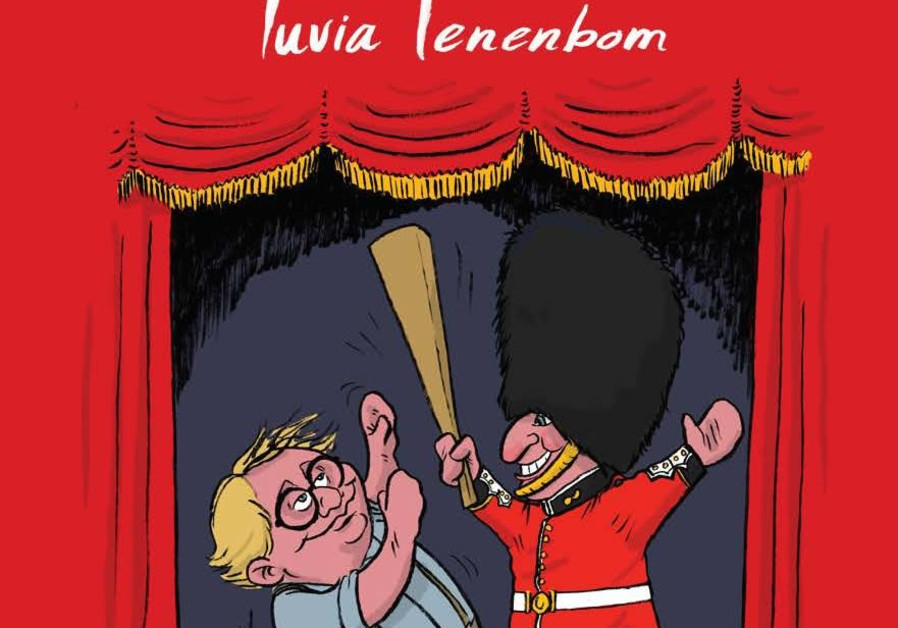
Tuvia Tenenbom
Gefen Publishing House, 2021
504 pages; $24.95