
Many Jews have turned to prayer during the Israel-Hamas War to voice our deepest longings – that Israel’s enemies be defeated and that our hostages and soldiers return safely. Public recitation of Psalms surged, along with supplications like “Avinu Malkeinu,” usually reserved for fast days or the High Holy Days. It was natural to hold such gatherings on Shabbat, when synagogue attendance is highest.
Yet here we encounter a tension: Petitioning God on Shabbat is generally restricted. That boundary reflects something essential about the sanctity of the day and the very nature of prayer.
We often imagine Shabbat as the day when prayer reaches its peak. Services are indeed longer, but this results mainly from extended Torah reading, the addition of Psalms, and the Musaf Amidah.
Forbidden to pray?
Paradoxically, the Amidah itself is shorter. Unlike the weekday versions, it omits the central petitionary section of 13 blessings, the very heart of daily prayer. My teacher, Rabbi Aharon Lichtenstein, once remarked that weekday prayer is defined by angst: “Distress and outcry are at its core. Anguish is its middle name.” Shabbat, by contrast, insists on a different tone.
The Jerusalem Talmud bluntly declares: “It is forbidden for one to demand one’s needs on Shabbat.” Maimonides codified the same principle: “It is forbidden to fast, to cry out, to plead, or to beg mercy on Shabbat.”
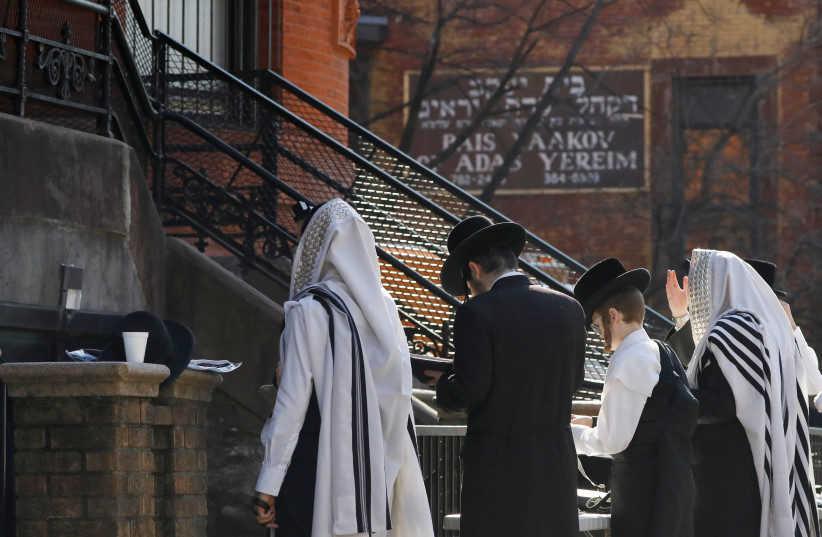
Why such restrictions? The commentators give two reasons. First, confronting illness or crisis arouses pain and disrupts the sanctity and joy of the day. Second, such concerns resemble weekday “business,” violating the ban on mundane speech. The sages asserted that even comforting mourners and visiting the sick were permitted only with hesitation.
Exceptions to the rule
One sage, when leaving a patient on Shabbat, avoided direct prayers for healing. Instead, he would say, “It is Shabbat, when one is prohibited to cry out. Healing is soon to come, His compassion abundant; rest on Shabbat in peace” (Shabbat 12a-b). In this view, the merit of Shabbat itself, not petitionary words, elicits divine mercy.
Yet the sages did not ignore moments of true emergency. In times of communal danger, such as when a city faced siege or flood, special prayers were mandated even on Shabbat (Taanit 19a).
This precedent, codified in Halacha (Orach Chaim 288:9), has guided contemporary rabbis who permitted public petitions on Shabbat, especially during the most dramatic weeks of the Israel-Hamas War. The Talmud extended the dispensation to individuals pursued by thieves or hostile enemies. Just as one may violate Shabbat to save a life, so too one may “violate” its spiritual repose with urgent prayer for deliverance.
Later authorities debated the scope of this allowance. Some limited the exception strictly to extraordinary threats, excluding prayers for the sick. Others allowed petitions only for those gravely ill, expected to die on Shabbat itself. Yet, as Rabbi Binyamin Hamburger has documented, some sages, spurred on by popular practice, widened the circle. Communities began to recite prayers for the ill, even when not critically sick or in imminent danger of dying that day.
As a compromise, some rabbis recommended adjusting the prayer itself to insert the phrase “Shabbat is not a time for outcry,” thereby softening petition into blessing. This formula evolved into the familiar “Mi She’berach” prayer for healing, recited during Torah reading. It preserves Shabbat’s atmosphere while acknowledging the human need to pray for those in need.
The High Holy Days
The High Holy Days, however, are different. They are days of judgment, when “The Books of Life and Death are open before us” as we state in our prayers. On such days, open pleas for mercy are entirely appropriate.
As the medieval commentator Rabbi Menachem HaMeiri asserted, “Everything is incidental to the essential point, which is prayer, submission of the will, total commitment to God, and praise and thanksgiving.”
In fact, while Ashkenazi communities typically omit “Avinu Malkeinu” when Rosh Hashanah or Yom Kippur falls on Shabbat, Sephardim recite it regardless, a position that the medieval communities of Provence also maintained with the Meiri’s support.
Striking the balance amid war and captivity
This year, amid war and captivity, Jews across the spectrum will surely include petitions for Israel’s safety and the swift return of soldiers and hostages.
The tension between restraint and outcry is not merely technical. It teaches us how to pray with discipline. Shabbat’s restriction is not indifference but a deliberate act of sanctity. Halacha preserves the day as one of rest and peace. We visit the sick with blessing, not lament, and we reserve cries of distress for the most acute dangers, like war, pursuit, flood. That restraint prevents Shabbat from becoming a weekly crisis bulletin, its rest consumed by constant anxiety.
As Rabbi Lichtenstein noted, “On Shabbat, we do not escape either the state or the sense of need. That would deny our creaturely humanity. We do, however, reorient our needs.”
By contrast, the Days of Awe invite full-throated petition. Judgment hovers, repentance beckons, and “Avinu Malkeinu” gives expression to our trembling hopes. Law shapes tone. On Shabbat, compassion must harmonize with peace; on the High Holy Days, pleading joins repentance, charity, and repair.
Together, these rhythms cultivate mature spirituality: faith that rests without denial, and prayer that pleads without despair. In this wounded season, after nearly two years of war, such balance allows our words to rise cleaner, our actions to remain steadier, and our hope to endure more resiliently.
May all of your deepest prayers be heard in this holy period. ■
The writer is the executive director of Ematai, which is dedicated to helping Jews navigate end-of-life care with Halacha and Jewish wisdom. www.ematai.org