
On February 9, 1413, in the third session of the Tortosa Disputation, a converted Jew named Gerónimo de Santa Fé (Yehoshua ben Yosef) stood before Antipope Benedict XIII and produced a line from the Talmud which, he said, proved the Messiah had already come.
The pope agreed with him.
A rabbi from Daroca, in the province of Zaragoza, named Joseph Albo cried out, somewhat violently, that it changed nothing.
“If it was proven to me that the Messiah had already come,” he said, “I would not consider the Jew is worse off.”
It is tempting to read the book Albo wrote afterward as a long version of that outburst, a wall thrown up against Christian pressure. However, Sefer Ha’ikkarim, the Book of Principles, is much more than that; it is one long work in four books, more than 1,700 pages, and the disputation occupies almost none of it.
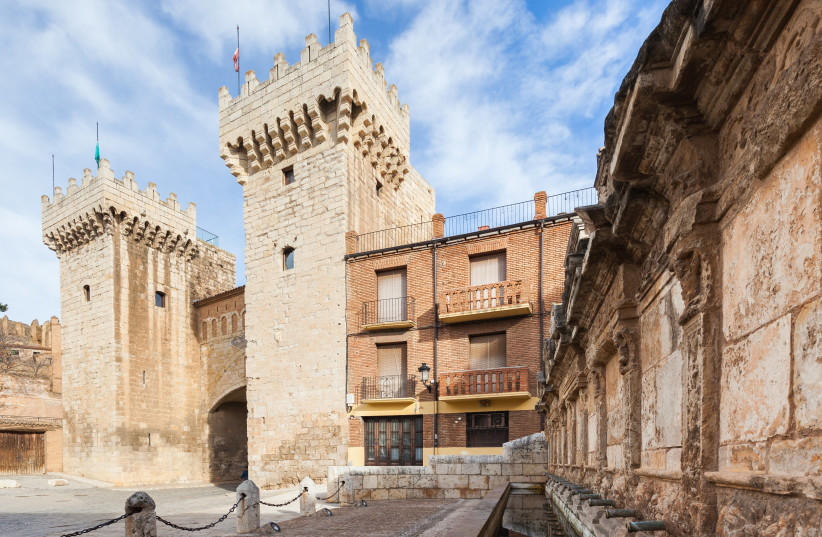
Faith, not philosophy, at the center of salvation
What Albo built is a complete system of Jewish belief, and an unusually readable one. His own foreword says the purpose was not to win an argument but to show what a divine law is and to guide a person toward true happiness.
It reaches English readers in Joseph Albo: Collected Writings, a volume built on Isaac Husik’s complete translation, which has been the standard English text for nearly a century, with a new introduction, as well as the first English version of Albo’s only surviving responsum.
Maimonides had fixed the principles of faith at 13. Hasdai Crescas brought them down to six, and Albo went further still, to three: the existence of God, revelation, and reward and punishment. He meant them as roots, the few truths a divine law cannot stand without, the ones everything else grows from. Reducing them was not a retreat into minimalism. It was an argument about where the weight of the whole structure rests.
Maimonides had placed the perfected intellect at the center of religious life and made knowledge the road to immortality. Crescas rejected that and put the love of God in its place. Albo took the same turn and argued it across hundreds of pages.
What saves a soul, he held, is not speculation but faith, devotion, and the performance of the commandments. “Faith stands higher than speculation,” he wrote, and “miracles are performed for men of faith, and not for men of speculative knowledge.” Eternal life is open to the ordinary believer, not reserved for the philosopher.
To a community that had just watched its scholars dragged onto a stage and its neighbors pressed to convert, unsure of what they still believed, that was no fine distinction. It was a door held open.
Maimonides had made the mind the path to God. Albo made it faith. That turn, more than any shared persecution, is the real inheritance the two volumes carry.
The longest of the four books is given to the hardest question a believer faces, which is why the faithful suffer. Albo returns to it through Job, through Jeremiah, through the bitter psalm of Asaph. “I cannot forget the sorrow I feel,” he writes there. “Why do the ways of the wicked prosper?”
A scholar who had lived through the massacres of 1391 dedicated his longest book to why the good are afflicted and what in them outlasts the body. That, far more than any polemic, is the book’s center of gravity.
The path he maps is not a grim one. The highest service, he insists, is from love and not from fear, and even the commandments the mind resists should be performed with joy, the way a person digs gladly for buried treasure.
Albo wanted a faith a person could live inside, not merely assent to.
Husik, whose translation this is, calls Albo a compiler, and the charge has weight. He drew whole discussions from Crescas, from Simeon ben Zemah Duran, who had already named the same three principles, and from Aristotle, often without credit. The originality of the Ikkarim is not in its raw materials. It is in the order he imposed on them and in the plain preacher’s voice that carried hard ideas to people who needed them.
The polemic is present, but it is one room in a large house.
In the 25th chapter of the third book, Albo takes apart the Trinity, the incarnation, and the Eucharist on rational grounds, and for centuries censors cut that chapter from the printed editions, keeping his praise of the Torah and deleting his attack on Christianity. Husik’s critical text restores it.
The single responsum that closes the volume shows the same mind in Halacha. A woman twice widowed, one husband killed in the 1391 massacre at Valencia, is freed to marry again because, Albo rules, a death decreed upon a whole community is not the verdict of one woman’s fate. He learned the ruling, he notes, from Crescas.
Albo ended his book on the priestly blessing, on the last three words, “and give you peace.”
Material prosperity and the perfection of wisdom pull against each other, he writes, and a person is the place where they collide. Peace is the name for their reconciliation, and it is also a name of God.
JOSEPH ALBO: COLLECTED WRITINGS
Edited by Shira Weiss
Library of the Jewish People/Koren
1,766 pages; NIS 180