
There are periods in history when it feels like reality is shrouded in darkness, violence, war, and suffering – times when change and a better future seem out of reach.
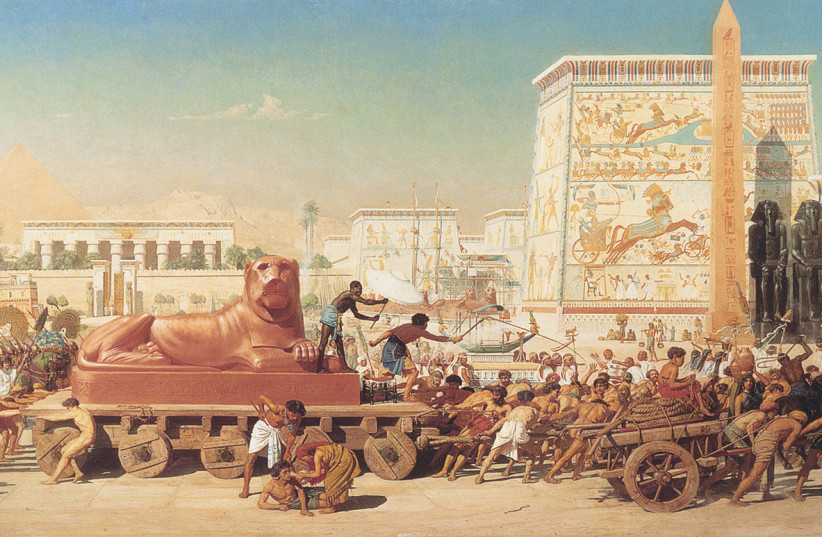
Such was the reality in Egypt as described at the beginning of the Book of Exodus. We read of the despair of an enslaved people and of Hebrew infants condemned to death by Pharaoh’s decree. Within this reality appears the presence of Miriam, who refuses to accept this fate, who believes in hope and life even when everything around seems lost.
Even before the Exodus from Egypt, before the great miracles and the splitting of the Sea of Reeds, Miriam kept hope alive. According to the midrash, Miriam and her mother were the courageous midwives who saved babies’ lives in defiance of Pharaoh. Miriam encourages her father, Amram, not to surrender to despair and Pharaoh’s decree but to bring new life into the world.
When it is no longer possible to hide her younger baby brother, and he is placed in the Nile River’s bulrushes, Miriam continues to watch over him in hope.
When Pharaoh’s daughter, defying her father, draws a Hebrew baby out of the river and names him Moses, Miriam approaches her and offers to find a Hebrew wet nurse.
Within a world of harsh decrees and cruelty, Miriam creates a human partnership that crosses boundaries for the sake of saving life. Out of such human moments of courage, Miriam embodies life-sustaining leadership that connects people across opposing nationalities, leading the way to a different reality.
Miriam and the profound expression of the spiritual source of life
Years later, when redemption comes and the people leave Egypt and cross the Sea of Reeds into freedom, the Torah describes how the women follow Miriam the prophet with timbrels and dancing.
Miriam, the visionary, now leading with drum, dance, and song, demonstrates how to celebrate life and freedom in music and movement, body and spirit.
The sages saw in Miriam’s leadership and the song of the sea a profound expression of the spiritual source of life. In a midrash on Psalm 87, it is said: “Singers and dancers alike say: ‘All my springs [sources] are in you.’”
Rabbi Yehuda bar Rabbi Simon said in the name of Rabbi Meir: Just as a well brings forth fresh water at every moment, so the people of Israel sing a new song at every moment. The rabbis say just as the men sing, so too the women sing, as it says – “Singers and dancers alike say: ‘All my springs are in you.’”
Song, like a well of water, emerges from the depths of life and from the Holy One through women and men alike. Song and hope, like the well, can replenish themselves when they are connected to the sources of life. Miriam embodies a form of leadership that connects us to the springs of life for humanity as a whole. Miriam’s well of living water, according to the midrash, accompanied the Israelites in the wilderness.
In the arid desert, water is key to survival. But Miriam’s well is not only a physical source of water; it is also a symbol of sustenance in the desert.
Wells connect the surface of the dry desert with the hidden waters of the deep. Beneath the surface of a desolate reality lie deeper sources of life. Miriam embodies the divine well that we all drink from, a source of life that continues to flow even when everything around appears dry and barren.
The prophet Micah, who calls on the people “to act in justice, to love kindness, and to walk humbly with God,” describes the leadership of the Exodus as a trio as well: “I sent before you Moses, Aaron, and Miriam” (Micah 6).
The three siblings lead the people together. A midrash on the Song of Songs, reflecting on the verse “O that you were like a brother to me,” teaches that in contrast to the stories of fraternal conflict in the Book of Genesis, what we long for is precisely this kind of siblinghood and shared leadership – a leadership of support, capable of bringing about the repaired and just society for which we yearn.
The Torah does not reflect perfect leaders, and family relationships are not perfect, either.
Miriam herself is criticized and punished when she and Aaron gossip about Moses and his Cushite wife. As a result, Miriam is struck with leprosy. However, the story does not end with illness and separation but with a healing prayer from Moses and the solidarity of an entire people. The whole community waits for Miriam until she recovers. Here, too, we learn about leadership – a leadership that includes complexity, but also the possibility of growth and healing through deep connection and mutual responsibility.
This Passover, in the shadow of our harsh reality of war, we ask ourselves, “Who are the figures who can strengthen us? What can awaken in us hope for a better future? From whom or from where comes our salvation?”
Perhaps especially at these moments, the presence and leadership of Miriam can give us hope. Miriam does not lead through domination and power but through courage, connection, and spirit, instilling hope and creating partnerships across boundaries for the future.
Miriam’s leadership does not avoid or erase hardship; on the contrary, it looks it directly in the eye. Yet Miriam’s well and leadership remind us that even when there is “darkness upon the face of the deep” (Genesis 1:2), the Divine Spirit hovers over the waters, and there are hidden divine springs of water within and around us that continue to flow.
May we, through Miriam’s inspiration, through connection and partnership, imbibe these springs of life, enhance their flow and sustenance within our nation and across nations, bringing hope and redemptive care to those around us and to our current reality.