
Although the most important question following the Israel-Iran War is the status of Iran’s nuclear program, close behind is how much the IDF and the Mossad have taken down Tehran’s ballistic-missile program.
According to top IDF sources, by the time the IDF attacked on June 13, the Islamic Republic not only had 2,500 ballistic missiles – more than the 2,000 most frequently reported number – and it was not only on the way to building a new facility for mass producing ballistic missiles, but the facility was so far along that IDF Intelligence estimated that by 2026, Iran would jump to 6,000 missiles, by August 2027 to 8,800 missiles, and at that rate, it would have reached more than 10,000 missiles sometime in 2028.
This is a smaller number than Prime Minister Benjamin Netanyahu claimed on Wednesday, when he said Iran could have reached 20,000 ballistic missiles if Israel had not attacked it now.
Based on the rate described by senior IDF officers, reaching 20,000 probably would have taken until into the 2030s – not exactly an imminent threat.
Also, top IDF sources said Tehran’s number of ballistic-missile launchers prewar was about 400.
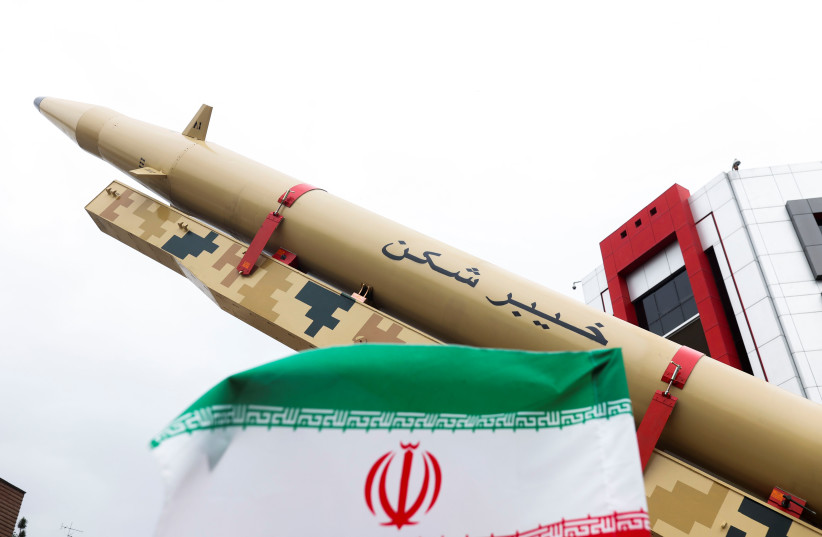
Senior IDF officers on Thursday said the IDF has destroyed about half of those, although based on other IDF officers’ statements, that number may be closer to two-thirds, meaning there are now likely fewer 200 remaining.
This is part of what led to a drop in the volume of Iran’s average missile salvos from 200 to 100 to 75 to 50 to between 20 and 30 to about 10 by the end of the war, and what has – at least so far – left Israel some breathing room regarding the ballistic-missile threat.
The Jerusalem Post has clarified with senior IDF sources that while Iran had increased its production of missile launchers, it was not at the same rate as the expected increase in ballistic missiles themselves.
Iran's ballistic missiles threat is lowest in years
Looking forward, if Iran does not throw itself immediately into rebuilding its dozens of destroyed sites – and this may not be easy to do while it also may want to rebuild nuclear sites, and IRGC and Basij sites – the threat for the near to medium term from Iran’s ballistic missiles is the lowest it has been in years.
Of course, Israel will need to stay on guard against the program eventually being rebuilt.
Looking backward, the point is that Iran was on track to have volumes of ballistic missiles that could overwhelm Israel’s defense shield far more than what the country witnessed during these 12 days.
While much of the focus has been on the low number of deaths from the 500 ballistic missiles Iran launched, 36 of which struck residential areas, “only” 28 people were killed, more than 1,250 were wounded, and 2,305 residences were heavily damaged, with another 13,197 having had their roofs destroyed.
Imagine that Tehran could have fired several salvos of 500 ballistic missiles and gotten through 14% – the rate they got through Israel’s generally excellent missile-defense shield – of them each time.
And imagine that instead of 36 striking residential areas, 400 or 500 out of 3,000 missiles got through.
Suddenly, the death toll could have easily reached the several hundred that senior IDF officers said they had expected, and the property damage could have left large portions of Tel Aviv and Haifa desolate instead of being restricted to a few horrid but self-contained sites.
None of this is hard to imagine, factoring in Iran’s quick recovery after its ballistic-missile production program was hit in October 2024 – after which Israeli officials said the production would be setback by years – and following IDF Intelligence indicating that the ayatollahs were leaping forward in this area.
In another part of his speech on Wednesday, Netanyahu said: “With the same force and determination, we destroyed Iran’s industry for producing ballistic missiles. We destroyed dozens of missile production factories. We struck hard at their stock of missiles. We destroyed most of their launchers. In many cases, we destroyed them minutes before they could launch their missiles of death at Israel. Iran’s malicious intention, to threaten – within a few years – the existence of Israel” had to be stopped.
On Thursday, senior IDF officers left little doubt that – independent of the nuclear threat – Israel was close to a point of no return in which it would have had to launch a dramatic attack on Tehran’s ballistic-missile program or face an existential threat from that vector.
Following Iran's launching of more than 100 missiles at Israel in April 2024, and more than 200 missiles last October, senior IDF officers were not going to wait to give the Islamic Republic a third chance.