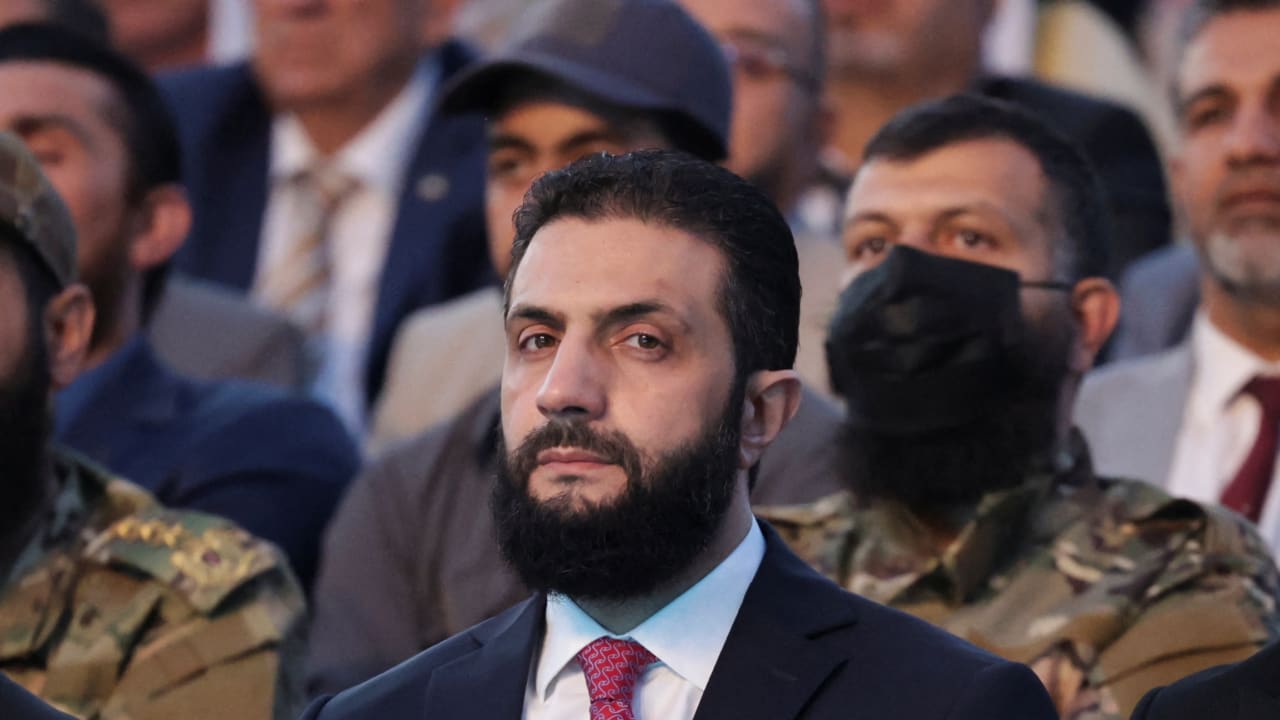
Israel and Syria could be moving toward increasing diplomatic engagement. That appears to be the messaging from both Jerusalem and Damascus.
This is raising eyebrows in the region, and it appears this movement toward possible normalization has support in the Gulf and other places.
Israel and Syria historically had bad relations, primarily due to the Assad regime and its attempt to portray itself as part of the wider Iranian “axis of resistance.” The Assad regime fell last December, and a new government emerged.
Israel was skeptical of the new government in Damascus. Some officials went so far as to slam Ahmed al-Sharaa, the new president of Syria, as a “jihadist.” Israeli officials threatened him, and the IAF carried out numerous airstrikes in Syria.
The IDF moved into a buffer zone on the Golan Heights border, and it has carried out raids into Syrian territory. Israeli officials have also said Israel will back the Druze and Kurds in Syria. This has potentially inflamed tensions.
Sharaa has been walking a fine line and has not focused on Israel tensions. He has many other issues he needs to deal with, and recently met Syrians from Daraa and elsewhere in southern Syria, apparently to hear their concerns about Israel’s actions.

US envoy to Syria Tom Barrack, who is also the ambassador to Turkey, has been playing a key role in the region and in engaging with Syria and its future.
“What just happened between Israel and Iran is an opportunity for all of us to say: ‘Time out. Let’s create a new road,’ [and] Turkey is key in that new road,” London-based Arab Weekly and Turkey’s Anadolu news agency quoted him as saying.
The Middle East is ready to have a new dialogue
“The Middle East is ready to have a new dialogue, [and] people are tired of the same old story,” Barrack said, adding that Syrian “President al-Sharaa has indicated that he doesn’t hate Israel, and that he wants peace on that border. I think that will also happen with Lebanon. It’s a necessity to have an agreement with Israel.”
Barrack’s comments, together with Foreign Minister Gideon Sa’ar’s remarks about possible ties with Syria, illustrate that many boats appear to be moving in the same direction. It’s clear that the US and other Western countries want to see movement in terms of ties between Israel and Syria and potentially Israel and Lebanon.
There are many issues in motion. Turkey has influence over Syrian policy. Ankara wants things from Washington, including participation in the F-35 program, according to reports.
It’s possible there are trade-offs here. For instance, Ankara could shift its anti-Israel rhetoric and back Syria engagement with Israel to get things it wants from the US.
This past May, US President Donald Trump showed initiative in meeting with Sharaa in Saudi Arabia. This was important and paved the way for US-Syria ties to grow rapidly.
These talks come after several prominent visits to Syria by various Americans. For instance, a visit by Rev. Johnnie Moore and Rabbi Abraham Cooper raised eyebrows in the Gulf, and the UAE-based Al-Ain news site devoted a whole article to the visit and its implications for potential Israel-Syria ties.
Al-Ain speculated that Trump might encourage a meeting between Prime Minister Benjamin Netanyahu and Sharaa. This remains to be seen.
Nevertheless, it is clear that many voices on both sides of the ocean and throughout the Middle East consider Syria-Israel ties as being on the table.