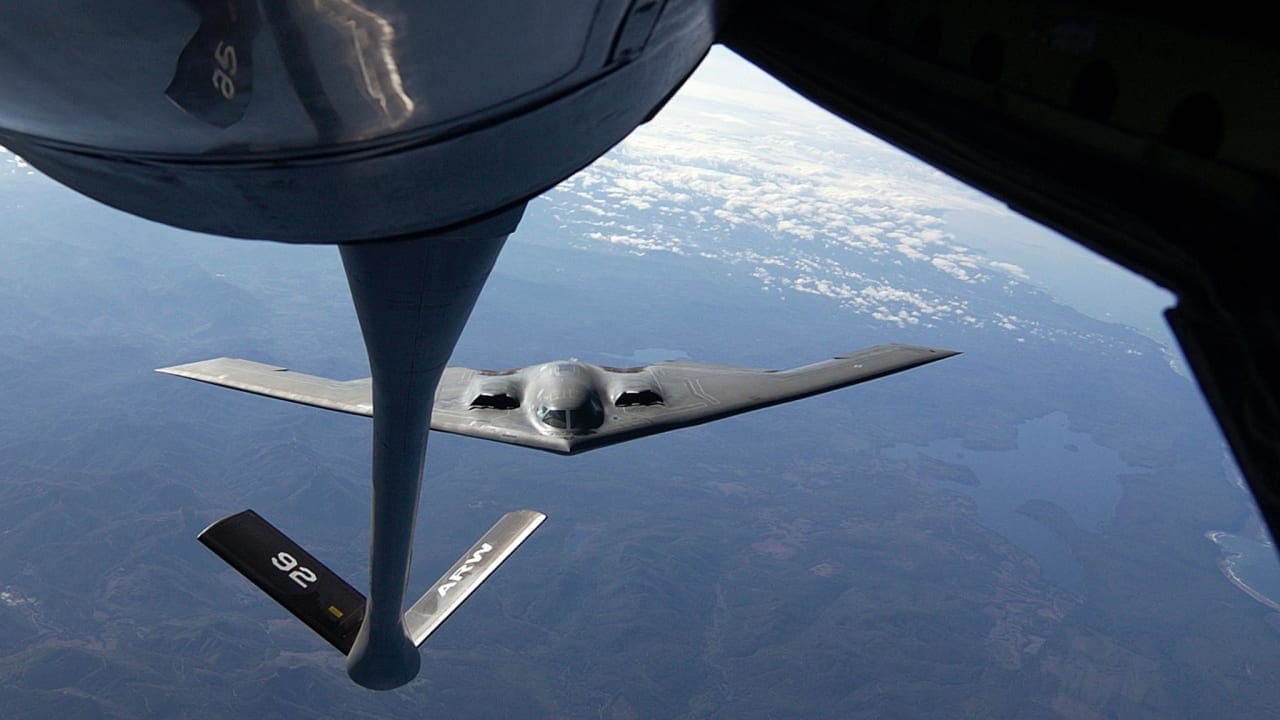
The massive accumulation of US military assets in the Middle East is not merely a show of force but a signal that the United States has the capacity to dismantle the Iranian regime’s power structure in a matter of hours, according to Vice Admiral (Ret.) Bob Harward, former deputy commander of US Central Command (CENTCOM).
“One thing he’s illustrated is that [President Donald] Trump does what he says,” Harward told The Jerusalem Post, citing the withdrawal from the Joint Comprehensive Plan of Action and the US’s stance that it will not tolerate a nuclear-armed Iran. “Now he’s positioned the assets for a military action,” Harward said.
“If he cannot meet the objectives regarding the nuclear and ballistic missile program, he’s willing to go beyond mediation and act.”
If the order to strike is given, Harward, who served as deputy commander of CENTCOM until 2013, detailed a hierarchy of targets designed to neuter Iran’s offensive capabilities while sparing the general population. The priority, according to the former commander, would be “bottom-up.” The first wave would target strategic missile locations and launchers – the direct threats to US forces and Israel.

The second priority would be neutralizing the remnants of surrogates outside the country that pose a risk of retaliation against Israel.
US could strike IRGC headquarters
However, the most significant shift in strategy concerns the regime’s internal grip on power. Harward suggested that a campaign would target the Islamic Revolutionary Guard Corps (IRGC) and the instruments used to oppress the Iranian people, rather than the national infrastructure.
“You’re not going to look at infrastructure,” Harward explained. “This is to provide the Iranian people a change in government, so I think those types of targets will not be hit. It will be focused only on the things that enable the regime and the IRGC to suppress the people.”
Perhaps the most chilling warning for Tehran was Harward’s description of modern American warfare capabilities, which he noted are vastly superior to what was seen in the Iraq and Afghanistan wars. “Because of what we’ve learned and what we’ve been able to develop technology-wise – be it command, control, and targeting – it allows your mass of strikes to be more effective,” Harward said.
“Where previously you could do 40 or 50 strikes a day, we now have the ability to conduct hundreds of strikes a day. That in itself changes the equation completely for the regime.”
Harward elaborated that the US now possesses the capability to decapitate the IRGC’s command structure with overwhelming speed. “If you’re targeting the IRGC and want to go after all their headquarters and facilities, you could probably do that in a matter of hours. That’s unprecedented.”
Harward’s perspective is shaped not only by his military service but also by his personal history. His family lived in Iran from 1968 to 1979, and he was in the country as a senior at the US Naval Academy just weeks before the Shah fell.
Recalling the 1979 revolution, Harward noted that the turning point came when the military shifted from supporting the Shah to supporting the people. He believes a similar dynamic is key to any future change in Tehran. “This is a regime that for 47 years has oppressed its people,” he said. “The bulk of them want change.”
He emphasized that any military action must be aligned with supporting the Iranian population, ensuring that the target list degrades the regime’s ability to communicate and suppress dissent without alienating the public.
“I don’t think anyone really understands the scale or capacity we have because no one’s ever seen it before,” Harward said, adding a warning to other global powers. “If it does happen, this will be illuminating for everyone to understand where we have come in terms of size, scale, speed, and capacity – be it Russia or China.”