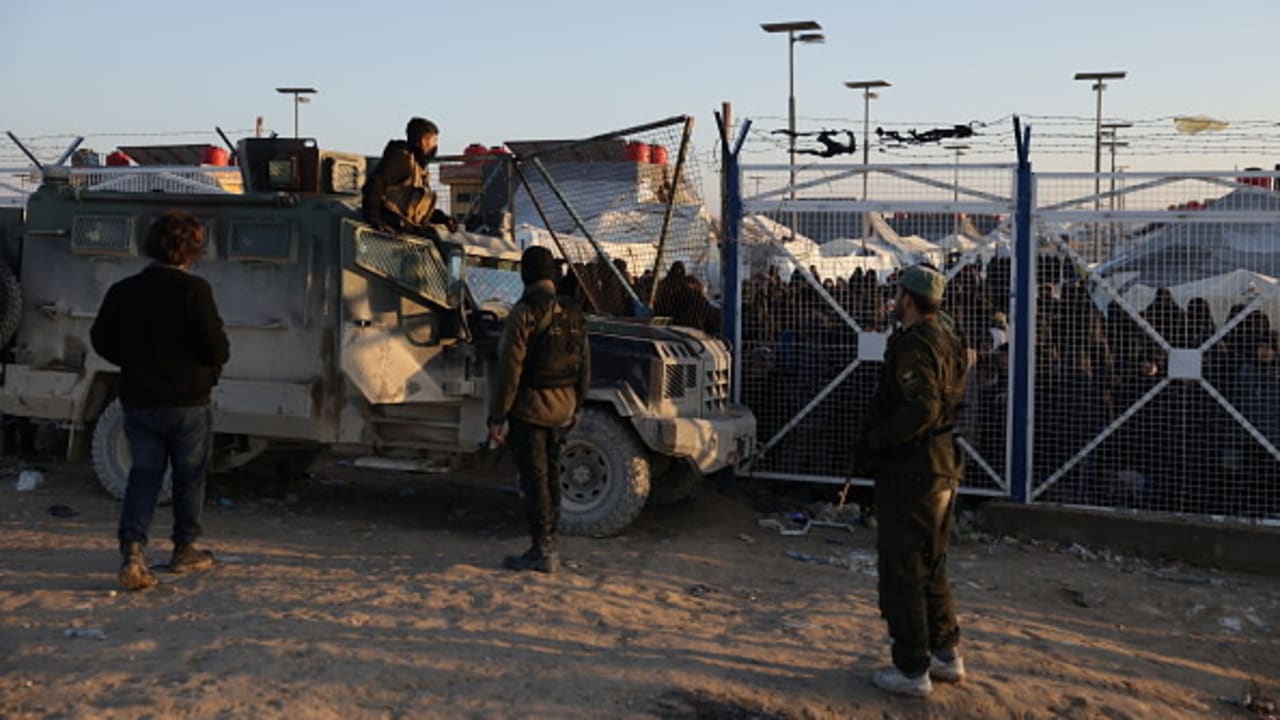
Syrian authorities said Wednesday that disorder at the al-Hol detention camp in northeastern Syria followed an abrupt withdrawal by the Kurdish-led Syrian Democratic Forces (SDF), which they say allowed detainees and displaced families to leave in large numbers and raised fresh security concerns.
For more stories from The Media Line go to themedialine.org
The camp, located near the Iraqi border, had long housed relatives of suspected Islamic State (IS) members alongside civilians displaced by years of conflict.
Interior Ministry spokesman Noureddin al-Baba told reporters that Syrian army units were preparing to deploy to the facility when SDF forces pulled back hours earlier without coordinating with Damascus.
He said the site was left in disarray when government troops arrived. “When the forces arrived, they found the camp had been opened in a chaotic manner, leading to widespread unregulated departures,” al-Baba said.
Authorities documented more than 138 openings along the camp’s 17-kilometer perimeter fence, which officials said enabled movement through smuggling routes and posed risks to regional stability.

Syrian officials added that earlier population estimates of roughly 23,500 residents proved inconsistent with later field assessments.
Foreign families linked to former IS fighters
Women, children, and elderly people made up nearly 70% of those remaining, many of them Syrian and Iraqi nationals, along with foreign families linked to former IS fighters.
Al-Baba rejected sweeping accusations against residents, stating that Syrian law requires individual legal proceedings rather than collective punishment.
“Syrian law prohibits collective punishment and requires individual criminal responsibility through the judicial process,” he said.
For years, international organizations warned that al-Hol’s overcrowded conditions and limited oversight risked fueling extremism and humanitarian crises.
The camp became a focal point of debate between Damascus, Kurdish authorities, and Western governments over responsibility for thousands of detainees following the territorial defeat of IS in 2019.
Officials confirmed that al-Hol was fully emptied and shut down Sunday after remaining families were transferred through organized convoys, marking a major shift in control over detention sites in Syria’s northeast.