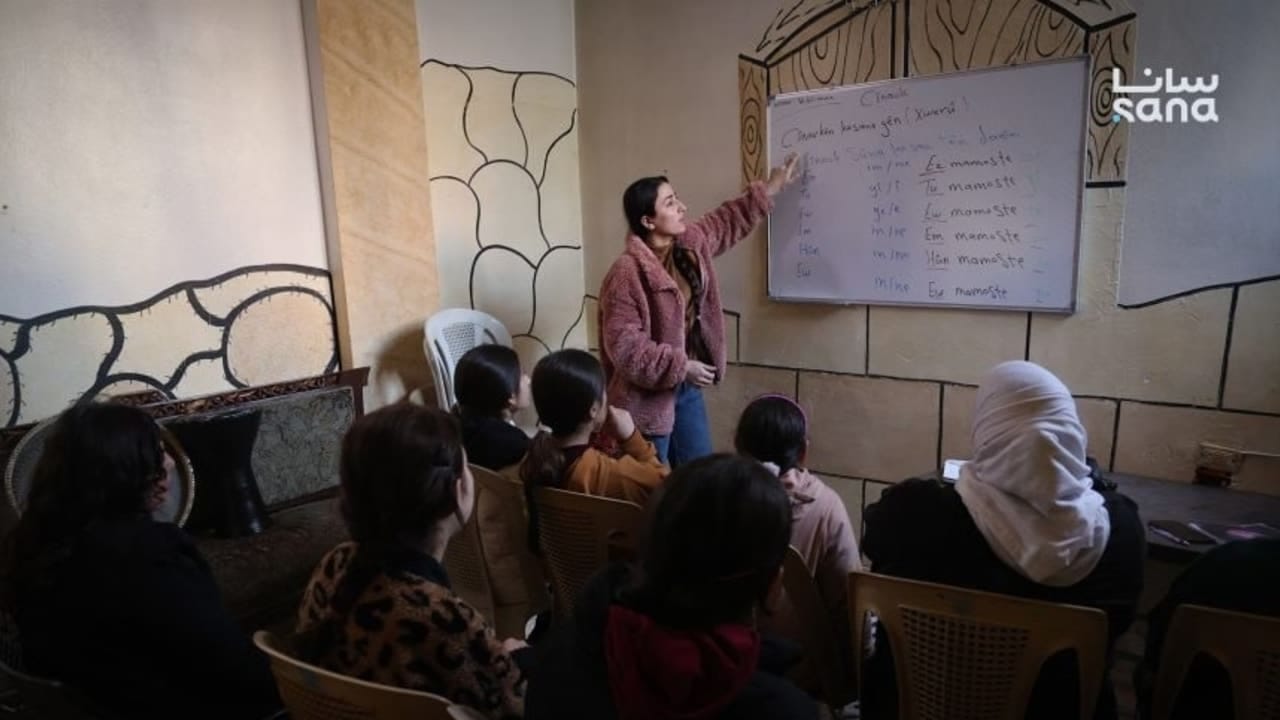
DAMASCUS - For the first time, the Kurdish language will formally enter Syria’s education system beginning with the 2026-2027 academic year, after being approved as an elective subject taught for two periods per week, marking a significant shift after decades of restrictions on Kurdish language and cultural identity in Syria.
For more stories from The Media Line go to themedialine.org
The decision comes in implementation of Decree No. 13 of 2026 and executive instructions issued by Syria’s Ministry of Education, in a move aimed at safeguarding cultural and linguistic rights and promoting diversity within an inclusive Syrian national identity.
The introduction of Kurdish instruction is based on the decree issued by Syrian President Ahmed al-Sharaa on Jan. 16, 2026, which states that Syrian Kurdish citizens are “an essential and integral part of the Syrian people” and that their culture and language are part of Syria’s national identity.
The decree also recognized Kurdish as a national language and permitted its teaching in public and private schools in areas where Kurds constitute a significant proportion of the population, either as an elective subject or as a cultural and educational activity.
The decision marks a shift in the state’s approach to the Kurdish issue. For more than half a century, Syria’s Kurds faced policies of discrimination and exclusion, most notably after the 1962 special census in Hasakah province, which stripped Syrian citizenship from tens of thousands of Kurds.

Restrictions deepened after the Baath Party came to power in 1963, affecting political, cultural, and linguistic life.
Executive decree implementing Kurdish as an elective subject
On Jan. 26, Syria’s Ministry of Education issued executive instructions implementing the decree, approving Kurdish as an elective subject to be taught for two periods per week across all grades covered by the decree. The subject’s grade will be included in students’ overall scores, but the result will not determine whether a student passes or fails.
The National Center for Curriculum Development was tasked with preparing Kurdish-language curricula for all educational levels and began work on Jan. 29 after forming a committee of linguistic and educational experts.
On Aug. 17, the ministry announced that it was recruiting Kurdish-language teachers from both within and outside its existing workforce. Applicants will undergo written and oral examinations to verify their proficiency in Kurdish, as well as training and qualification programs.
Decree represents a 'qualitative shift' in approach to Kurdish issue
Education Minister Mohammad Abdulrahman Tarkou said in press remarks that the decree represents a “qualitative shift” in the historical approach to the Kurdish issue and reinforces a concept of citizenship based on rights and responsibilities.
Tarkou, who is himself a Syrian Kurd, added that the ministry is working to prepare curricula and secure teaching staff, including in eastern Syria, stressing that the goal is to make schools “a space for national belonging, not discrimination and exclusion.”
The decision comes amid broader changes in relations between Damascus and the Kurds, as well as the restructuring of state institutions in northeastern Syria. The 2026-2027 academic year will provide the first practical test of turning the new legal recognition of Kurdish into classroom instruction, after decades in which language remained one of the central issues surrounding the identity and cultural rights of Syria’s Kurdish community.