
A renewed nuclear agreement between Washington and Tehran, while reducing the immediate nuclear danger, would still leave Israel exposed to Iran’s missile program and proxy networks, Prof. Amatzia Baram of the University of Haifa warned on Wednesday in an interview with Maariv.
He urged Jerusalem to prepare for a tougher regional posture even if the nuclear issue is contained.
Baram said the White House seeks a clear, signed nuclear achievement it can present as superior to the 2015 accord.
“Trump must show a written, signed success that can be framed as a bigger win than President Obama’s 2015 deal,” he said. According to Baram, political optics weigh heavily in Washington, making a strong, enforceable nuclear deal the top priority.
However, he warned, such a deal may not include Iran’s ballistic missiles, its support for proxy groups, or protections for protesters in Iran.
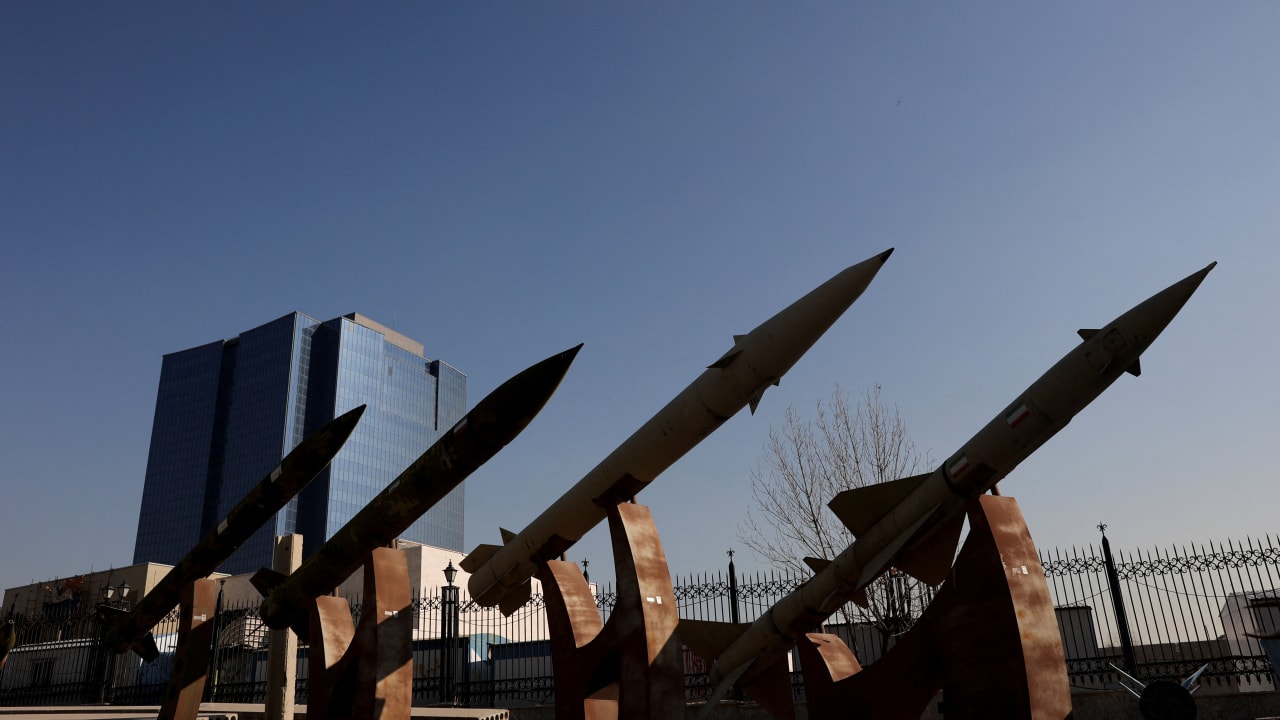
“The Americans may go for a dramatic nuclear agreement while effectively dropping the tougher demands on missiles, proxies, and the Iranian opposition,” he said. “For Israel, that would mean the other threats remain.”
Baram argued that Iran’s leadership could show flexibility on the nuclear issue because concessions there, while damaging to regime prestige, do not immediately undermine core regime security.
He said Iranian President Masoud Pezeshkian, whose rise was enabled by Supreme Leader Ali Khamenei, could help sell such moves if required.
“But the Islamic Revolutionary Guard Corps and senior clerics strongly oppose this,” he added.
“At present, they carry the greatest weight, and the supreme leader tends to side with them,” Baram said. He stressed Iran is unlikely to accept meaningful limits on missile ranges or to end support for Hezbollah, the Houthis, Iraqi militias, or even Hamas. These pillars, he said, are central to exporting the revolution and to Iran’s defense doctrine.
Baram estimated the chance of an American military strike is still “a bit above 50 percent” if Iran refuses fast, direct talks that include nuclear concessions. He noted that current contacts are slow and mediated through Oman.
“The US military threat is part of the pressure mechanism meant to force Iranian concessions, but without them the threat could turn into a strike,” he said.
Even a strong nuclear deal would still require Israel to prepare for missile salvos and proxy escalation, Baram cautioned. He urged tighter US-Israel security cooperation and increased investment in missile defense.
“If America settles for the nuclear track, the prime minister should seek compensation from Trump,” he said, adding that Israel must also step up efforts against the “ring of fire” around its borders.
Political majority in Lebanon wants Hezbollah disarmed
Regarding Lebanon, Baram said there is a broad domestic political majority that wants Hezbollah disarmed, but international pressure has been insufficient.
He proposed pushing Beirut toward clear decisions that would curb Hezbollah’s rearmament and change the internal balance of power.
He suggested coupling a cabinet decision to disarm militias with a sweeping parliamentary law mandating the removal of weapons from “all organizations” except the army and police.
Hezbollah would refuse, he said, and could then be designated a rogue entity. Additional steps, he added, should target Hezbollah’s finances, including severing illicit banking channels and communications networks, and, on Israel’s side, rebuilding specialized capabilities to disrupt the group’s global funding.
Baram also pointed to a longer-term regional shift, warning that a strengthened Turkey could become a more potent strategic challenger than a de-nuclearized Iran.
“Turkey is militarily stronger, tied to NATO and the US, and harbors broad regional ambitions,” he said. He described Ankara’s systematic push for influence in Syria and Iraq and efforts to gain political and economic footholds in Lebanon.
Egypt and Jordan are also on Turkey’s map of influence, he said, not through conquest but via political, economic, and ideological networks that create long-term dependency.
He warned of a possible Turkey-Qatar-Saudi alignment over the coming decade that could reshape the region’s balance of power. “Regional processes build gradually, and once their force is recognized, they can be very hard to stop,” Baram said.
Baram concluded that Israel must address immediate Iranian and proxy threats while planning for emerging regional challenges. “Iran and the proxies are the immediate danger, but Israel should start preparing for evolving regional dynamics,” he said. “In the Middle East, trends unfold over years, and those who fail to look ahead end up reacting to a new reality instead of shaping it.”