In 1992, famous political strategist James Carville coined the phrase “it’s the economy, stupid” to help people block out all the political issues many thought were important to American voters but really weren’t, compared to bread-and-butter concerns like how they were doing economically day-to-day.
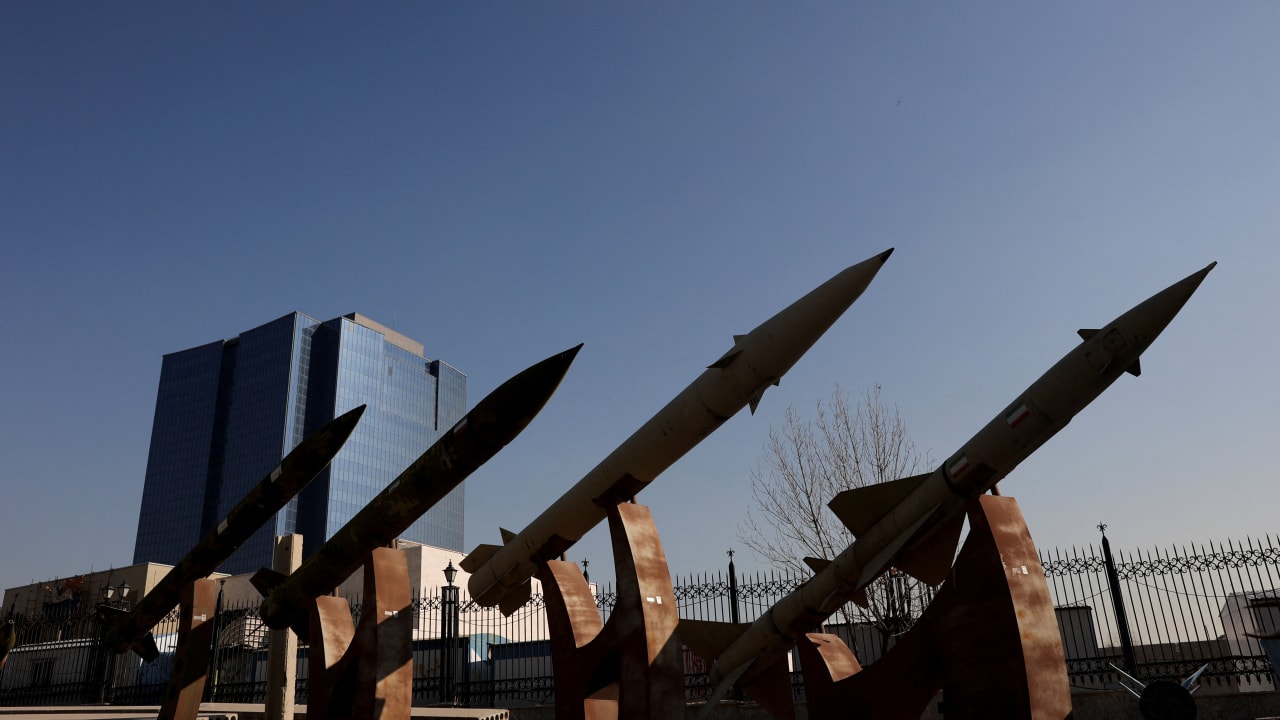
Exporting that phrase and style to the current US-Israel-Iran-Middle East War, the correct phrase would be “It’s the ballistic missiles, stupid.”
The true measuring stick of the success of the Israel-US operation against Iran will be whether, once the war is over, Tehran’s ballistic missile apparatus is so damaged, and whoever is running Iran is so deterred, that they are unable to rebuild it, or that it at least takes them years to do so.

This is in contrast to all of the talk centered around Iran’s nuclear weapons and regime change.
The Islamic Republic’s nuclear weapons program has been on life support since Israel and the US bombed it at dozens of sites in June 2025.
Focus is on missiles, not nukes
Even more significant than the damage, which set Iran back at least two years, was that it was so comprehensive and thorough that Tehran did little to try to rebuild over the last eight months.
US President Donald Trump set Iran's giving up the nuclear program as a red line – a worthy goal to truly permanently end that threat – but the truth is there was not much of a threat in the nuclear arena, certainly not in the coming years.
The next issue, which has captured the headlines and which Trump has crowed about publicly, concerns replacing the Islamic regime.
As virtually all US and Israeli defense officials knew and know, simply assassinating Ayatollah Ali Khamenei was never going to be enough to accomplish that goal.
Achieving such a goal may be possible, but it will require much longer and greater investment by the US and Israel than they may be willing to make (especially under Trump).
It would also require fundamental changes from Iran’s protest movement and likely from defecting senior Iranian military officials.
If it happened, it might be the best-case scenario, because it could permanently eliminate Iran as a threat to Israel, the United States, and the rest of the world.
But no one came into 2025 or 2026 thinking that the Islamic regime was going to be overthrown anytime soon. The idea was to bring it down over many years through attrition.
Simply the existence of the regime, while dangerous, was not an existential threat.
The two existential threats had been the nuclear program (almost destroyed in June 2025) and the ballistic missile program, if it reached a certain volume.
Unlike the frozen nuclear program, after June 2025, Iran raced forward and brought its ballistic missile program back from around 1,300 missiles to around 2,500 missiles, close to what it had achieved at its height.
It also was back to a potential of leaping forward with its volume of missiles to 4,000, 6,000, or even 8,000 – numbers that could overwhelm Israel’s air defense shield.
This was an existential threat. To date, Israel has destroyed 150 ballistic missiles and a number of sites. That is not enough.
Israel must truly bludgeon the full spectrum and supply line of all elements that can be used to make such missiles so that after this war, whoever is running Iran will not be able to get back to the same point for years and will question whether doing so is worth it.
That issue, and only that issue, should be the measuring stick for whether the current campaign is successful.