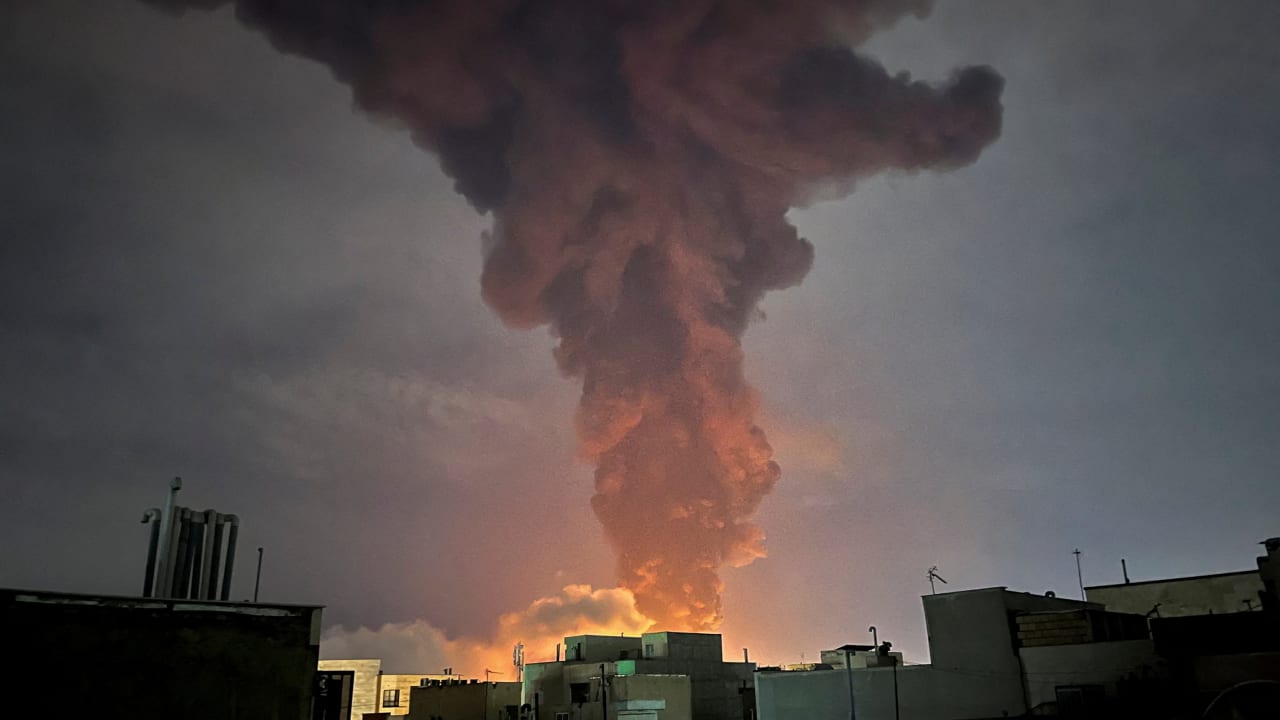
For the first time since the war began, the IDF has struck 30 fuel storage facilities belonging to the Iranian military, undermining Tehran’s claims that these installations were purely civilian infrastructure.
Beyond the immediate smoke and fire, however, the strikes highlight a deeper vulnerability for Iran’s leadership: the extreme fragility of the country’s energy infrastructure - the very engine sustaining the regime.
Since the imposition of sweeping Western sanctions, Tehran has become heavily dependent on oil and gas exports for revenue. In 2025 alone, Iran earned at least $40 billion from oil sales, exporting nearly 2 million barrels per day.
“90% of it goes to China via what is called a ‘ghost fleet’ of tankers because of the American sanctions,” explained Dr. Amit Mor, an energy specialist and CEO of Eco Energy Ltd.
According to Dr. Mor, while the trade helps keep Iran’s economy afloat, it comes at a high cost. Beijing, aware of its leverage as Tehran’s primary customer, has secured steep discounts on every barrel.

While oil exports finance the regime’s regional proxies, domestic energy supplies help keep internal unrest in check. Joseph Webster, a senior fellow at the Atlantic Council, said the energy sector is central to the regime’s domestic stability.
“Typically, fuel shortages in any country across the world tend to produce consumer anger,” Webster said. “People like to have a certain amount of self-control over their lives, and not being able to access fuel often leads to consumer anger and can often spark political protests.”
This risk is not theoretical. In recent years, cyberattacks targeting Iran’s gasoline distribution systems have shut down service stations, triggering long lines and public anger that required significant government intervention to contain.
Now, with the Port of Bandar Abbas - home to the country’s central refinery - potentially in the crosshairs, the regime faces the possibility of a fuel-starved population turning against its leadership.
Iran's role in global natural gas
While oil dominates the headlines, Dr. Mor noted that Iran is also a major player in the global natural gas market. The country holds roughly 34 trillion cubic meters of natural gas reserves, about 17% of the global total. Yet the domestic situation remains precarious.
“The Iranian economy is in a crisis that is getting deeper in recent years,” Dr. Mor warns. “There is a very deep shortage of electricity across Iran. The infrastructure and power stations are old, and investments in new power stations are very few.”
Natural gas is central to everyday life in Iran, generating roughly 80% of the country’s electricity. It powers industry, heats homes during harsh winters, and fuels hundreds of thousands of vehicles converted to run on compressed natural gas.
“Any additional shortage of gas hits the Iranian economy without a doubt,” Dr. Mor added, pointing to the deteriorating electrical grid that already forces government ministries to shorten working hours to manage rolling blackouts.
US gasoline prices jump as strikes continue
The war’s impact on energy markets is also being felt in the United States, complicating the geopolitical calculus. With oil prices nearing $100 per barrel and US gasoline prices jumping nearly 50 cents in a week, Washington is watching closely.
“Americans love low gasoline prices,” says Webster. “If those costs increase significantly, you would expect to see a decline, perhaps a sharp decline, in President Trump’s approval rating.”
This political reality may help explain why, despite the rhetoric, Iran’s oil and gas sector has not been completely destroyed.
Some analysts speculate that the US administration may be considering a “day after” scenario.
As the conflict intensifies, preserving parts of Iran’s energy infrastructure may be less about restraint and more about long-term strategy: ensuring that if the regime in Tehran falls, a future - potentially friendlier - government will still have the resources needed to rebuild.
Until then, Iran’s energy sector remains the country’s most combustible strategic target.