
Fifty percent of the ballistic missiles that Iran has fired on Israel during the current war have been cluster munitions, the IDF Home Front Command said on Tuesday.
This is a shift from the June 2025 war with Iran, when occasionally the missiles were built of cluster munitions, but most were not.
Typically, Iranian ballistic missiles have 500 to 1,000 kilograms of explosives in them and strike one target, causing significant damage there and to the immediate surroundings.
However, cluster munitions might contain dozens of smaller eight-kilogram bombs which spread out over a 10-kilometer square radius.
On one hand, each hit from a cluster munition causes less damage than a full single ballistic missile hit.
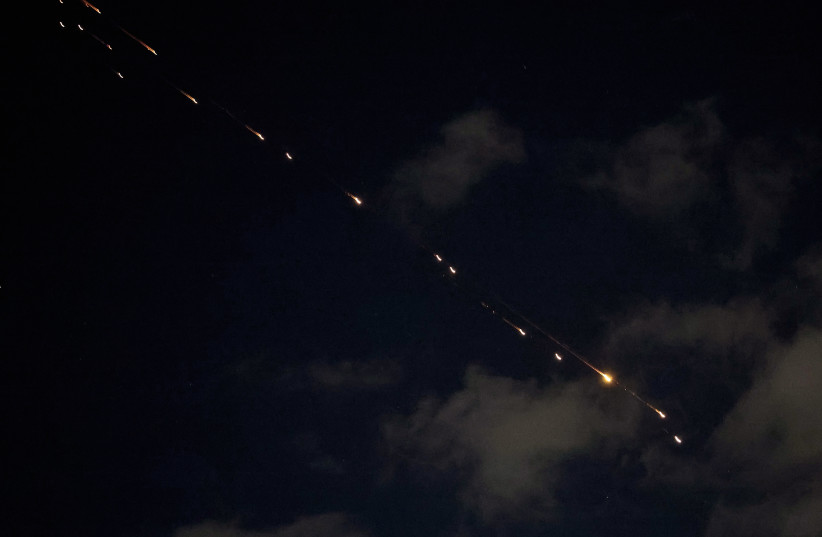
On the other hand, each hit can still be deadly, can penetrate multiple floors in a single building, and if such a missile breaks apart before it's shot down, can cause a wider number of dangerous impact areas.
IDF faces criticism of overusing missile alerts, disrupting routines
While discussing the issue, the IDF was pressed about criticism that in recent days it has repeatedly sent millions of Israelis into bomb shelters and safe rooms when Iran has only fired a single missile, which was very unlikely to have endangered so many people in different locations at once.
The IDF explained that its "polygon," its algorithm for evaluating which cities to warn based on the estimated trajectory of a ballistic missile, after such a missile is launched from Iran, errs on the side of saving lives, even if it inconveniences people in their daily routines.
That said, the IDF said that whenever it can, it does exclude certain parts of the country from receiving warnings where the chances of them being targeted are very low.
Each launch also includes an assessment of the specific warhead and the size of the explosives it carries.
Two Hezbollah missiles hit central Israel, interceptors missed, no warning sirens sounded
Meanwhile, the IDF said on Tuesday that an atypical technical failure led to two Hezbollah missiles hitting central Israel on Monday, with interceptors missing their marks and without even a warning siren.
One of the missiles struck Ramle, and the second hit an open area in the Mateh Yehuda Regional Council, lightly wounding a bunch of civilians.
Despite the failure, most of the missiles fired on Monday were intercepted by Israel's multilayer air defenses.
Also, the IDF said that the technical failure did not occur because of some new kind of Iranian technology, but rather the missiles fired were weapons the IDF is acquainted with.
Following a probe into the incident, the IDF said that "adjustments were implemented to strengthen interception capabilities against similar threats in the northern area."