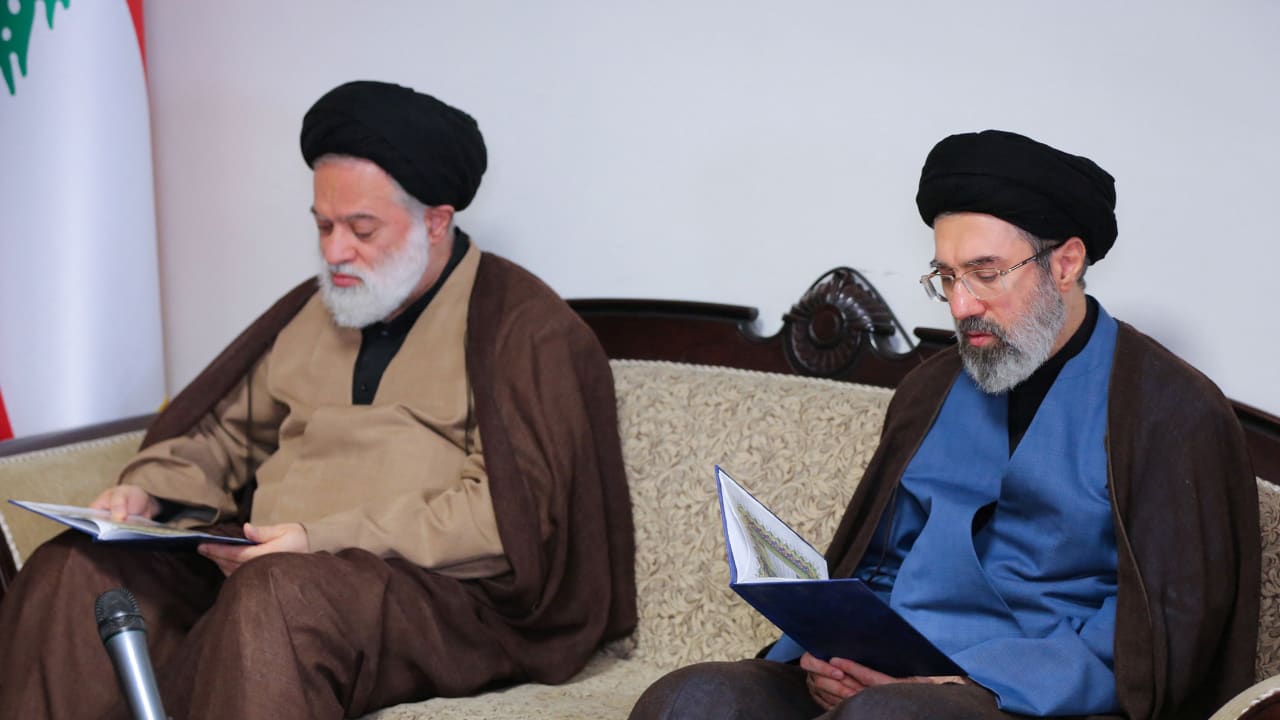
Mojtaba Khamenei, Iran’s new supreme leader, survived the February 28 US-Israeli strike on Tehran’s leadership compound because he had stepped outside shortly before missiles hit his residence, according to leaked audio obtained by The Telegraph. The recording, attributed to a senior official in the office of the late Ali Khamenei, provides one of the fullest accounts yet of the strike that killed Iran’s former supreme leader and other senior regime figures.
According to the report, the compound was hit at 9:32 a.m. local time in what appeared to be a coordinated attempt to kill members of the Khamenei family and senior Iranian leadership at the same time. The Telegraph said the audio was independently verified and came from remarks delivered by Mazaher Hosseini, identified as head of protocol in Ali Khamenei’s office, during a March 12 meeting in Tehran.
Hosseini said Mojtaba Khamenei had gone into the yard moments before the strike and was heading back upstairs when the building was hit. According to the report, he suffered a leg injury, while his wife, Zahra Haddad-Adel, and their son were killed instantly.
The leaked recording also described the deaths of other people inside the compound, including Mojtaba Khamenei’s brother-in-law, Misbah al-Huda Bagheri Kani, and Mohammad Shirazi, the chief of Ali Khamenei’s military bureau. Hosseini said the strikes hit multiple parts of the office complex simultaneously, including residences associated with several members of the Khamenei family.

Questions about Mojtaba Khamenei's ability to lead
The February 28 strike killed Ali Khamenei and helped trigger a sudden succession process in Tehran. Mojtaba Khamenei was formally named the supreme leader on March 8, after days of uncertainty following the attack.
Since then, questions have continued over Mojtaba Khamenei’s health and his ability to lead. He has not appeared publicly since the strike, and his first message after taking power was read on state television rather than delivered in person, adding to speculation over the severity of his injuries.
The Telegraph report also said US intelligence assessments indicated Ali Khamenei had opposed his son succeeding him and regarded him as unfit for the role. That claim has added to criticism that the leadership transition resembles hereditary succession, a politically loaded accusation in a system founded in opposition to monarchy.
Mojtaba Khamenei’s rise has been portrayed as both a moment of continuity and a sign of instability, with analysts warning that the Islamic Revolutionary Guard Corps may gain even greater influence during his rule. The leaked audio adds another layer to that picture, suggesting Iran’s current supreme leader survived the strike that killed his father by only minutes, while the leadership structure around him was shattered in a single attack.