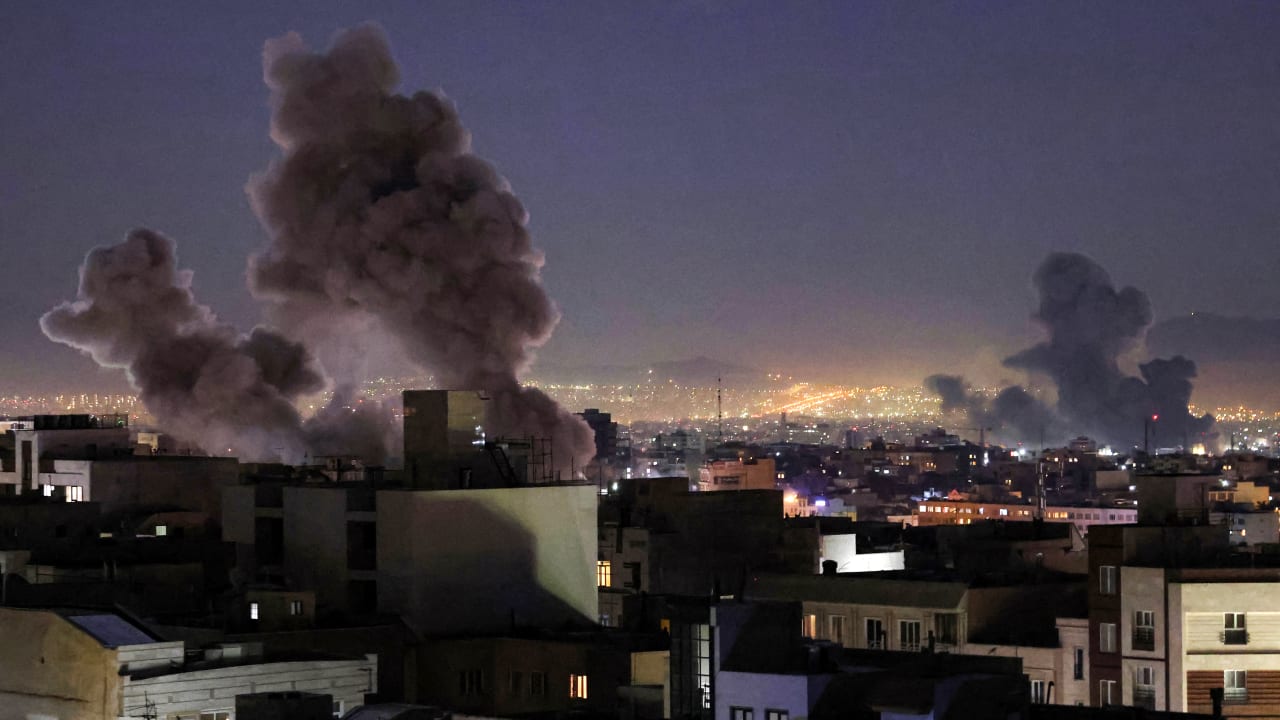
The Iranian ballistic missiles have become less and less significant in this war, as Israel and the US attack their bases and factories. That said, the war hasn’t become less concerning. Iran lost the first round badly.
Its nuclear sites are rubble. Its air defenses are gone. The Revolutionary Guards have taken casualties they won’t acknowledge for months. By any military measure, Tehran is beaten.
But it isn’t finished. Iranian Foreign Minister Abbas Araghchi announced last week that the strait is “open, but closed to our enemies.” That sentence is worth sitting with. Araghchi was staking a territorial claim over a waterway that belongs to no one country, one that carries roughly a fifth of the world’s oil every day.
Brent crude is above $105 a barrel. American gasoline prices are up about 25% since the US and Israel launched coordinated strikes on Iran on February 28, targeting military facilities, nuclear sites, and the country’s leadership.
Goldman Sachs has since cut its 2026 US GDP growth forecast by 0.3 percentage points and raised its inflation forecast by 0.8 points. In a worst-case scenario, with oil flows disrupted for a full month, the bank puts recession odds at 25%. The economic damage is real and spreading.

Iran’s military couldn’t stop the Israeli-American air campaign. Its proxies have been dismantled. Its negotiating leverage is largely gone. What remains is geography. Geography, it turns out, survives an air campaign.
Message to Gulf
Araghchi wasn’t speaking to Washington or Jerusalem. He was speaking to Riyadh, Abu Dhabi, and Doha.
The message is simple enough: hosting American forces has a price. Align with Washington, and your shipping lanes are exposed, your oil exports are vulnerable, and your economic stability becomes someone else’s collateral. Iran is trying to fracture the regional alignment that made the military campaign possible.
Whether it succeeds is a separate question. The attempt itself reveals where Iran thinks this war goes from here. It’s not trying to win militarily. It lost that round. It’s trying to win politically by making the cost of standing with America prohibitive for governments that have restless publics and tight budgets.
That’s a harder problem than it looks.
Washington's muddled response
Speaking on Monday from Paris, where he was attending trade talks with China, US Treasury Secretary Scott Bessent told CNBC the US was “fine” with some Iranian, Indian, and Chinese vessels transiting the strait. The administration wants fuel markets to be stable.
That’s a reasonable short-term call, but far from a long-term strategy.
What Washington has signaled, intentionally or not, is that Iran can selectively control access to an international waterway and the US will adjust around it, provided enough oil keeps moving. When Tehran decides who sails and Washington adjusts, Iran runs the strait.
It rewards the regime for the one card it had left to play. And it tells every other government watching – and all of them are watching – that a chokepoint can be leveraged if you’re prepared to absorb the initial military punishment.
What winning this phase requires
The military campaign demonstrated what American and Israeli power can achieve. The open question is whether that same determination carries into the economic and maritime fight now underway.
The Strait of Hormuz isn’t Iranian territorial water. It’s an international waterway governed by the UN Convention on the Law of the Sea, a treaty Iran has signed.
No country gets to privatize a global chokepoint. No serious power should accept that arrangement even as a temporary fix, because temporary, especially in the Middle East, has a way of becoming permanent once the pressure lifts.
The principle extends beyond this war. It applies to the South China Sea, the Black Sea, and every corridor the global economy depends on. The moment Washington signals that chokepoints are negotiable under sufficient pressure, it offers a working model to every regime that wants to test that proposition.
Iran turned Hormuz into its last weapon because everything else was taken from it.
The coalition that won the military campaign now has to decide whether it has the resolve to win this phase too.
That answer isn’t clear enough – not just yet.