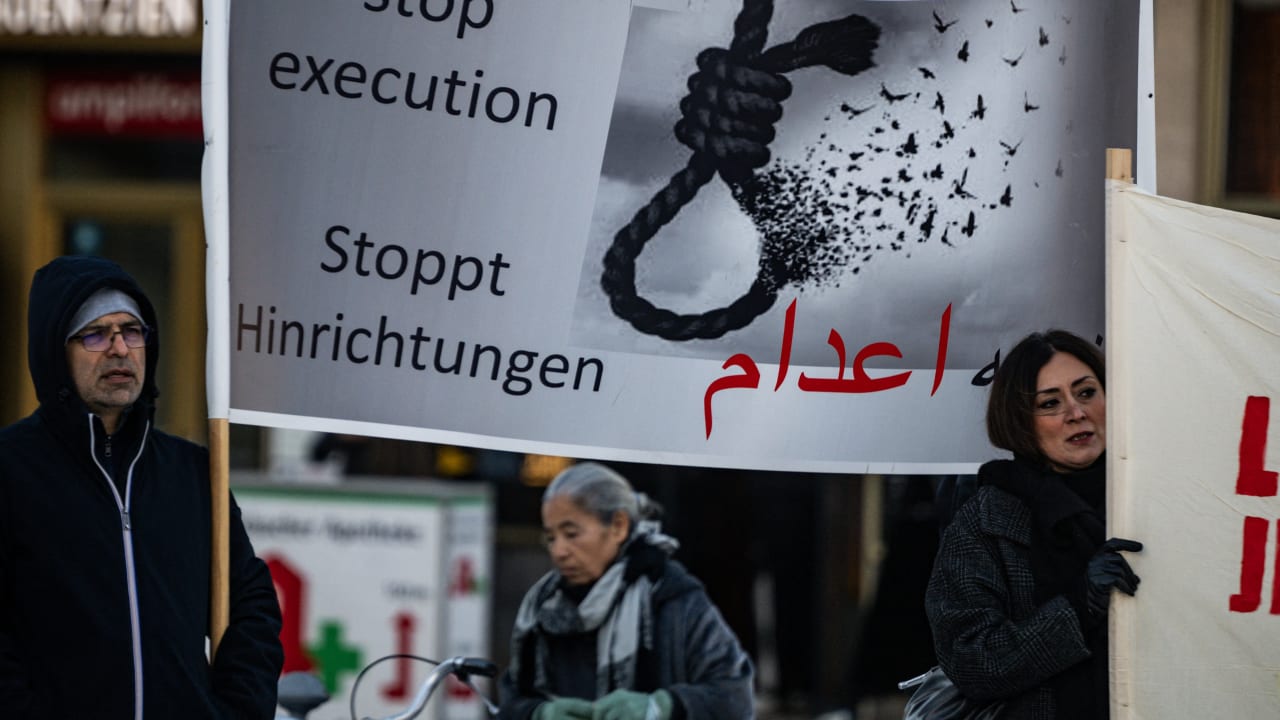
Nearly 1,000 out of the 1,212 people executed for drug-related offenses in 2025 were murdered by the Islamic regime, according to the 15th report of Harm Reduction International published on Friday.
The figure, which excludes unrecorded executions by China, Vietnam, and North Korea, represents a 97% increase from 2024 and the highest reported figure since HRI began collecting data in 2007.
In addition to the 955 people executed last year by the regime for drug-related offenses, which averages to around three state murders every day, more than 1,000 people are currently on death row for the alleged crime.
The 2025 execution spree has left at least 222 children without parents, the report noted.
At least 23 of those killed were women, some of whom were found guilty despite drugs allegedly having been found in their family properties and not in their direct possession, which HRI said raised questions about their reported role in the offenses.

Impoverished, low-level victims
Additionally, almost one in four of those killed belonged to members of an ethnic minority group, and more than one in five of those murdered by the regime were foreign nationals, HRI recorded.
At least a third of the 336 people from ethnic minority backgrounds killed belonged to the Baluch ethnic group despite that group making up only 2% of Iran’s total population.
The large majority of those killed came from a background of poverty, were alleged to have worked in a low position in the drug trade, and were denied proper due process during their trial, according to the HRI.
United Nations Special Rapporteur on human rights in Iran Mai Sato said, “Many of the drugs-related cases in Iran involve young fathers from minority ethnic backgrounds experiencing economic hardship who face not only execution but also confiscation of their limited assets – including family homes and farmland – devastating their families long after their execution.”
A large number of executions, at least 65, were also carried out in secret without prior notice, HRI noted. This secrecy meant families were deprived of the opportunity to say goodbye to their loved ones.
Some executions were also carried out despite ongoing legal proceedings, the report noted. On September 7 last year, a Kurdish man was executed despite an active judicial review of disputed elements in his case and a hearing scheduled only two months after his death.
A Baluch man, who was initially sentenced to 20 years in prison for a drug offense, was also executed on February 9, 2025, after his sentence was changed to the death penalty for reasons never disclosed.
HRI explained that under Iran’s Islamic Penal Code, elm-e-qazi (knowledge of the judge) is a legitimate basis for establishing guilt without the need for witnesses or a confession and is based solely on available evidence, which is often only circumstantial. HRI claimed that elm-e-qazi has been employed arbitrarily.
Three men executed on September 9 were killed following a joint case in which no drugs were found, HRI noted.
The Islamic regime has also regularly employed methods of coercion and torture, as well as denying legal counsel, to extract illegitimate confessions out of prisoners, HRI noted.
Based on the apparent legal violations by the Islamic regime, HRI recommended that the United Nations Office on Drugs and Crime pause its cooperation with the regime, fearing that the agency may be complicit in some of the human rights violations being committed.
Through the Country Partnership Programme, UNODC helps train law enforcement and provides security forces with the necessary equipment. While the rehabilitation, HIV care, and drug prevention resources have been widely commended, there are concerns that these resources would be used by the regime to target those in need of said services.