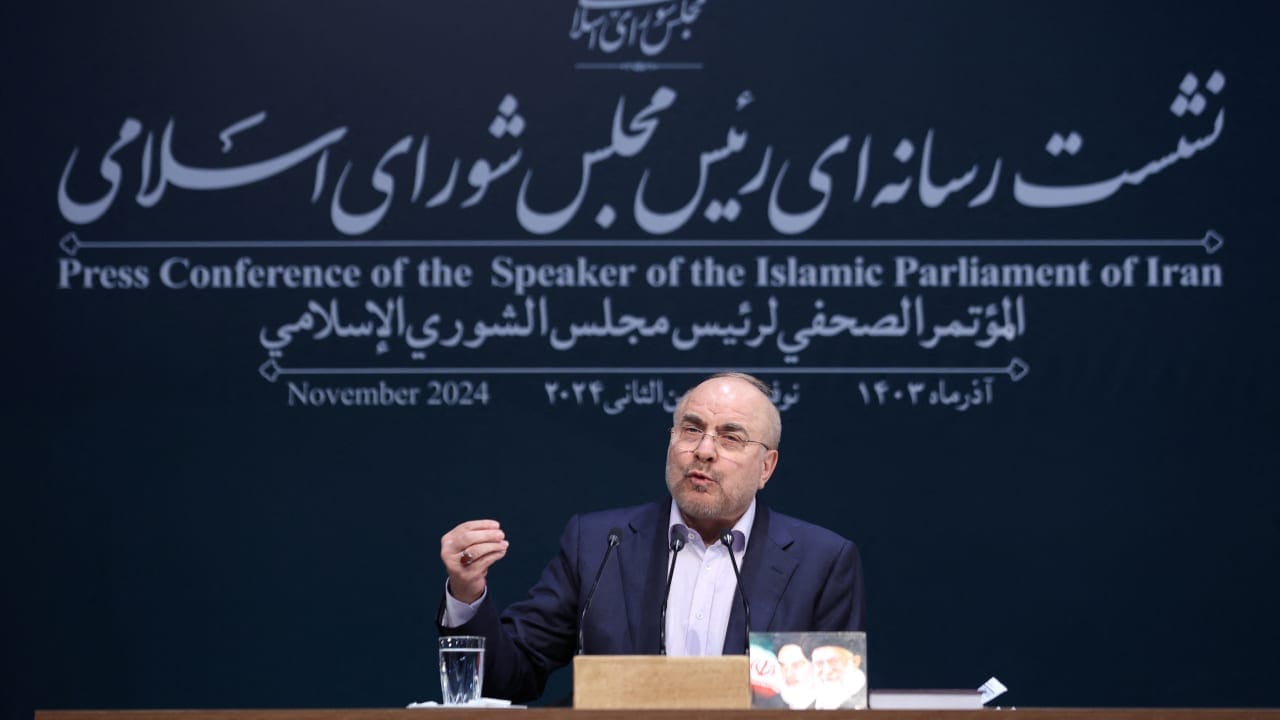
The United States has, in recent days, held mediated talks with Iranian Parliament Speaker Mohammad-Bagher Ghalibaf in a bid to end Operation Epic Fury. A powerful IRGC insider with a deep military pedigree and a long record of failed presidential bids, Ghalibaf has emerged as a central figure in Tehran’s power structure and is now “practically leading Iran,” sources told The Jerusalem Post.
Could Ghalibaf serve as a bridge between the Islamic Republic’s hardline security apparatus and US President Donald Trump’s administration?
Born in 1961, Ghalibaf is a “son of the revolution” in every sense.
He joined the Islamic Revolutionary Guard Corps (IRGC) at its inception in 1980, rising through the ranks during the brutal Iran-Iraq War to become one of its most prominent commanders. This military foundation remains the bedrock of his power.

“He is an ‘insider’ in a way few other politicians are,” said Dr. Raz Zimmt, a senior researcher at the Institute for National Security Studies (INSS) and a leading expert on Iranian affairs. “Unlike the clerical moderates of the past, Ghalibaf has the ‘Soleimani connection.’ He was a peer and close associate of the late Qasem Soleimani, which gives him a level of credibility with the IRGC that a civilian could never achieve.”
Despite his influence, Ghalibaf has long struggled to capture the presidency, the ultimate prize in Iranian elective politics. He has stood unsuccessfully for the office four times, placing fourth in 2005 and second in 2013, before withdrawing his candidacy in 2017. Most recently, he finished a disappointing third in the 2024 early election, called after the death of former Iranian president Ebrahim Raisi.
However, Zimmt notes that Ghalibaf’s electoral failures do not equate to a lack of power. “We are seeing a clear division of labor in Tehran. While the presidency handles the day-to-day civil administration, Ghalibaf – acting as Speaker of the Parliament since May 2020 – has effectively taken charge of the strategic and military management of the state.”
Ghalibaf seen as 'pragmatic conservative,' corrupt populist
To his supporters, Ghalibaf is a “pragmatic conservative” – a man who, during his tenure as mayor of Tehran, proved he could manage a complex bureaucracy and deliver results. To his detractors, he is a populist mired in systemic corruption.
During his time as mayor, Ghalibaf was frequently accused of using his IRGC ties to shield himself from burgeoning corruption scandals. “He is very corrupt,” Zimmt observes, “but in the context of the Middle East, that sometimes means he is a man you can actually do business with. He understands the language of power and interests, rather than just pure religious dogma.”
Despite his reputation for pragmatism, Ghalibaf continues to weaponize the fiery rhetoric expected of the regime’s elite. Just this week, a post from his official X/Twitter account sent ripples through Washington and Jerusalem, declaring that “alongside military bases, those financial entities that finance the US military budget are legitimate targets.”
Such statements serve as a stark reminder of the threat Ghalibaf poses. While he may be more “manageable” than figures like Supreme Leader Mojtaba Khamenei, he remains a staunch defender of the IRGC’s regional hegemony.