
Steve Witkoff and Jared Kushner. Ali Larijani. Oman and Qatar.
These are the names – and places – that have long defined the diplomatic choreography between Washington and Tehran. These were the intermediaries, the familiar channels, the well-worn tracks through which messages passed.
But the month-long war now under way has done more than degrade Iran’s air defenses, cripple parts of its military-industrial complex, and send missiles streaking toward Israel, forcing millions into shelters. It has done more than disrupt global shipping lanes and close the Strait of Hormuz.
It has also upended the diplomatic cast of characters.
As reports of talks between Washington and Tehran emerged this week, Witkoff and Kushner were being nudged aside, tainted in Tehran’s eyes by previous negotiations with the pair that preceded – and perhaps masked – military action.
Larijani, who was the secretary of Iran’s Supreme National Security Council, and other senior Iranian figures, most notably supreme leader Ali Khamenei, have been eliminated. And Oman and Qatar, long the quiet mediators between the US and Iran, are now themselves within range of Iran’s retaliation, making their continued role far more complicated.
But before getting to the players, there is a more basic question: will there even be talks?
At the moment, everything is still up in the air. US President Donald Trump has once again created a deliberate ambiguity, suggesting diplomacy while leaving open the possibility of more force. Whether this is an off-ramp or a bluff remains unclear.
Into that vacuum – if diplomacy is the road taken – have stepped unlikely players: US Vice President JD Vance, Iranian parliament speaker Mohammad-Bagher Ghalibaf, and Pakistan.
Why them? Why now?
Why does Iran want to deal with JD Vance?
Tehran is reportedly saying it no longer wants to deal with Witkoff and Kushner, or, for that matter, with Secretary of State Marco Rubio, but, rather, with Vance.
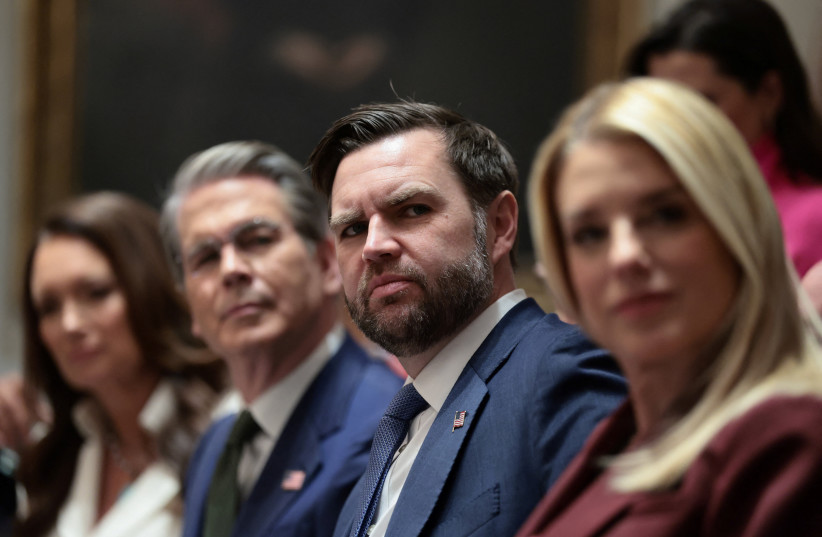
From Tehran’s perspective, he represents something the other names on Washington’s roster do not: distance.
He is not identified with the previous rounds of negotiations that, in the Iranian narrative, ended in deception – talks that were followed by military strikes. That alone gives him a degree of credibility, or at least a lack of baggage, that figures like Witkoff and Kushner no longer enjoy.
But it is not just about what Vance is not. It is also about what he is. The vice president has, throughout his political career, positioned himself as skeptical of American military entanglements, particularly in the Middle East.
For instance, the former Marine, who served in Iraq, thought that the US bombing of the Houthis last year was a mistake, and has a long record – before coming into office – of saying that a war with Iran is not in America’s interests, that it would be tremendously expensive and a “huge distraction of resources.”
Even as he has publicly backed Trump’s decisions once they were made, he has consistently given voice to a strain of thinking inside the Republican Party that prefers defined objectives, limited engagements, and clear exit ramps.
Earlier this month, Trump acknowledged that Vance had some misgivings about the war. Vance, he said, was “philosophically a little different from me. I think he was maybe less enthusiastic about going, but he was still quite enthusiastic.”
All of that, obviously, makes Vance a more acceptable figure to the Iranians. His record of caution about military entanglements and focus on cost makes him, in their eyes, more likely to pursue a transactional deal – something short of total Iranian capitulation – that allows both sides to claim a measure of success.
Yet the logic behind Trump elevating Vance to this position is not only because he may be the only person the Iranians are willing to work with. There is also political logic in getting him involved.
As one of the administration’s more cautious voices on the war, his role would serve as a built-in test. If diplomacy works, it would carry the imprimatur of even those who were skeptical about going to war. And if it doesn’t – if negotiations break down or are never even held – then one of those skeptics will have reached the same conclusion as the hawks: there was never a deal to be had.
In that sense, Vance is more than a negotiator. He is a built-in validator of whatever outcome emerges.
Mohammad Bagher Ghalibaf
If Vance’s rise reflects political calculation in Washington, the emergence of Ghalibaf’s reflects a basic necessity in Tehran.
The war has not only degraded Iran’s military capabilities; it has also hollowed out its leadership. With key figures eliminated and others operating under severe constraints – physically, operationally, and, most likely, psychologically – the regime is not functioning in an optimal manner. Decision-making is less centralized, more suspicious, and more fragile.
Trump has contributed to this by saying that he was holding talks with the Iranians, but not specifying whom he was talking to. That ambiguity is not accidental. It injects a layer of suspicion into Iran’s internal politics, leaving rival camps to speculate about who might be talking to Washington – and on whose behalf those conversations are taking place.
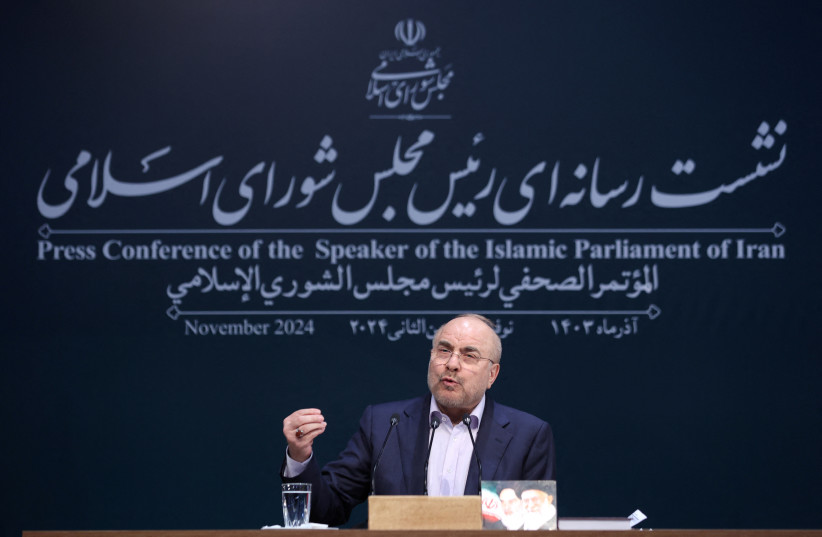
It is in that atmosphere – where suspicion lingers, and authority is no longer clearly defined – that authority gravitates to those who can act as a bridge between the competing institutions. Ghalibaf is one of the few figures left who can do that.
His résumé is, in many ways, uniquely suited to this moment. As a former commander in the Islamic Revolutionary Guard Corps, he has credibility with the military-security establishment. And as the speaker of parliament, he holds a formal political role that places him within the regime’s governing framework. Over the years, he has also cultivated an image – at least some of the time – of a pragmatic manager, someone focused on infrastructure, economics, and administration.
That combination matters. It does not, however, make him moderate. His record – both in terms of internal repression and alignment with the regime’s hardline positions - suggests the contrary.
Just as important as his emergence, however, is the vacuum his rise reflects. With Larijani gone and the supreme leadership itself disrupted, there are fewer figures with both the stature and the connections to take on a central role. Ghalibaf is not necessarily the regime’s ideal emissary; he is, however, the available one.
Pakistan
Pakistan’s emergence as a central mediator is driven less by diplomatic ambition – though that is clearly part of it – than by pressing national interests.

Unlike many of the traditional intermediaries, Pakistan cannot afford for this war to drag on – or for Iran to unravel. The reasons are immediate and concrete.
First, geography. The Pakistan-Iran border runs through Balochistan, a vast and weakly governed region split between the two countries, where separatist insurgents already operate on both sides. That matters because if Iran is destabilized, the fallout would not stop at the border. It would spill directly into this same area – bringing refugees, armed groups, and greater instability into a region Pakistan is already struggling to control.
Pakistan is still grappling with the presence of well over a million Afghan refugees from decades of war next door. The last thing it needs now is a new wave crossing in from Iran.
Second, economics. Pakistan is heavily dependent on energy flows that pass through the Strait of Hormuz. The disruption of that waterway has already led to rising fuel costs, emergency measures, and mounting economic strain in Pakistan. For Islamabad, de-escalation is not a diplomatic preference – it is an economic necessity.
Third, positioning. Pakistan occupies a rare space in the current landscape: it maintains working relationships with both Washington and Tehran at a time when direct channels between the two are largely frozen. It has in the past served as a quiet conduit for communication, including hosting Iran’s diplomatic interests in Washington, giving it a built-in role that few others can replicate.
That positioning rests not only on present-day necessity, but on a relationship that has quietly deepened in recent years.
At a think tank conference in Islamabad just days before the February 28 US-Israel strike – titled “Pakistan-Iran Relations: An Enduring Partnership in a Changing Region” – Iran’s ambassador, Reza Amiri Moghaddam, described ties between the two countries as among their most constructive in decades. He pointed to shared history, cultural affinity, and common strategic interests as the foundation of that relationship.
There is also a societal layer that reinforces those ties. Pakistan is home to the second-largest Shi’ite population in the world outside Iran – roughly 15%-20% of its more than 250 million people – creating religious and cultural links that add another layer to the relationship.
Adding to this is an unexpected personal channel: the growing rapport between Pakistan’s army chief, Asim Munir, and Trump.
That relationship was forged during last year’s India-Pakistan crisis, when Washington stepped in to help contain the escalation, and Munir emerged as the key interlocutor.
What began as crisis management has since evolved into something more consequential. In the current context, it gives Washington a direct line into a country that can still talk to Tehran, and gives Islamabad a seat at the table at a moment it can ill afford to be on the sidelines.
Pakistan offers something else as well. Unlike Gulf states such as Qatar, it does not host major US military bases that would automatically make it a target for Iranian retaliation. Still, it remains closely tied to Washington, particularly through military channels, while maintaining ties with Iran, despite periodic tensions.
That combination – access, credibility, and urgency – has pushed Pakistan to the forefront. Its mediation is driven by a simple calculation: that a prolonged war on its western flank is something it cannot afford.
It is still not clear whether diplomacy is the road that will be taken. Nevertheless, the emergence of Vance, Ghalibaf, and Pakistan already reflects a change: even before any talks begin, the terrain has begun to shift. Whether that shift will matter remains an open question.