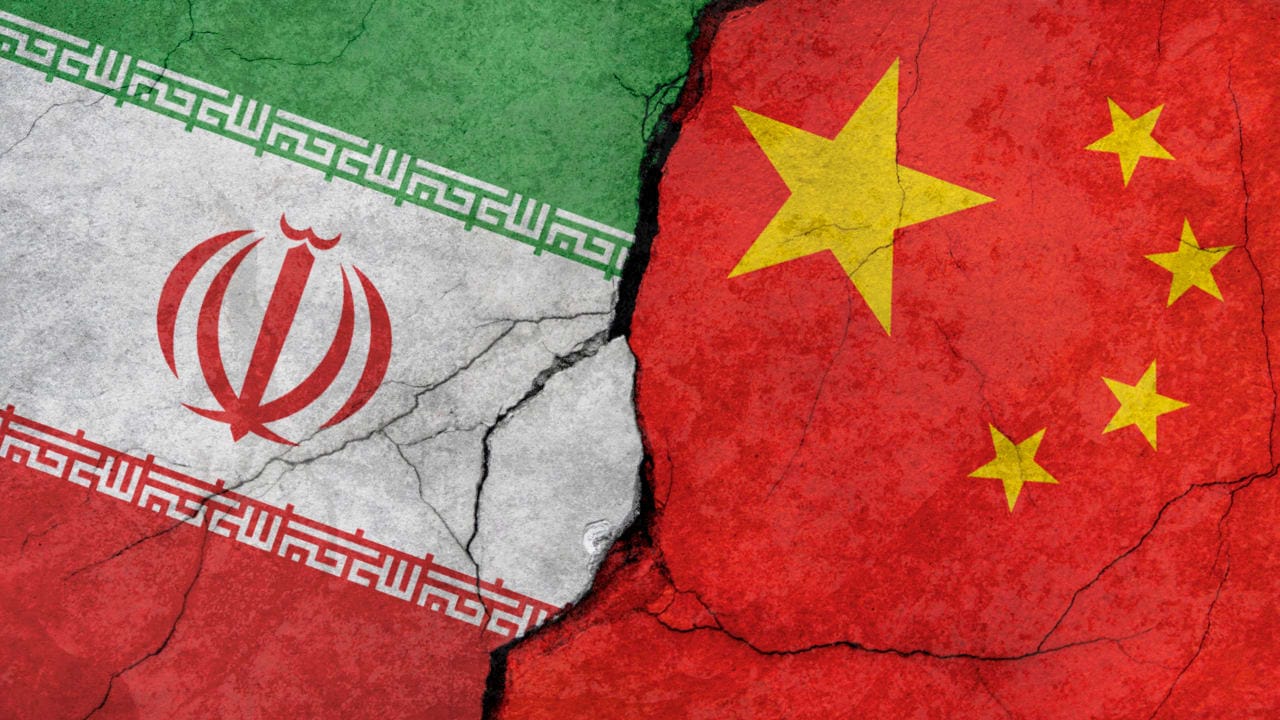
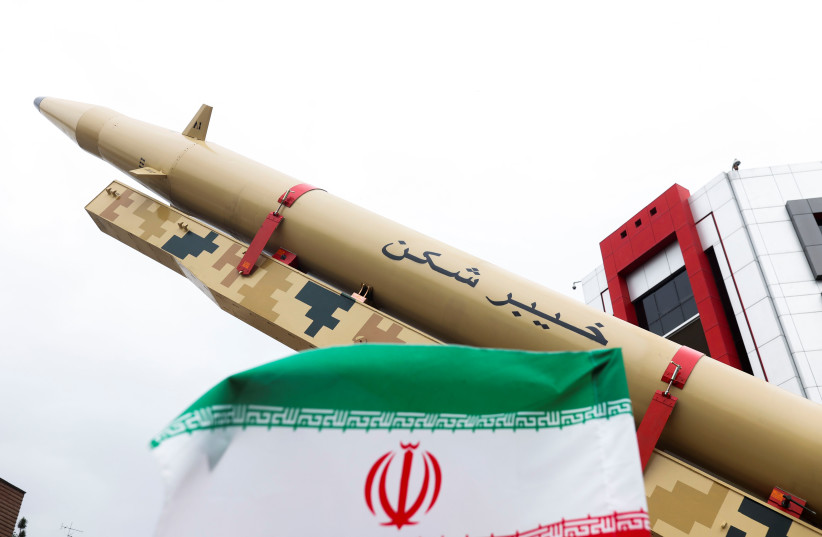
If Iran does not get heavy Chinese help with reconstituting its ballistic missiles program, the damage the Israeli and American militaries caused it means the regime will not be able to obtain thousands of missiles for multiple years, the IDF said on Friday.
On the other hand, the flip side of this IDF view is that if Beijing does go all in to help Tehran rebuild its ballistic missile program, the recovery may be much quicker, and in unpredictable ways.
The IDF's positive scenario is based on the US and Israel having struck over 2,600 Iranian military industrial sites, including a vast number of targets connected to Iran's ballistic missile apparatus.
That heavy weakening, without massive outside help, would mean Iran lost the chance to produce thousands of missiles that it could be manufacturing now and would have produced in the coming year or two, as well as lost the ability to produce any new missiles at any substantial rate for a period of multiple years.
In turn, the IDF's negative scenario is based on the fact that Iran retains between several hundred and 1,000 missiles (the IDF does not know how many) and that significant help from China could unpredictably accelerate the regime's recovery in this area.
Iran lost hundreds of billions during war
Next, the IDF said that Iran lost hundreds of billions of dollars during the war.
The IDF quoted Iran President Masoud Pezeskhian putting the losses at a minimum of $150 billion, and the military expects that number to grow substantially once the regime has enough time post-ceasefire to visit and assess all the areas where it was struck.
More specifically, the IDF said that it can specifically quantify at least $25 billion of harm to the Iranian military and at least another $45 billion in a variety of sectors overlapping with the broader economy.
Out of around 100,000 employees in the military industrial sector, this means many of them will now be out of jobs and disgruntled, with one giant former company having already officially announced it is closing down to the monumental level of damage it was hit with.
All of this will impact the ability of the Islamic regime, currently led by Mojtaba Khaemeni, the son of assassinated Ayatollah Ali Khamenei, to remain in power in Iran, said the IDF.
Further, the IDF states that Mojtaba's rule is much less stable than his father's rule was.
This is because he is wounded and has made no public statements, even by video, to Iran or the world, because he was chosen mid-war in rushed circumstances, and because his religious credentials and resume were always considered less impressive than his father's.
In fact, The Jerusalem Post understands that Ayatollah Khamenei was not even necessarily in favor of Mojtaba being his successor, at least until very recently.
Mojtaba will need to compete with the Islamic Revolutionary Guard Corps and other power centers if he wants to remain in control, which will also depend on when he might recover sufficiently from his wounds to establish a more public presence as ruler.
Regarding the 60% enriched uranium inside Iran under the rubble of multiple nuclear facilities, the IDF is confident that the US will succeed in convincing the Islamic regime to allow this to be removed to a third country or to be diluted.
Moreover, the IDF would be very supportive not only of returning to war to ensure Iran gives up its nuclear weapons program, but this would include substantially targeting Iran's as-yet mostly untouched energy sector.
If the IDF or US strike Iran's energy sector, the military said that an Iranian recovery from this war, which might have taken three to five years, could end up taking closer to 10 years due to a lack of funds.
Despite the IDF's optimistic scenarios, senior military sources appeared to discount and not take seriously the concerns of Arab countries in the region and the US, regarding the ability of Iran to harm them economically.
Although behind the scenes, top Arab military officials are telling top Israeli officials and the US to keep striking Iran, in parallel, they and Washington are very concerned about continued additional harm from Iranian missiles and from the regime closing the Straits of Hormuz.
NOTE: The Chinese Embassy in Israel later responded to the article with the following statement:
"The report is a baseless assumption. As a responsible major country, China always abides by international law and its international obligations in international affairs, including arms sales and non-proliferation. China firmly rejects the circulation of speculative, misleading, and false information targeting China. China opposes groundless smear and ill-intentional association.
China’s position on the Iran issue is clear and straightforward. We have always upheld an objective and impartial stance. China has consistently worked to promote peace talks and never added fuel to the fire. The current ceasefire negotiations have not come easily. We hope that relevant parties will do more to ease tensions, rather than the opposite."
NOTE FROM THE JERUSALEM POST: The report was based on senior IDF sources and not mere open source research or speculation.