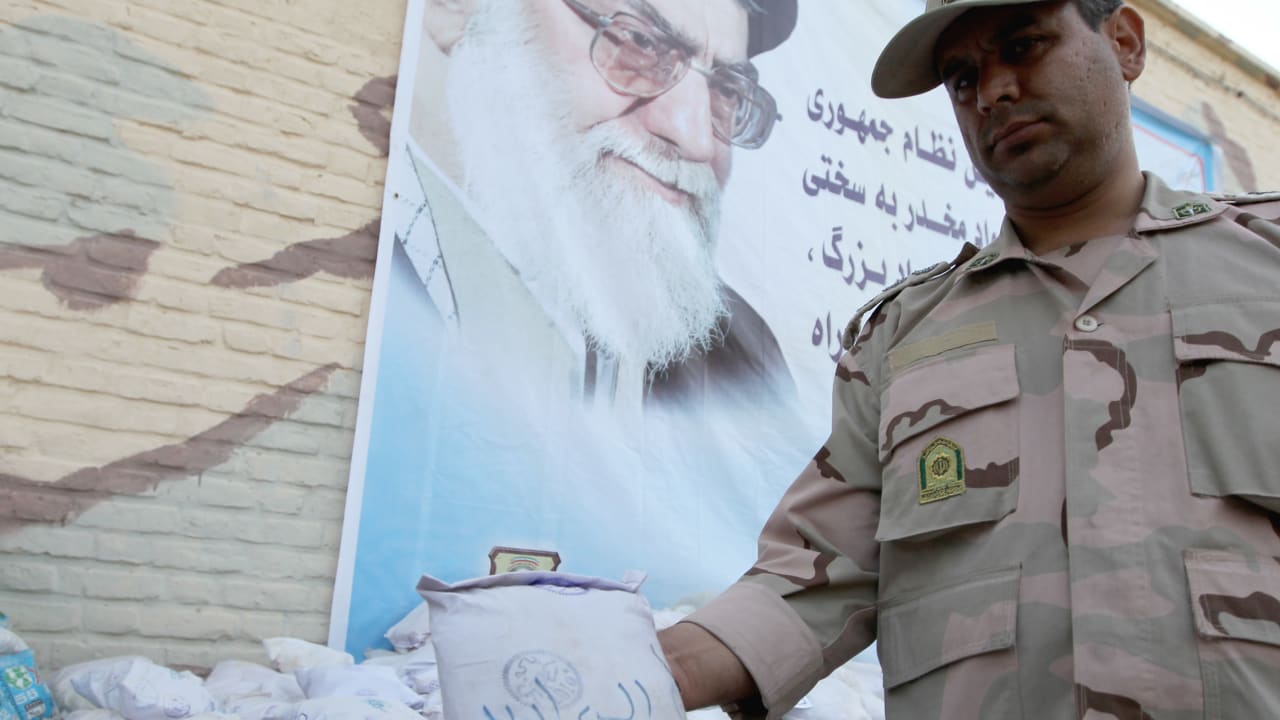
The United Nations Office on Drugs and Crime has continued to support the Islamic Republic in identifying drug traffickers, despite concerns that those convicted in reportedly unfair trials are subjected to torture and, in many cases, executed.
The UNODC last week announced that it had “helped” Iran procure advanced detection scanners to combat methamphetamine trafficking at the country’s borders.
At least part of the technology was funded by Japan, according to a 2018 UN announcement, while the international body provided training to Iran’s Anti-Narcotics Police (ANP) and Customs Administration on how to use the technology and handled the international procurement and handover of the equipment.
Iranian seizures of meth increased from 30,393 kilograms in 2022 to 40,453 kg in 2025 with the help of the technology, according to the United Nations.
UN anti-drug assistance draws human rights scrutiny
Though presented by the UN as a major achievement in the thwarting of international drug trafficking, the agency’s official policy advocates for the universal abolition of the death penalty, viewing it as incompatible with fundamental human rights.

Nearly 1,000 out of the 1,212 executions for drug-related offenses in 2025 were carried out by the Islamic regime, according to the 15th report of Harm Reduction International published in March. At the time of the report, over 1,000 people were awaiting execution for drug-related offenses, some of whom had never come into direct contact with the illegal substance.
According to both the report and UN Special Rapporteur on human rights in Iran, Mai Sato, the large majority of those killed came from a background of poverty. Many were alleged to have worked in only minor roles in the drug trade, and they were denied proper due process during their trial.
Critics warn UN support may strengthen Iran and its proxies
Additionally, while the UNODC said last week that thwarting smuggling attempts helped stem the flow of money to organized crime groups, Anne Herzberg, legal adviser at NGO Monitor, told The Jerusalem Post that many of Iran’s proxies also rely on funds generated through illicit drug trafficking.
According to the IDF, Hezbollah has been funded through cocaine sales in Europe and is heavily involved in trafficking cannabis and Captagon along the Lebanese-Syrian border.
“It beggars belief that Iran is not aware of, does not profit off of, nor [is] heavily enmeshed in Hezbollah drug trafficking,” Herzberg said.
“Moreover, it appears Iran uses drug-related charges as a pretext to jail and execute dissidents,” he added.
UN Watch calls for safeguards on assistance
Hillel Neuer, the executive director of UN Watch, added that the UN “should not be helping Iran’s brutal regime catch people whom it may then torture into confessing and execute after sham trials.”
He noted that the Islamic Republic of Iran’s “fundamentalist government routinely denies defendants due process, and has dramatically increased executions for drug offenses, including in cases raising grave questions of innocence and coerced confessions.”
Neuer argued that the UN’s actions raise serious ethical and legal concerns if UN-provided technology is helping Tehran identify suspects “who may ultimately be sent to the gallows.”
Methamphetamine is the second most commonly found drug in people who fatally overdose in the US, according to research from the US Centers for Disease Control and Prevention (CDC). Acknowledging the need to fight drug trafficking was essential, Neuer said, nevertheless, that the UN cannot give “sophisticated tools to a regime notorious for torture, arbitrary detention and executions.”
“The UN needs to explain what safeguards it imposed, whether it tracks what happens to people arrested using its equipment, and whether it can guarantee that its assistance is not facilitating death sentences. If it cannot provide those guarantees, the assistance should stop,” he concluded.
The UNODC did not respond to The Jerusalem Post’s request for comment.