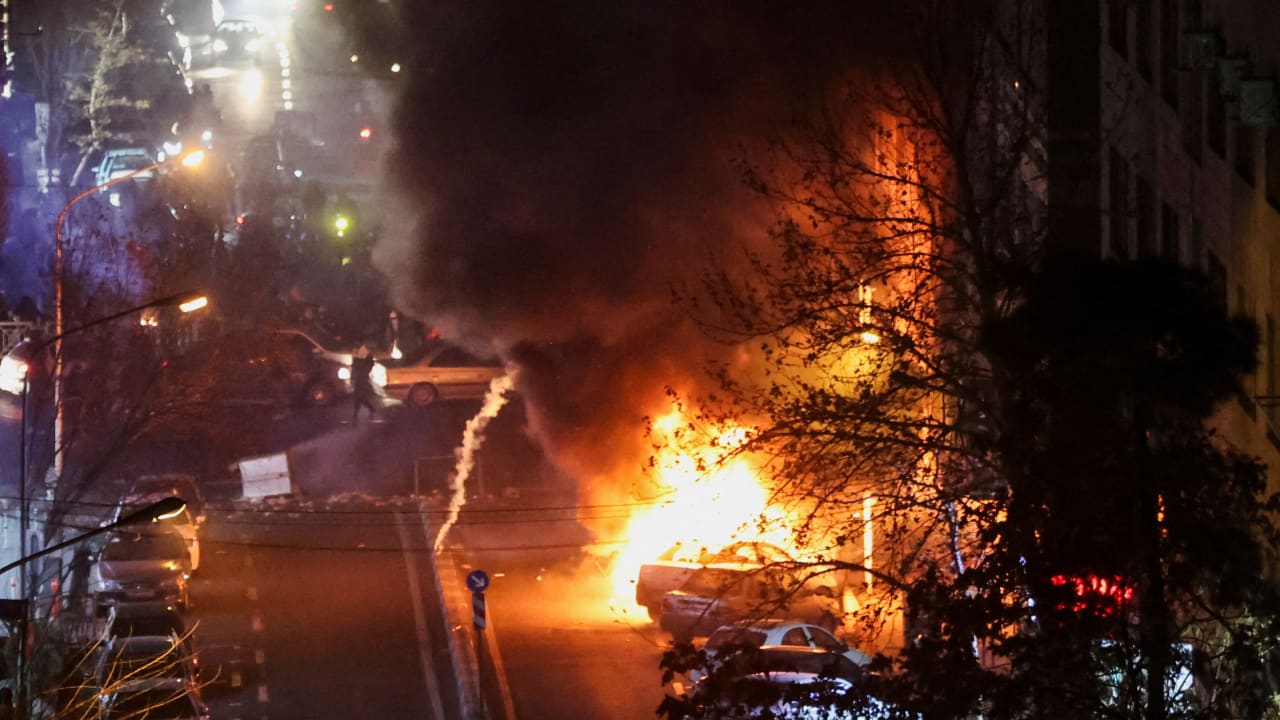
Small-scale protests by retired telecommunications workers, retired teachers, and job-seekers have been taking place in Tehran and several other cities as Iran faces a worsening economic crisis, the Human Rights Activists News Agency reported.
In Isfahan and Sanandaj on Sunday, retirees reportedly gathered to demand action over the cost of living and pension payments. They cited the Social Security Law, which requires pension and disability payments to remain at or above the legal minimum wage.
Iran’s monthly minimum wage is about 16.6 million tomans ($120) before benefits, according to Iranian media outlets.
Retired educators, telecommunications workers, and job-seekers also demonstrated on Sunday in Tehran, Ahvaz, Shush, Kermanshah, Dezful, and Rasht, according to reports.
On Monday, a group of retirees protested in Kermanshah province over the cost-of-living crisis and subsidized medical treatment under supplementary insurance policies.

Many Iranians forgoing critical treatments as costs rise
The protests come after DW Persian reported that many Iranians, including cancer patients, were forgoing or delaying critical treatment as healthcare costs become increasingly unaffordable.
The prices of some medications had risen by 120%, Iran’s semi-official Tasnim News Agency reported.
Some medications had increased in price by as much as 543%, German news channel Deutsche Welle (DW) reported.
The cost of a monthly prescription of four NovoRapid insulin pens, for example, has risen from about 280,000 tomans after insurance reimbursement to nearly 1.1 million tomans, DW reported, citing Iranian physicians.
There were no reports of violent suppression at these protests.
Last week, security forces opened fire on and beat demonstrators outside the Dabal Khazaei Sugarcane Agro-Industry Company and near the Lishtar refinery project, according to footage shared by both HRANA and the Karun Human Rights Organization.
Iran's economy continues to struggle with blackouts, water crisis, war
Iran’s economy was already struggling under years of sanctions, while the regime’s Internet blackout and water crisis, as well as the war with the US and Israel and the blockade of the Strait of Hormuz, have further worsened the crisis.
Beni Sabti, a researcher and commentator at Tel Aviv’s Institute for National Security Studies (INSS), last week told The Jerusalem Post it was possible that there would be a return to protests at the size and scale of the violently suppressed January demonstrations, especially given that the “Iranian people don’t have many options to survive.”
Human-rights groups have said more than 30,000 demonstrators were killed by the regime’s security forces in January. Iranian authorities have continued to execute people accused of being involved in the protests, using vague charges such as moharebeh (waging war against God).