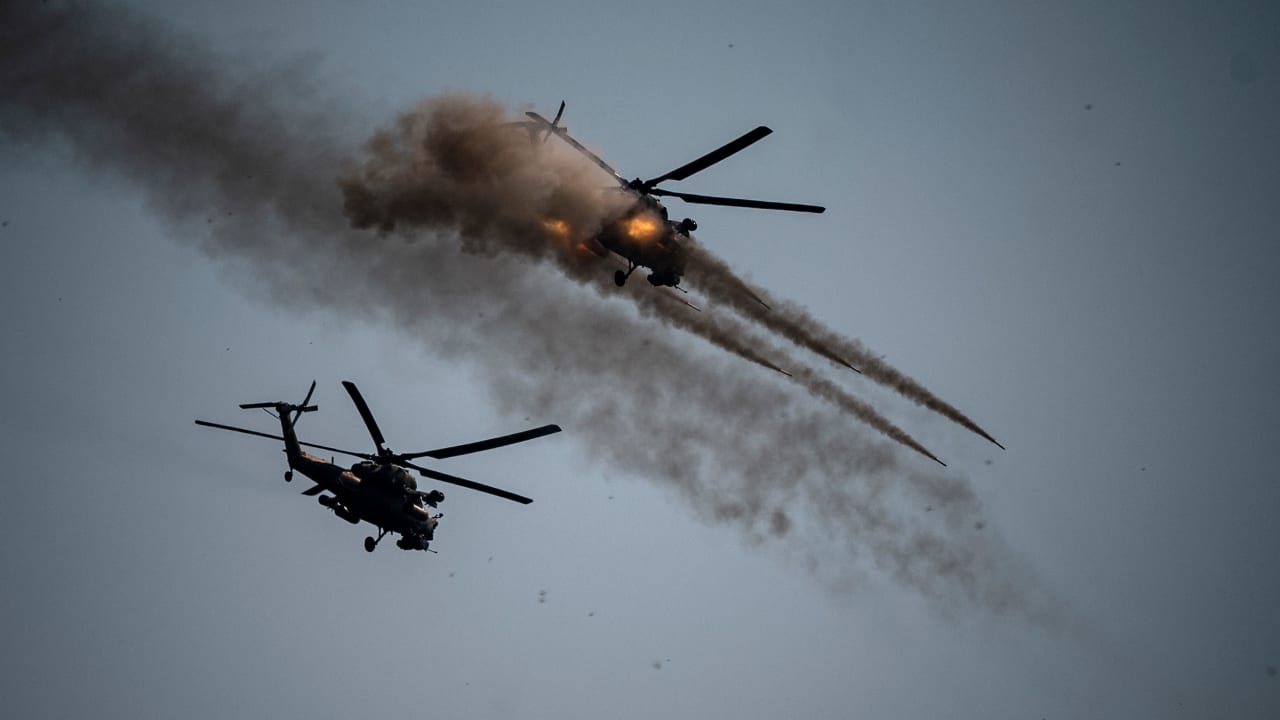
Russia has signed a weapons deal with Iran, agreeing to supply the Islamic Regime with 90 advanced guided missile launchers as a sign of Moscow's support, according to a Financial Times report published on Thursday.
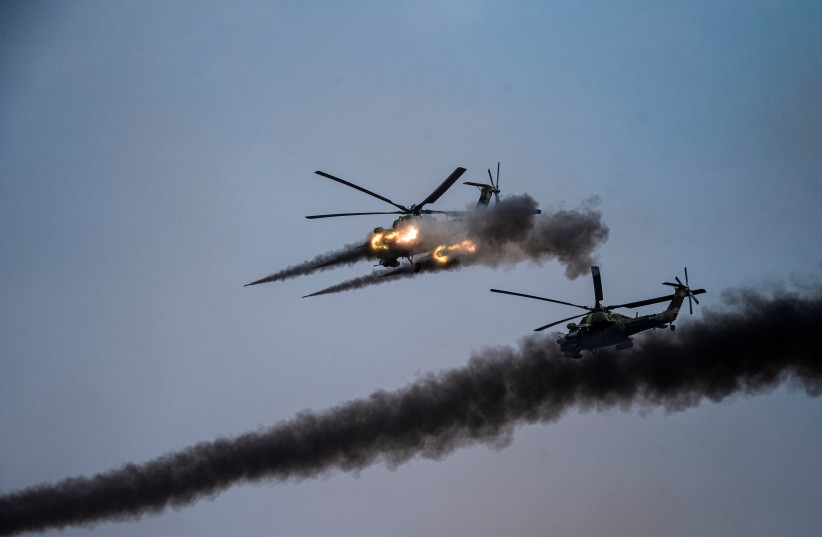
The order, recently uncovered by FT, involved a 2024-2025 production schedule from a major Russian defense manufacturer that produced helicopter-mounted missile launchers utilized extensively in the Russia-Ukraine War
Russian-Iranian ties have been deepening their partnership in recent years,
-
-Western intelligence officials say Russia and Iran have further deepened their partnership during the war in the Middle East this year, despite US President Donald Trump’s recent claims that Moscow was doing “very little, if anything” to help the Islamic Republic.
-
H3
-
-
Iran to receive Russian fighter jets
Iran will reportedly receive Russian-made Su-35 fighter jets after the US-Iran war ends, Revolutionary Guards spokesman General Mohammad Akraminia told Iranian media on Sunday.
Akraminia claimed that before the war began at the end of February, the IRGC was in the final stages of procuring the fighter jets. He told the Persian-language outlet Tabnak that the Su-35s were meant to arrive before the war.
“We have also made progress domestically. Of course, purchasing equipment from abroad will bring us closer to advanced technologies, which we can then use as a foundation for further development,” he said.
While he did not specifically name Russia in the interview, it is the only established manufacturer of Su-35s. The fighter jet is Russian-designed and produced by Sukhoi, part of Russia's United Aircraft Corporation.
Jerusalem Post Staff contributed to this report.
---Financial Times Text---
The order, which has not been previously reported, shows how the two allies have strengthened their military ties since Russia’s invasion of Ukraine in 2022.
Western intelligence officials say Russia and Iran have further deepened their partnership during the war in the Middle East this year, despite US President Donald Trump’s recent claims that Moscow was doing “very little, if anything” to help the Islamic Republic.
The FT has previously reported that Russia has helped Iran develop supersonic cruise missiles, sold it Verba shoulder-launched anti-air missiles and engaged with Tehran over information potentially relevant to nuclear weapons.
“It is indicative of Russia’s willingness to continue supplying Iran despite its own wartime demands and with far less concern about Western objections than in the past,” said Nicole Grajewski, a non-resident scholar at the Carnegie Endowment for International Peace.
The production document, provided to the FT by Dallas Analytics, a Ukrainian private intelligence organization, was sent in a May 2024 letter from Vympel, a leading Russian designer of missiles and launch systems.
Vympel urged another Russian defense bureau, KBM, to speed up deliveries of components for two types of missile launchers, APU-L and APU-305, which are primarily mounted on helicopters. Delays could put nine contracts at risk, it warned in the letter.
The accompanying production schedule lists seven Russian customers and two foreign buyers. China is named as one of them, with an order for 192 APU-305 launchers. The other buyer, identified only as “K-10,” ordered 90 APU-L launchers.
Rosoboronexport, Russia’s state-owned arms agency, uses K-10 to refer to Iran, according to a person familiar with the matter and internal Russian documents obtained by the FT.
One contract for Yak-130 jet trainers and light attack aircraft seen by the FT explicitly identifies the buyer as “K-10, Iran”. Another, a 2023 production schedule from a subsidiary of Russia’s state-owned defense conglomerate Rostec, lists six Yak-130s destined for K-10, with two scheduled for production in the first half of the year and four in the second.
The schedule matches publicly reported deliveries. In 2023, the semi-official Tasnim news agency reported that Iran had received two Yak-130s. By the end of 2024, all six had been delivered, according to the Stockholm International Peace Research Institute.
The document does not establish whether the launchers destined for Iran were ultimately delivered.
Both types of launchers are designed to carry Russia’s light multipurpose guided missile, known as LMUR or Izdeliye 305, a precision weapon capable of striking moving targets. First unveiled at Russia’s Army Expo in 2021, the missile entered military service in 2022 and has since been widely used by Russian forces in Ukraine.
“This missile is much faster than a drone and reaches its target far sooner. At around 230 meters per second, it covers 14km in about a minute,” a representative of Dallas Analytics said. An operator can guide the missile in flight, allowing it to strike small, moving targets with precision.
“The concept is shoot-and-scoot: move to a firing position, launch, hit the target, and withdraw quickly,” the representative added. The short-range weapon is particularly suited to raids and ambushes, leaving the enemy little time to react.
According to the US Army’s Worldwide Equipment Guide, APU-L launchers are designed for Russia’s Mi-28 attack helicopters and can carry two missiles each, while the APU-305 carries one.
Iran already has Russian Mi-28 helicopters. In November 2023, deputy defence minister Mehdi Farahi told Tasnim that arrangements had been finalised for the helicopters to join Iran’s armed forces.
In January 2026, Tasnim journalist Mohammad Taheri posted a photograph of an Mi-28 with the message: “Inshallah, you have a good military service.” Later that month, photographs of an Mi-28 in a hangar in Tehran emerged online, with open-source researchers geolocating the aircraft to an Iranian aviation facility.
Russia is walking a fine line to make sure its support of Iran does not disrupt its other relationships, including with other Middle Eastern countries and the US, said Hanna Notte, Eurasia program director at the James Martin Center for Nonproliferation Studies.
“Russia still has certain red lines when it comes to its involvement in this war,” said Notte. “Which is why the support it has provided to Iran is operationally helpful but is not the game changer in this war.”
---Financial Times Text---