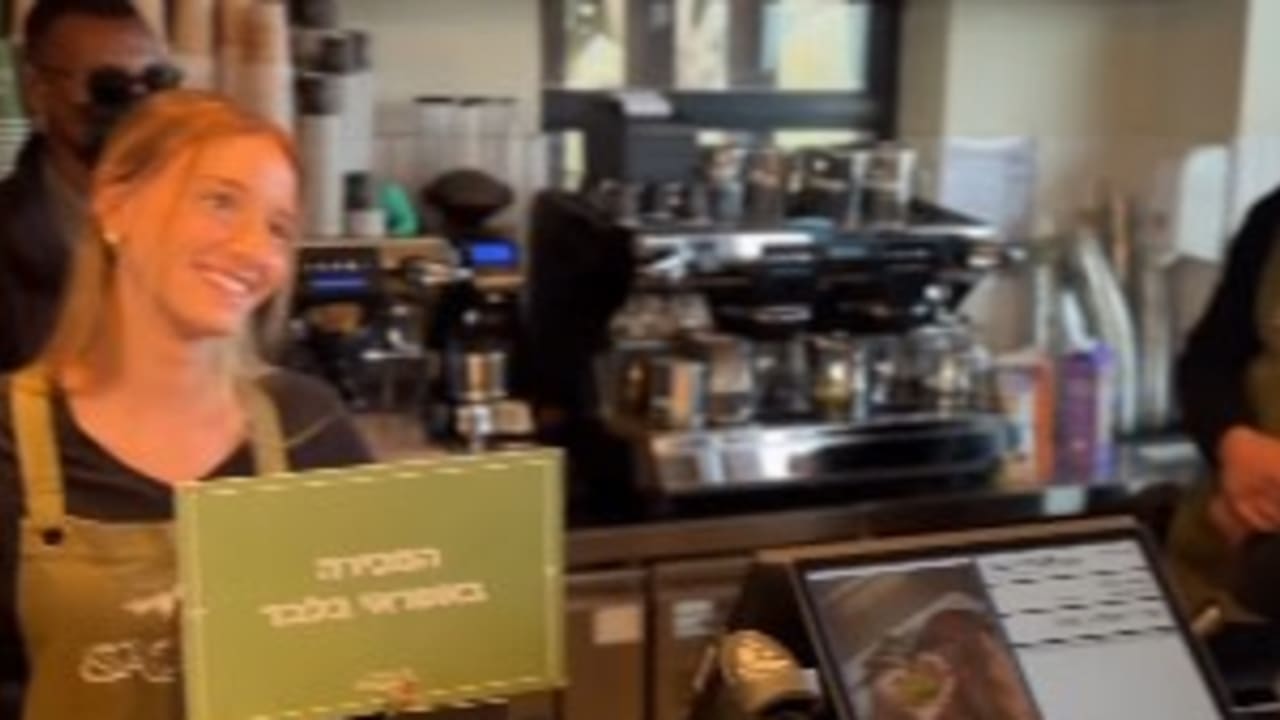
A brief appearance in a video posted by Israeli Prime Minister Benjamin Netanyahu propelled a young female employee of Sataff café near Jerusalem into international visibility. Images and snippets of the 'barista', a mistaken identity later corrected as the employee clairfied she only took Netanyahu's order, quickly spread across social platforms.
The video, released Sunday, aimed to counter viral conspiracy theories about the prime minister’s health and claims that footage from a recent news conference showed a hand with six fingers. Instead, attention focused on the woman behind the counter in a green apron and dark shirt, her hair tied back and wearing a warm smile.
In the video, a cameraman tells Netanyahu that “they’re saying on the internet that you’re actually dead.” The prime minister replies, “I’m dying for coffee. I’m in love with my people. Look how they behave — fantastic.” He then raises both hands and says, “Do you want to count the fingers?”
A warm smile
The video’s initial purpose, to tamp down rumors about the prime minister’s well-being by showing him casually ordering coffee, was swiftly overshadowed by fascination with the worker who served him. The visual hooks were modest — a uniform, a tied-back hairstyle, a fleeting smile. Social media users fixated on the 'barista', sharing her brief on-screen moments with screenshots and edits.
On X, formerly Twitter, the reaction swelled into a full-fledged trend in Israel. The “barista craze” spawned jokes, memes, and culture-war punchlines that recast the young employee as an unlikely face of Israeli national PR.
Within hours, interest coalesced around the employee’s identity and age. Coverage described her as a 17-year-old who became a global star overnight. The café owner said the attention had spiraled beyond anything he expected.
As the online churn continued, the café’s sudden spotlight brought mounting inquiries and requests for interviews abroad, the owner told Israeli News 12. For the business and the employee, it marked an abrupt shift from routine service to worldwide attention, amplified by memes and commentary that turned a simple coffee run into a pop-cultural flashpoint.