
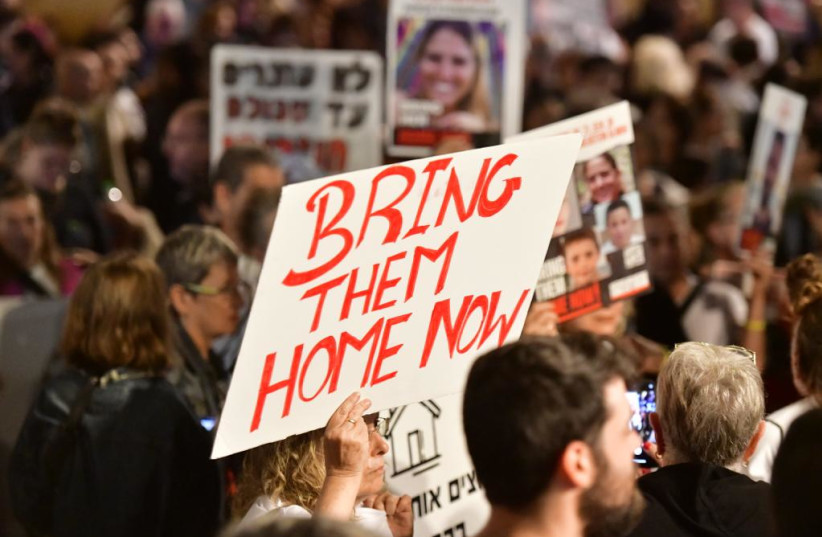
For over six months, we have been closely following the plight of the hostages held captive in the underground tunnels of Gaza. While many have tragically lost their lives and some have been rescued, many more still remain trapped in the dark confines of these tunnels.
Beyond the psychological trauma, a critical medical question arises: What will be the physical toll on these individuals after enduring months of psychological distress, lack of light, inadequate nutrition, severe inactivity, and deprivation of fresh air and sunlight?
As an ophthalmologist and vision physiology specialist, I wish to shed light on the potential vision problems that could afflict these hostages upon their release. Understanding these issues is crucial for preparing their proper care and creating suitable conditions for their recovery.
Prolonged exposure to darkness for several months can lead to a range of eye and vision disorders. Some may be temporary and resolve after returning to normal conditions, while others could have lasting, severe consequences for the rest of their lives. Moreover, the combination of prolonged darkness and inadequate nutrition can trigger hallucinations and various psychological problems, which require the expertise of mental health professionals.
Potential consequences of extended darkness on vision
Let us examine the main potential consequences of extended darkness on the eyes and vision, especially when accompanied by poor nutrition and vitamin deficiencies.
Firstly, the lack of visual stimulation, coupled with a potential vitamin A deficiency, will lead to diminished light sensitivity and a condition known as night blindness or nyctalopia. Additionally, it may impair the ability to distinguish colors and their nuances.
Due to the absence of normal visual stimulation, there may also be a disruption in the coordinated functioning of the eyes and brain, resulting in impaired binocular or depth perception. Consequently, these individuals may initially experience double vision, impaired spatial perception, and difficulty with hand-eye coordination, leading to challenges in movement and navigation.
Prolonged darkness will also disrupt the circadian rhythm, our internal clock that regulates sleep-wake cycles. This disruption can pose additional challenges for women, given their cyclical hormonal changes.
Furthermore, long-term deficiencies in vitamins, particularly A, B and C, can increase the risk of permanent structural changes in the cells of the optic nerve and retina, leading to degeneration of the retinal pigment epithelium, which is essential for normal vision. Additionally, it may cause structural alterations in the cornea, the transparent front layer of the eye. In such cases, the consequences for the eyes and vision could be severe.
While some of these problems may be temporary and resolve over time, others could persist for life. The longer the exposure to darkness combined with inadequate nutrition, the higher the risk of irreversible damage.
As I mentioned earlier, we are only discussing vision-related issues here. Specialists in other medical fields could expand this list with conditions within their areas of expertise.
All of this heightens our responsibility to do everything possible to secure the release of these hostages. And it strengthens our desire for their swift liberation.
Moreover, it is crucial for the ophthalmologists across the country to be prepared to face a significant influx of patients with such conditions. They must be ready to provide comprehensive care and treatment to address the vision-related consequences of prolonged captivity in darkness and inadequate nutrition.
Proper resources and facilities need to be allocated to handle this potential surge of cases effectively. Ophthalmologists should be equipped with the necessary knowledge, skills, and equipment to diagnose and manage the various eye disorders that may arise from this unprecedented situation.
By being proactive and prepared, we can ensure that these individuals receive the best possible care and support, not only for their physical well-being but also for their psychological recovery and reintegration into society.
The road ahead may be challenging, but with collective efforts and a strong commitment to their welfare, we can help alleviate their suffering and restore their vision, allowing them to embrace the light of freedom once again.
The writer is an ophthalmologist with doctoral degrees in ophthalmology and pathophysiology. Prior to relocating to Israel in 2019, he worked at the University Clinic – a joint organization of the M. Krasnov Research Institute for Eye Diseases of the Russian Academy of Sciences and the I.Sechenov First Moscow State Medical University.