
Back in 1783, at the conclusion of the American Revolution, a Jew named Mordecai Sheftall from Savannah, Georgia, wrote to his son: “Thanks to the Almighty, it is now at an end. An intier [entire] new scene will open it self, and we have the world to begin againe.” Similarly, the conclusion of the current Gaza war will open up a “new scene.” Many assumptions and paradigms (“konseptziot”), not just of Israelis but of American Jews too, perished in the wake of October 7. Like Sheftall, we too “have the world to begin againe.” Many disturbing features characterize this new world in which we find ourselves, but also – as we shall see – a historic opportunity.
The most obvious and most disturbing feature of this new world is the resurgence of antisemitism. Antisemitism has a long, ugly history in the United States dating back to the founding of the Jewish community in Colonial times. It peaked during the inter-war years of the 20th century when, for example, automaker Henry Ford, influenced by The Protocols of the Elders of Zion, described “the international Jew” as “the world’s foremost problem”; pioneering radio priest Father Charles Coughlin, now known to have been in the pay of the Nazis, preached to tens of millions of listeners that Jews were both international financiers and Communists undermining the United States; and famed aviator Charles Lindbergh alleged that Jews, instead of placing America first, were conspiring to force the country into war against Germany. During these years, discrimination against Jews in housing, employment, clubs, hotels, and universities was commonplace and rampant.
Following World War II, however, American antisemitism declined, as awareness about the destruction of European Jewry increased, and Americans sought to distinguish themselves, ideologically, from the Nazis whom they had just defeated. Antisemitism continued to wax and to wane, but by every measure it declined decade by decade. By the time I was growing up, in the early 1960s, almost all resorts and housing developments had dropped their restrictive clauses against Jews; antisemitic college quotas had mostly ended; and professional fields like law, medicine, and banking proved more receptive to Jews than at any previous time in the 20th century. The former director of the Anti-Defamation League, Benjamin R. Epstein, described the years following World War II as a “golden age” for American Jews, one in which they “achieved a greater degree of economic and political security, and a broader social acceptance, than had ever been known by any Jewish community since the [ancient] Dispersion.”
Antisemitism did not disappear completely, of course, but young Jews grew up believing that most prejudice in America was directed at “people of color,” such as Blacks and Hispanics. When Prof. Leonard Dinnerstein published the first and only scholarly history of American antisemitism, in 1994, his book ended on a hopeful note.
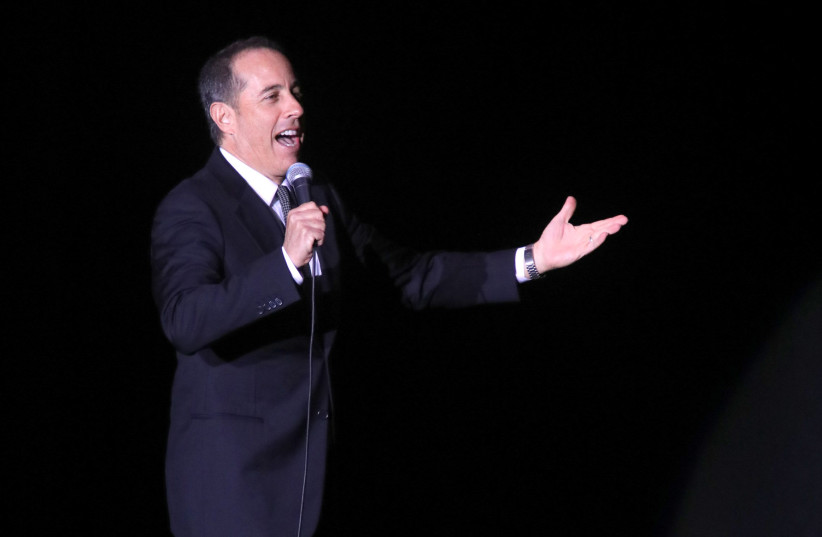
“Greater tolerance and acceptance of diversity in the United States,” he concluded, “showed that antisemitism has declined in potency and will continue to do so for the foreseeable future.” In the year 2000, a volume actually appeared with the arresting title The Death of American Antisemitism. Just as anti-Catholicism and anti-Mormonism had greatly receded in the United States, so many people – young Jews in particular – believed that antisemitism in America was basically over. Comedian Jerry Seinfeld recently confessed that in the 1990s, when he produced his popular sitcom Seinfeld, he believed that “antisemitism was a relic – seemingly a relic of history books.” A whole generation of Americans, including Jews, grew up believing that, too.
Today, of course, “we have the world to begin again.” Nobody – not community professionals, not scholars, not rabbis, not politicians, and certainly not lay people and young people – expected to see the breadth and depth of antisemitism that we have witnessed since October 7. Different national surveys offer different numbers, but all agree that overt antisemitism has skyrocketed in the US. Something on the order of two-thirds of American Jews report feeling less safe than they did a year ago. More than 40% have changed their behavior – on the street and online – to avoid being recognized as Jews and targeted. Among college students, according to an important scholarly survey by Prof. Eitan Hersh, 40% of Jewish students report that they have been personally targeted with antisemitic messages, and “a substantial share” of the college-age Jewish population feels they incur a social penalty for being Jewish, for attending Jewish programs, and for supporting the right of Israel to exist as a Jewish country.” Significantly, Hersh found, a substantial share of the non-Jewish population on college campuses “endorses that social penalty.”
When antisemitism resurged in the US
To be sure, the resurgence of antisemitism in America began before October 7. The 2016 election was riddled with antisemitic memes and messages, leading a horrified Washington Post correspondent to declare that “Antisemitism is no longer an undertone” of the Republican campaign. “It’s the melody.”
The so-called Unite the Right rally in Charlottesville, Virginia, just one year later, featured the chant “The Jews will not replace us,” an allusion to White Replacement advocates’ charge that Jews, whom they view as not true white people, are aiding the effort to assist immigrants from Latin America and thereby undermine white civilization. Note that on the extreme Right in America, Jews are attacked for imitating white folks and undermining white civilization in favor of people of color; while on the extreme Left, they are attacked as powerful white folks who promote the white power structure and should be shunned by people of color.
A year after Charlottesville, on October 27, 2018, a mass shooting took place at Pittsburgh’s Tree of Life Synagogue. It left eleven people dead and seven wounded, the deadliest attack ever on a US Jewish community. Again, the culprit turned out to be a Right-wing extremist who blamed Jews for promoting non-white immigration. For many young Jews, it was that deadly attack on Shabbat that signaled the resurgence of American antisemitism. Based on what they had learned about the Holocaust, they reasonably but wrongly concluded that the danger facing Jews in America came from the extreme Right. That fit into a paradigm that they understood, even if they had not previously experienced it themselves.
October 7 upended that paradigm. What has been so disturbing and painful to American Jews over the past nine months has been the outpouring of antisemitism from the Progressive Left – including, in many cases, their own previous allies. Important leaders of Progressive causes like Black Lives Matter, the environmental movement, the LGBTQ+ movement, and the women’s movement (causes much beloved by many American Jews) have sided with Hamas terrorists against Israel. “We have watched our identities and ancestry completely erased, our very existence demonized for being unapologetic Zionists, and have been forced into silence in our shared progressive spaces,” a Progressive Colorado Democrat named Stefanie Clarke wrote a few months ago in the Denver Post. “Instead of seeing us for who we are – and who we have always been – many of our trusted Progressives allies have reduced an entire group of people to a slur [“Zionist”] and turned their backs on us. The Left has left us behind.”
Rabbi Sharon Brous of Los Angeles, whose congregation is filled with Progressive Jews, has spoken of her “existential loneliness” in the wake of October 7.
Of course, not all American Jews define themselves as “Progressive.” But about half do describe themselves as “Liberal,” according to the Pew Survey, and about 70% traditionally vote Democratic. Supreme Court justice Louis Brandeis, the central figure in American Zionism during his lifetime and the man who reshaped Zionism to win American Jews under its banner, strongly identified as a Progressive, and has long been a hero to the American Left. “By battling for the Zionist cause,” Brandeis claimed over a century ago, “the American ideal of democracy, of social justice, and of liberty will be given wider expression.”
Generations of American Jews learned from Louis Brandeis that “to be good Americans, we must be better Jews; and to be better Jews, we must become Zionists.” Jews who supported Israel for most of its history believed that Zionism, American patriotism, Judaism, and social justice all marched happily hand in hand. Zionism thus complemented the cult of synthesis that, I have argued, most American Jews have long subscribed to. They have been taught and have long believed that “there is nothing incompatible between being a good Jew and being a good American.”
But now, in the wake of October 7, we have the world to begin againe. Across the United States, Jews are hearing from Progressives that they have to choose between their Zionist Jewish commitments and their Progressive American commitments. This is a new and disturbing experience for many US Jews, young people in particular. Many Jews, as a result, are turning inward, finding allies among their fellow Jews.
But first let me relate to what is going on at American colleges and universities. Higher education has been an engine of mobility and a symbol of progress for American Jews since early in the 20th century. Already in 1918-19, according to the American Jewish Year Book, Jews constituted almost 10% of America’s college students, while being only about 3.5% of the population. Jews continued to find ways to attend college even during the inter-war years when many universities imposed strict antisemitic quotas in a bid to keep their percentage of Jewish students down. The value of the Jewish community’s go-to-college strategy proved itself when college-trained Jews found good jobs during the New Deal and World War II. To this day, American Jews believe that if their children gain acceptance to a top-ranked college or university, they are set for life. College is also the place where American Jews become independent and mature; it serves for American Jews many of the same roles that the IDF serves for Israelis.
There are approximately 4,000 colleges and universities in the United States, and, when it comes to antisemitism, each one is a story unto itself. Many colleges – especially religious ones like America’s excellent Catholic colleges, and colleges with many poorer students who need to work in order to study – have hardly been affected by antisemitism. In addition, where campus leaders have taken a strong stance against law-breakers, such as at the University of Florida in Gainesville, antisemitism has been minimal. The Anti-Defamation League’s “Report Card,” which covers about 85 campuses (Brandeis got an A; Harvard got an F), makes the diversity among campuses clear. Despite this diversity, a great many college campuses where large numbers of Jews study – Columbia, Cornell, Johns Hopkins, MIT, Ohio State, Princeton, Rutgers, Stanford, Tufts, the Universities of California, the University of Chicago and state universities in Illinois, Massachusetts, North Carolina, Pennsylvania, and Virginia, as well as Yale University – all received Ds or Fs from the ADL. Students at those universities, especially if they are so-called “visible Jews” – meaning Jews who wear distinctive Jewish symbols or attire – have likely experienced some form of harassment since October 7 or to know someone who did. Remember too that owing to COVID-19, far fewer Jewish students on college campuses today have visited Israel on Taglit-Birthright programs than before.
Over the past decade, as universities have laid new stress on “diversity, equity, and inclusion,” the number of Jewish students at many of the top American universities has declined sharply. At the University of Pennsylvania, according to Inside Higher Education, Jewish students accounted for about a third of the enrollment several decades ago and now make up only about 16%. The number of visibly Jewish traditionally observant students, which reached 200 in the early 2000s, has plummeted by 65% to about 70. Harvard, Yale, Princeton, Columbia, and Dartmouth all have likewise witnessed significant declines in their Jewish student numbers. The decline is even more pronounced in the faculty ranks. According to one study, just 4% of elite American academics under age 30 are Jewish. When I began my career, that number was 21%. White Jewish men, especially if they are visibly Jewish, have little chance of finding faculty appointments in the humanities, social sciences, and arts today. For several years now, I have had to break that dire news to prospective graduate students. It is heartbreaking.
The absence of Jews among the younger faculty at elite universities, and the decline in the overall number of Jews, especially visible ones, at those same universities goes far to explain what we have witnessed at America’s universities in the wake of October 7. In the world that “began again” following October 7, the American academy seems to be a lot less friendly to Jews than at any other time in the last 75 years.
There is an additional and rather sensitive factor at work at universities, and that is the impact of the growing number of faculty and students of color. As the percentage of Jews has declined, the percentage of people of color has risen. Many of these individuals come from African, Muslim, and Third World countries where Jews are unknown. Many come with preconceptions about Jews and Israel and subscribe to the colonialist binary that divides the world into oppressors and oppressed – colonizers and colonized – with Jews and Israel among the rich, wicked oppressors. All Jews, to them, are white and powerful – even Jews who are themselves “of color.” Of course, many people of color on campus are simply ignorant about Jews; they are not necessarily hostile. We, too, often label as “rasha” those who should actually be placed in the category of “tam.” But whatever the case, the presence of large numbers of people of color has changed elite universities in recent years. Anecdotally, people of color have been disproportionately involved in the antisemitic activities on many campuses. American journalist Peter Beinart, no friend of Israel in recent years, has reported that in his experience, “the students who are most likely to be involved in the pro-Palestine activism are among the least privileged students on campus. They are disproportionately students of color, and many of them are from immigrant families, and a significant number of them are actually foreign students.”
Many people, including me, believe that some of these foreign students are actually foreign agents, receiving money from Gulf states. There is considerable evidence that campus demonstrations were carefully planned and organized, as well as generously funded. Some day the full story will become known. I remind you, however, that it took 80 years before an intrepid Catholic scholar named Charles Gallagher proved that Father Charles Coughlin’s Christian Front warriors, in the late 1930s and early ‘40s, were in the pay of the Nazi Party. It may take a long time to unravel who stands behind this year’s demonstrations at elite universities.
I would also add to Beinart’s observation that many of the leading pro-Palestinian activists on college campuses, in addition to being students of color, are Muslim. In the world that began againe on October 7, American Jews are, in some cases for the first time, confronting Muslim political power in the United States. There are at least twice as many Jews as Muslims in the US – very different from the situation in England and France. Still, as it has a right to do, the Muslim community is flexing its political muscles. This is especially evident in the crucial swing state of Michigan, home to a large Muslim community. In Chicago, too, Palestinian power has grown, and politicians are listening to them. In the post October 7 world, American Jews will need to take much greater account than ever before of Muslim voters.
Both in Israel and the United States, the claim is made that American Jews, looking ahead, will also have to take much greater account of their own young people who, it is alleged, are turning away from Israel and Zionism in large numbers. American Jews with historical memories will recall hearing this warning many times before, perhaps most famously around the Yom Kippur War, when an organization called Breira was formed by young American Jews, some of whom became in later years Jewish leaders and stalwart Israel supporters. The relationship to Israel, it turns out, is a bit like the relationship of children to parents. One may be critical of Israel as a young person, but the older you get, the smarter and better Israel gets.
Today, somewhere between 1/5 and 1/3 (20-33%) of young American Jews say they have little or no connection to Israel, according to studies by Eitan Hersh and Leonard Saxe; a smaller percentage are actively hostile. Among disconnected young people, a good many have only one Jewish parent – remember that over 70% of non-Orthodox marriages since 2000 in the US have been intermarriages without conversion. Some of the disconnected young people are yordim [emigrants from Israel] who may have long been disaffected with Israel. Some are rebels against their deeply Zionist parents. Some descend from Communists and anti-Zionists. Their parents may have sought to forget that, but they now long to recall it. Whatever the case, and I do not mean to imply that dissenters are inevitably insincere in their beliefs, it is crucial to remember that they form a small minority, albeit a noisy one. The overwhelming majority of young American Jews, 65-80%, feel deeply connected to Israel; indeed, the bulk of American Jews say they feel more connected to Israel since Oct. 7 than before.
Israelis inevitably ask me whether some of those “more connected to Israel” Jews will make aliyah. Nefesh B’Nefesh has reported a 142% increase in requests to open aliyah files since October 7, and more American Jews than before are completing their university studies in Israel because it is safer and less expensive. But the sum total is small: There was a total of 3,020 American olim in 2023; and 3,500 in 2022.
What is far more significant is that the Jewish world has radically contracted in recent years. Jews are no longer a global community, spread “from one end of the world even unto the other.” Instead, the Jewish world is increasingly concentrated in two places: North America and Israel. Almost 90% of world Jewry live in one or the other or both. The rest of the Jewish world – particularly the communities of Europe, Latin America, and South Africa – are aging, weakening, and shrinking. The post-Oct. 7 Jewish world will likely be a two-centered world, akin to Babylonia and Jerusalem, with most of the 200 countries of the world having practically no Jews at all. That has vast implications not only for educators at all levels but also for policymakers. The more that Jews in these two centers know each other and understand each other, the stronger our Jewish world will be.
And that leads me to my nechemta [consolation]: The good news about American Jewry, as far as I know, has scarcely been reported in Israel. The good news is that since Oct. 7, we are seeing the beginnings of an exciting revival in American Jewish life, what one study recently described as “an explosion in Jewish belonging and communal participation that is nothing short of historic.”
Dubbed “the surge” by the study’s authors, this widespread rise in communal participation is evident at every level of American Jewish life and especially among young people and Jews in their prime. An astonishing 43% of Jews, according to the study, expressed new interest in increasing their engagement with Jewish life, and 23% have already taken the first step by attending a class, joining a Shabbat synagogue service, or participating in an advocacy effort.
Reports from the field support this study’s findings. Both Hillel and Chabad report significant increases in turnout for their activities. The Jim Joseph Foundation reports that in general, Jewish students on college campuses “feel a heightened sense of Jewish identity.”
Synagogues and other communal institutions are also much more crowded than before. Jewish day schools and Jewish camps are witnessing enrollment increases. Classes about Israel and Judaism are booming. Young Jews are spurning non-Jewish partners and asking to be introduced to fellow Jews. In short, in the face of heightened antisemitism and attacks on Israel, a large number of American Jews – not all, but a sizable number – are turning to their fellow Jews and seeking to strengthen their connections to Jewish life. This, of course, has happened before in Jewish history: Previous bouts of antisemitism going all the way back to ancient Persia spurred spiritual revivals. So did the rise of antisemitism in America in the late 19th century. That is what sparked the creation of so many innovative Jewish organizations, from the Jewish Publication Society to The Jewish Encyclopedia to Hadassah. The Holocaust, too, resulted in a very significant period of American Jewish renewal. And now it is happening again.
I cannot predict how long this revival will last or what its long-lasting impact will be, but I am willing to predict that this surge and those who are transformed by it will be remembered long after the naysayers who are turning their back on Israel and Jewish life are long forgotten.
To sum up: In the wake of the unspeakable horrors of October 7 and all that has taken place thereafter, an entire new scene is opening, and “we have the world to begin again.” Let us hope that American Jews, working closely with counterparts here in Israel, can make the most of this historic opportunity. ■
Jonathan D. Sarna is the Joseph H. and Belle R. Braun Professor of American Jewish History in the department of Near Eastern and Judaic Studies and director of the Schusterman Center for Israel Studies at Brandeis University in Waltham, Massachusetts. This article is an edited version of his English translation of a Hebrew lecture he gave at the National Library of Israel on July 9.