
Britain, France, and Germany formally triggered the UN “snapback” mechanism on August 28, asserting Iran’s “significant non-performance” under the 2015 nuclear deal and starting a 30-day clock for UN sanctions to return.
In their letter to the Security Council, the E3 said Iran has “increasingly and deliberately ceased performing its JCPOA commitments,” including accumulating a stockpile of highly enriched uranium that “lacks any credible civilian justification.”
They cited IAEA reporting that Iran’s holdings of material enriched up to 60% represent “over nine significant quantities.”
On Friday, the Security Council rejected a Russian-Chinese resolution that sought to delay the measure, clearing the way for sanctions to resume on schedule. The draft failed to reach the required nine votes, and Western delegations said weeks of meetings had not produced a “concrete” agreement. Iran’s president denounced the outcome as “unfair, unjust, and illegal.”
As the snapback takes legal effect, previously lifted UN measures are restored. These include the global conventional arms embargo, bans on uranium enrichment and reprocessing, restrictions related to ballistic missiles capable of delivering nuclear weapons, and asset freezes and travel bans on designated individuals and entities.
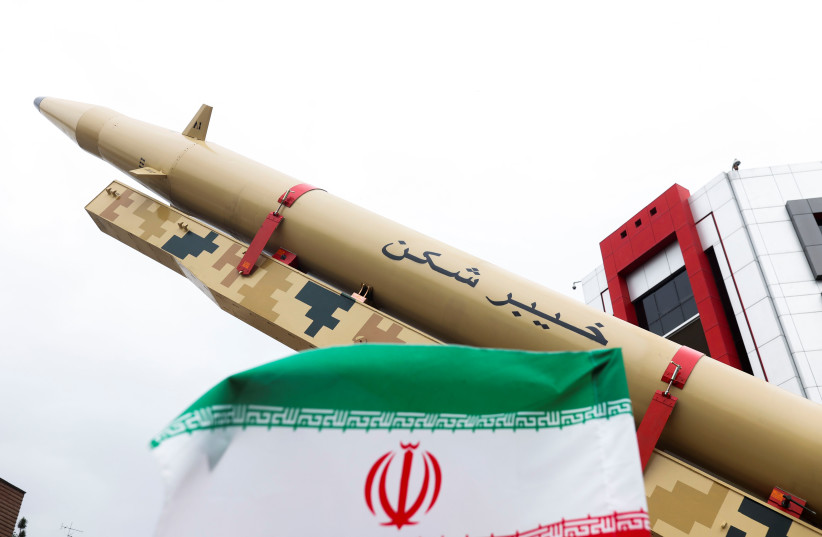
The move reactivates cargo-inspection authorities and will be accompanied by European measures.
Tehran’s immediate response has been diplomatic retaliation. Iran recalled its ambassadors from Berlin, Paris, and London “for consultation” after the Security Council rebuffed the delay effort. Iranian officials argue the step undermines diplomacy; European governments say the clause exists precisely to address serious non-compliance.
The E3 insists it did not slam the door on talks. They told the council they were prepared to discuss an extension if Iran restored IAEA access, addressed the highly enriched stockpile, and re-engaged in negotiations. Independent arms-control analysts likewise recorded the European offer of an extension conditioned on verifiable steps. The offer was not taken.
Israel, which has warned for years that a nuclear-threshold Iran would destabilize the region, publicly pressed for the snapback before the vote. “We must not allow Iran to rebuild its military nuclear capacities... These stockpiles must be eliminated,” Prime Minister Benjamin Netanyahu said in New York.
That is the backdrop. Here is the judgment. The E3 was right to act, and it deserves the explicit support of Israel and all states that rely on a predictable rules-based order. Snapback is not improvisation; it is a legal instrument Iran accepted in 2015 to deter exactly the pattern the IAEA has chronicled since 2019.
Enforcement must now match the decision. The point is not press releases; rather, pressure that changes behavior. That means quick, coordinated advisories to banks, insurers, and shippers naming front companies, hulls, and routings; rigorous use of UN inspection authorities for suspicious cargo; and synchronized penalties in the US and Europe for entities that help Tehran sidestep restrictions on missiles, drones, and dual-use goods.
Legal basis is back
The legal basis is back; compliance and compliance-evasion will be tested in the real world.
Verification must be the only off-ramp. If Iran wants relief, it should provide the IAEA with the access it unilaterally withdrew, account for the highly enriched stockpile, and return to talks on a durable ceiling far below weapons-usable levels. The E3 said as much in black and white, offering an extension if Tehran met those conditions. Until that happens, sanctions should bite, not blur.
Critics will say sanctions hurt ordinary Iranians. That hardship is real. It is also true that the fastest path to easing pressure is transparency and compliance. As long as leaders in Tehran stockpile material that even the E3 describes as having “no credible civilian justification,” the burden lies with the regime, not with those enforcing international norms.
Israel and the moderate Arab states have a direct stake in the outcome. Fewer funds and fewer components for Iran’s missile and proxy networks mean fewer rockets fired at Israeli and Gulf cities and fewer drones launched at ships. The snapback mechanism will not solve every danger, but without it, the region slides toward a reality in which inspectors are blind and centrifuges spin without consequence.
The E3 pulled the emergency brake built into Resolution 2231. The rest of the democratic world should keep it engaged until Iran changes course in deeds, not words.