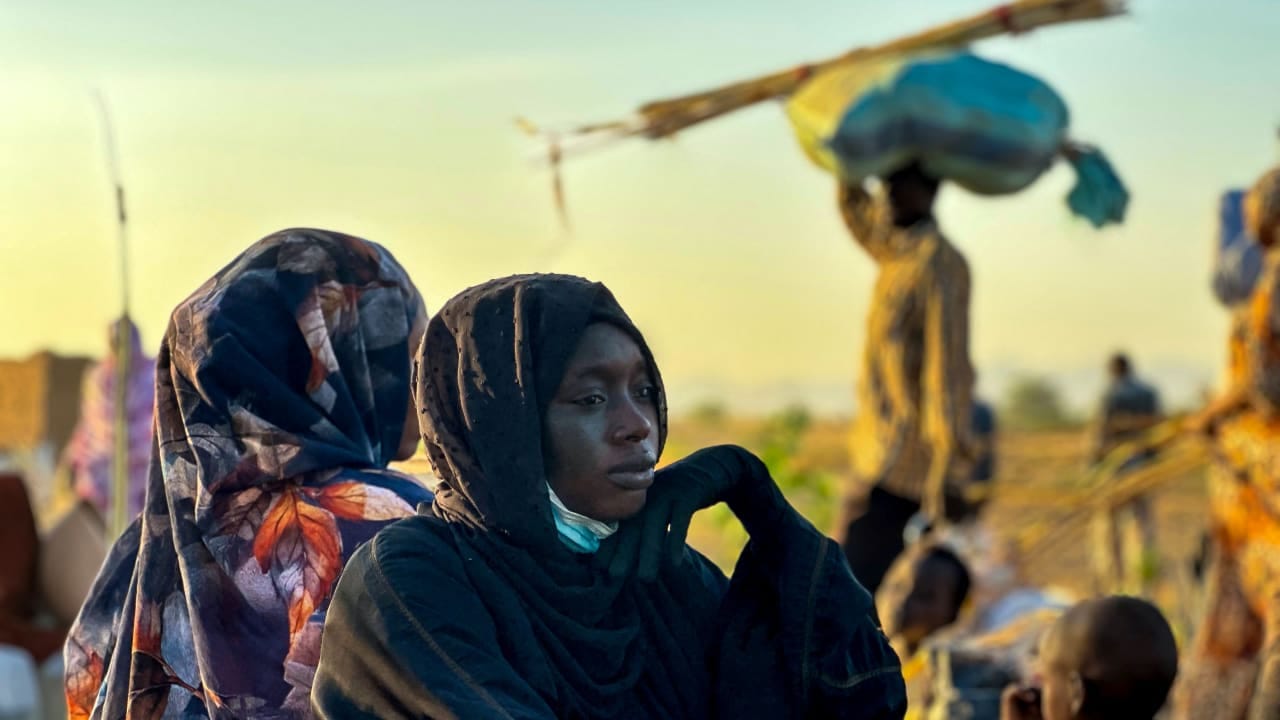
Sudan is bleeding, and the man holding the knife still claims to speak for “stability.” General Abdel Fattah al-Burhan, head of the Sudanese Armed Forces, has turned his nation’s agony into a bargaining chip for Iran, Hezbollah, and the radical Islam represented by the Muslim Brotherhood. He has chosen tyranny over transition — and in doing so, he has chosen Israel’s enemies as his own allies.
When Washington and the Arab world pleaded for a cease-fire, al-Burhan’s answer was clear: more massacres. On September 12, the Quad, comprising the United States, Saudi Arabia, the United Arab Emirates, and Egypt, proposed a detailed roadmap for negotiations and a permanent ceasefire. It called for ending attacks on civilians and transferring power to a civilian-led transition. Al-Burhan rejected every word. His defiance was not a misunderstanding; it was a declaration of ideology and alignment.
A man molded by the Muslim Brotherhood
Behind the façade of uniform and flag, al-Burhan is the heir to Omar al-Bashir’s Islamist regime: a man molded by the Muslim Brotherhood, now armed and advised by Tehran and emboldened by Hezbollah’s example. His war against his own people is the same war Iran and Hezbollah wage against the free world, a war against life itself.
The Red Sea has become a corridor for Iranian drones. This is not a “civil war.” It is an Islamist reconquest funded by Iran, coordinated with Hezbollah, and justified by the Brotherhood’s poisonous theology.
For Israel, this is not a distant tragedy; it is a strategic proximity. Iran has found in Sudan what it once found in Yemen: a bridgehead. Through al-Burhan, Tehran gains the Red Sea, a gateway to Eilat, and the perfect launchpad for its most loyal weapon, Hezbollah, now strengthened by sympathetic Brotherhood networks spreading through Africa.
Hezbollah’s African reach is no longer a secret. Over the course of two decades, it has built a sprawling network, including financial channels throughout West Africa, weapons depots in East Africa, and recruitment cells in the Horn. Sudan has long served as the southern artery of that network a safe haven for arms trafficking, money laundering, and covert Iranian logistics.
Now, under al-Burhan’s Islamist rule, that artery has turned into an express lane for Tehran’s ambitions and Brotherhood-inspired radicalism. An Iran–Hezbollah–Brotherhood alliance means one thing: the southern front against Israel is no longer hypothetical. Drones launched from Sudan could threaten Eilat and Israeli shipping routes. Smuggling corridors could reawaken through Sinai. The Red Sea, once a lifeline of trade, could become a front line of confrontation.
There is a moral dimension that Israelis cannot ignore.
In Nigeria, Islamist militias have slaughtered thousands of Christians while the world looks away. The Nigerian regime’s complicity is a warning: when a state weaponizes religion, mass murder follows.
President Trump has spoken of these atrocities and promised that America will not tolerate the persecution of innocents.
Al-Burhan’s Sudan walks the same path. Today, it is Sudanese Christians and civilians. Tomorrow if Iran’s project continues, it could be Israelis, Jews, and Westerners in the Red Sea basin. The same ideology that burns churches in Africa dreams of burning synagogues in Jerusalem.
No Partner for Peace, No Return to Abraham
Israel has extended its hand before through the Abraham Accords, through the hope of a new era with the Arab world. But Sudan under al-Burhan cannot rejoin that family of peace. How can a regime that allies with Hezbollah, Tehran, and the Muslim Brotherhood, that bombs its own people, that defies every American proposal for peace, ever be a partner for normalization?
The road back to peace in Sudan and to any future partnership with Israel begins with one act: the removal of Abdel Fattah al-Burhan from power.
Until that day, Sudan will remain not a bridge of peace but a fortress of hate, manned by Islamists who see Israel as their next enemy.
Jerusalem must act now, warning its allies, strengthening naval patrols, and urging Washington to cut every lifeline to Khartoum’s junta. Israel must speak with the clarity others have lost: those who choose Iran, Hezbollah, and the Brotherhood cannot choose peace.
The world’s mistake from Lebanon to Nigeria has always been to believe that those who kill their own will stop at borders. They never do. Al-Burhan has already tested the world’s patience. He defied the Quad, rejected every ceasefire, and aligned with Tehran. His next defiance could come at Israel’s expense.
If the West will not act, Israel must lead. Because in this new shadow war, the first line of defense for civilization begins on the shores of the Red Sea.
Natalia Cuadros is a Spanish investigative journalist and researcher on international and geopolitical affairs