There is something quietly revealing about who goes silent when the moment passes. Not the silence of grief, exhaustion, or humility, but the silence that arrives when there is nothing left to promote—no campaign to amplify, no urgency to monetize, no social reward for speaking at all.
Silence, in this context, is not accidental. It is diagnostic. It reveals who understood the moment as responsibility and who understood it as content. When attention fades, values remain—or disappear. And in the post-war moment, as the cameras move on, the disappearance has been striking. Not dramatic. Just telling.
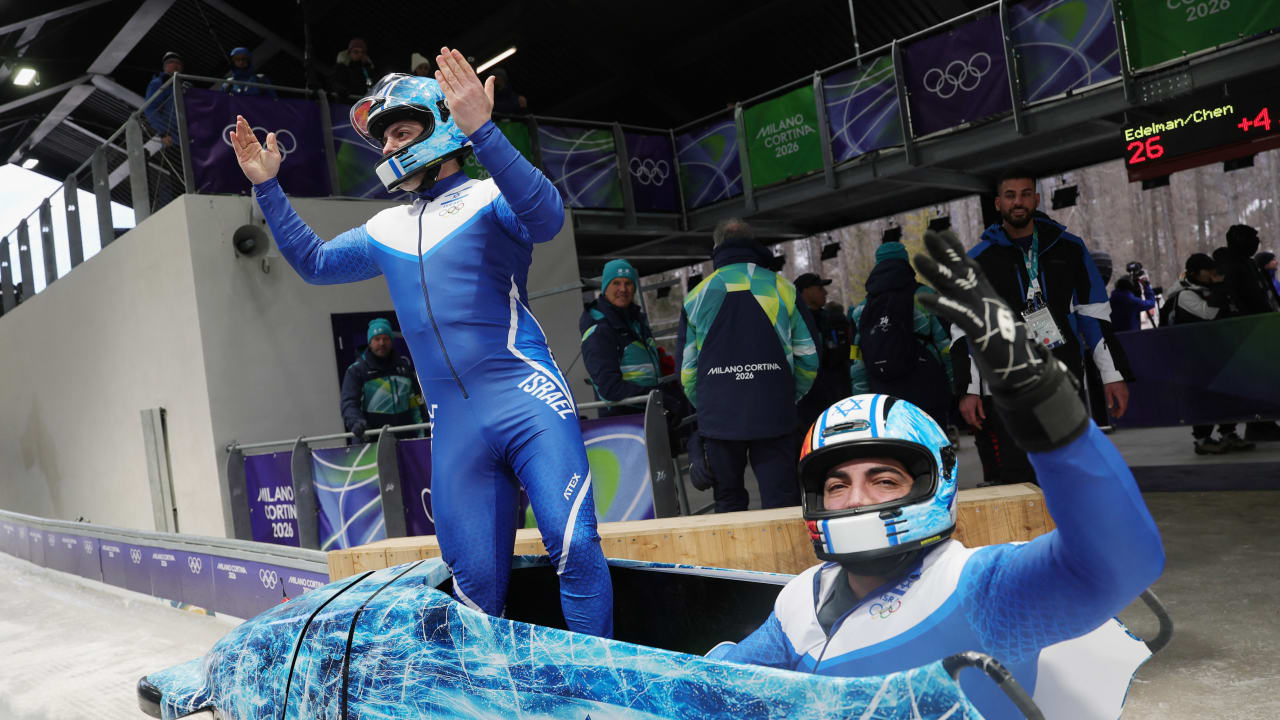
In recent weeks, as Israeli Olympic athletes stepped onto the world stage representing discipline, perseverance, and national pride, an absence became impossible to ignore. Many of the loudest voices who claim to champion Jewish visibility and resilience were nowhere to be found. No posts. No stories. No celebration. Just a quiet that felt less like humility and more like disengagement.
These athletes did not fit the familiar script of outrage or victimhood. They did not require explanation or defense. They simply existed as representatives of a sovereign nation competing openly and unapologetically on one of the most important global stages.
That kind of Jewish presence, it turns out, is easy to ignore. That silence is not a moral failing of individuals; it is a structural feature of a culture that has confused performance with purpose.

Much of what passes today as Jewish activism is not rooted in responsibility, continuity, or long-term commitment. It is rooted in incentives. When outrage is rewarded, outrage flourishes. When visibility brings funding, visibility becomes the goal. And when the moment passes—when the algorithm moves on—the activism dissolves with it.
This is not burnout. It is exposure. A system designed for performance cannot survive the demands of endurance.
For a little more than two years, the Simchat Torah war dominated Jewish life. Statements flowed freely. Hashtags multiplied. Panels, livestreams, branded solidarity, and carefully curated grief-filled social media feeds. Some of this was sincere, and some of it was necessary.
But the war also served as a stress test, revealing not only who spoke but also why. When attention was guaranteed, silence was costly. When funding flowed, engagement followed. Now that the war has receded from the center of the global feed, the incentives have shifted—and so has the behavior.
This is where the comparison becomes unavoidable. What we now call “activism” would barely have been recognizable as activism to the people who actually built Zionism.
Constructive Zionist activism
Early Zionist activism was not expressive; it was constructive. It was not performative; it was institutional.
Theodor Herzl convened the First Zionist Congress in Basel with no guarantee of success and no expectation of applause. Max Nordau was mocked relentlessly for insisting that Jews needed physical strength as well as moral clarity. Chaim Weizmann spent years lobbying world powers in rooms where he was barely tolerated, let alone celebrated. Golda Meir went door to door raising funds with no certainty that the project would succeed and no personal benefit if it did. Hannah Senesh parachuted into Europe knowing she might never return. Ze'ev Jabotinsky was labeled dangerous, militant, even irresponsible because he understood that Jewish survival required power, not just persuasion.
This was activism that assumed sacrifice as the baseline. It built institutions, schools, militias, labor movements, political frameworks, and eventually a state. There were no cameras waiting, no sponsors underwriting the effort, and no guarantee that history would be kind.
Measured against that standard, much of today’s influencer-driven activism is not merely weaker. It is categorically different. The difference is not stylistic; it is substantive. One is rooted in responsibility and outcomes, the other in expression and reach. One builds structures that last beyond the moment, the other thrives only as long as attention lasts. It is the difference between laying a foundation and drawing a house symbol. Both may look convincing at a glance, but only one can support weight.
This hollowness is the same phenomenon behind the increasingly common aestheticization of Jewish identity. Birkin-bag Judaism. Vibes-based solidarity. Consumption posing as commitment.
There is nothing inherently wrong with success, beauty, or comfort. But when symbols of status replace sacrifice, and when identity becomes a lifestyle brand rather than a shared responsibility, something essential erodes. Nations are not built on vibes. They are built on unglamorous work, delayed gratification, and people willing to stay long after the applause fades.
Performance activism feels compelling because it offers emotional satisfaction without consequence. It rewards expression rather than endurance and immediacy rather than continuity. It thrives during moments of crisis and collapses the moment those crises become less visible. That is why the post-war silence is so revealing. Real advocacy does not expire when the algorithm shifts. Real leadership does not require a trending moment. Responsibility, if it is real, does not depend on sponsorship or virality.
The people who kept showing up were never the loudest. They were soldiers returning to duty, families rebuilding, volunteers staying, donors giving quietly, and Israelis living with the aftermath when it stopped being interesting. That is what responsibility looks like when no one is watching. It is unglamorous, persistent, and resistant to branding. It does not ask to be seen. It simply continues.
This is why the silence surrounding Israeli athletes matters. It reveals what kinds of Jewish success contemporary culture knows how to celebrate—and which kinds it does not.
We know how to amplify pain. We know how to aestheticize trauma. We know how to perform solidarity. We are far less comfortable celebrating strength without spectacle. Olympic athletes are inconvenient because they cannot be easily instrumentalized. They are not symbols to be consumed. They are outcomes of a system that values effort over expression and discipline over display.
The post-war moment strips away noise and leaves only substance. For many, there is not much left. This is not an argument for nostalgia, nor a demand that everyone become Herzl or Jabotinsky. It is an argument for standards. Zionism did not succeed because it was loud. It succeeded because it was serious. It was understood that survival required construction, not just expression.
Influence is not leadership. Visibility is not nation-building. And in this moment, silence is not neutral—it is clarifying. The question is no longer who spoke loudest during the war.
The question is who will still be standing when the feed refreshes, the cameras move on, and no one is paying them to care. History does not remember who posted—it remembers who built. When the cameras moved on, so did the activists, because unlike Zionism, today’s activism cannot survive without an audience.
The writer is the founder and CEO of The Israel Innovation Fund (TIIF) and the creator of Wine on the Vine. He is the author of the forthcoming book Never Again Is Not Enough: The Hebraization Manifesto, a comprehensive blueprint for Jewish revival rooted in Hebrew language, Jewish strength, and Zionist identity. Bellos is a frequent commentator on Jewish affairs, Israeli society, and the cultural and geopolitical challenges facing modern Jewry.