
The Muslim month of Ramadan began on about Feb 18, 2026. It is a month that is observed as Islam's holiest, a month that is supposed to be marked by prayer, fasting, and spiritual reflection.
In that light, “Squad” member Rep. Ilhan Omar tweeted on X late last week: “Iraq was attacked by the US during Ramadan and it is sickening to know that the US is again going to attack Iran during Ramadan. The US apparently loves to strike Muslim countries during Ramadan, and I am convinced it isn’t what these countries have done to violate international law but about who they worship.” Indeed, the US and Israel did strike Iran on the morning of Feb 28, during the month of Ramadan.
Her post raises several issues, starting with the accuracy of her specific claim. That the US was going to attack Iran during Ramadan seems to have been borne out. That the US attacked Iraq during Ramadan is false. The US invasion of Iraq, under President George W. Bush, began March 20, 2003; Ramadan did not begin until October 26. The previous US attack on Iraq under President George H.W. Bush (Operation Desert Storm) commenced Jan. 17, 1991; Ramadan that year began on March 17.
Omar's implied assertion is even more important to examine. The congresswoman is implying that Ramadan is a month of peace for Muslims and that non-Muslims should honor the Muslim faith and not attack during that month.
If that were the case, one might expect similar considerations from the Muslims. Unfortunately, that is not the case. As is well known, they chose to attack Israel in 1973 on the holiest day of the Jewish year, Yom Kippur, and in 2023 to attack on one of their most joyous holidays, Simchat Torah.
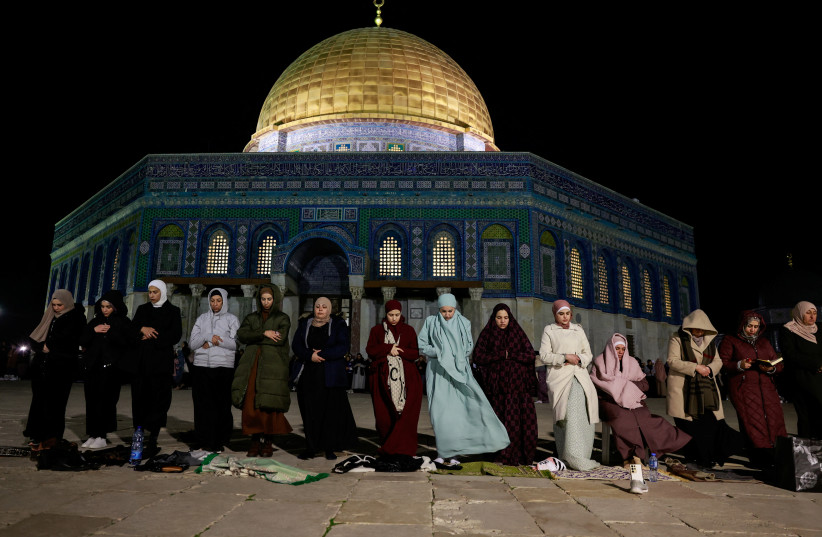
Muslims themselves do not seem to view Ramadan as an inappropriate time to launch attacks. The 1973 war, which they began, was launched during Ramadan and is to this day referred to in some circles as the Harb Ramadan – the Ramadan War!
This is not coincidental. During Ramadan, Muslims are urged to be more devoted to their religion, and for many, this includes the willingness to give the ultimate sacrifice for it.
There is also historical precedent, as some of Islam's greatest battles took place during Ramadan. These include the Battle of Badr in 624, when Muhammad and his companions repelled an attack from Meccan tribes. The eventual conquest of Mecca also took place during Ramadan. Later, important Muslim military battles continued to occur during the holy month, including the Battle of Guadalete that gave them control of the Iberian Peninsula in 711 and Saladin's 1187 wresting of Jerusalem from the Crusaders in the Battle of Hattin.
Terrorists use Ramadan as a time to intensify attacks
In recent decades, various Muslim terrorist groups have used the "spiritual awakening" of Ramadan as a time to intensify attacks. A BBC report in 2016 was entitled "Why so-called Islamic State chooses to bomb during Ramadan". The article explained that, "Juxtaposed alongside that ascetic puritanism is the view of radicals who regard Ramadan as a month of conquest and plunder. They believe it is an opportune moment to double down on their millennial war against civilisation and therefore launch more attacks than normal.
"Indeed, al-Qaeda's official chapter in Syria, the Nusra Front, recently described it as 'a month of conquests.'
Similarly, a 2024 report by the Washington Institute for Near East policy entitled "There’s No Such Thing as a 'Ramadan Truce'” explained that, "we should not overlook another aspect of Ramadan that has been a tradition through the ages–the holy month as a time for war." They further noted that "For Hamas and their fellow travelers, waging war during Ramadan – including sacrificing fellow Muslims as pawns in the fight against Israel, inciting tensions at Jerusalem’s al-Aqsa Mosque to trigger violence at that holy site and launching terrorist attacks against civilians – are all acceptable military tactics, as valid during Ramadan as they are the other months of the year."
In Israel, this concern is well-known. Annually, prior to Ramadan, Israeli law enforcement gears up for increased violence and issues warnings to the law-abiding population. A small example – this year two weeks before Ramadan, the regional council of Emek Yizrael advised residents that with the month approaching, they should be more vigilant, ensure that houses and gates are locked, check that their security cameras are functioning, and report suspicious activity.
This is not just perception. A 2018 study covering 33 years found that in Muslim-majority countries, terrorist incidents during Ramadan were 7% higher than on non-Ramadan days, and jihadist groups conducted 27% more terrorist attacks.
Omar's crocodile tears should not fool anyone. The US and Israel have historically not specifically chosen Ramadan as a time to attack, but there is no reason for them to have avoided it either. Nor do Muslims view Ramadan as a time to avoid fighting – some even view it as an auspicious time to engage in hostilities.
Ramadan was not the only month that began on Feb 18. So did the Jewish month of Adar, in which Purim, the festival celebrating the salvation of the Jews in ancient Persia, is observed.
Rabbinic tradition sees Adar as an auspicious time for the saving of the Jewish people. Now that Operation Roaring Lion has commenced with decisive, masterful blows during the months of Adar and Ramadan, we pray that the auspicious nature of Adar overwhelms the militaristic history of Ramadan and leads to a swift demise of the Islamic Republic of Iran in a manner similar to the fall of Haman all those centuries ago.
The writer is a professor at Bar-Ilan University.