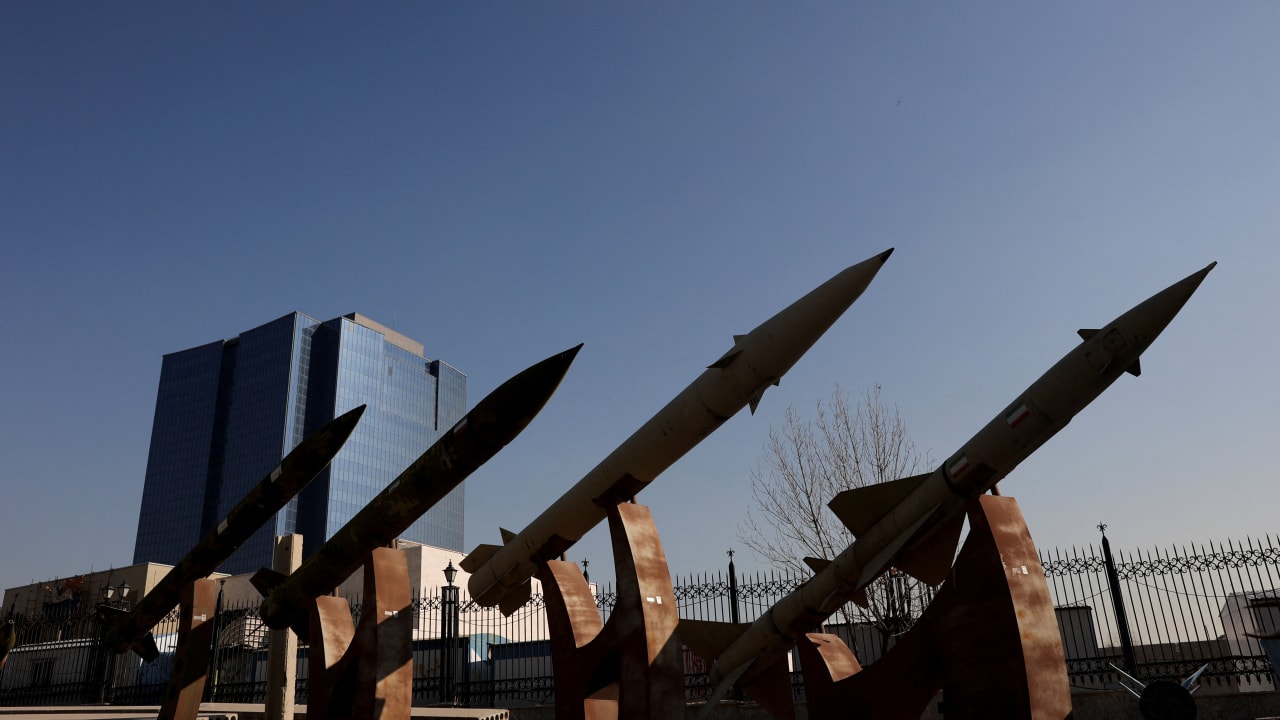
For years, Iran has tried to convince the world that it’s a rising military power, capable of staring down Israel and the United States with sheer ideological fervor and a barrage of rockets and drones.
But strip away the spectacle, and a simpler truth emerges: Iran can terrorize civilians, but it cannot win a modern war. It lacks the doctrine, the discipline, and the technological depth that victory demands. What the regime has built is not a true war machine, but a collection of tools meant to frighten, not to conquer. Tehran confuses the ability to sow panic with the ability to shape outcomes, and that confusion ensures it spills blood without gaining ground.
This rot runs deep, starting with Iran’s approach to armament. Decades of investment have yielded weapons designed to shock and awe the unprepared: cheap drones, volleys of unguided rockets, and proxy militias that look menacing on TV but crumble against a real military. These are the weapons of a regime addicted to theater, not a state preparing for serious conflict.
Iran fires in bulk because it cannot fire with precision; it boasts about range because it cannot boast about accuracy. It substitutes ideology for ability, and propaganda for power. The result is a military stuck in the 1980s, obsessed with old myths while the rest of the world has moved on.
Israel, on the other hand, invests in tools that actually change the battlefield. The Iron Beam, Israel’s high-energy laser defense, says it all. While Iran built stockpiles of rockets hoping to overwhelm defenses, Israel developed a system that neutralizes them at the speed of light – and at a fraction of the cost. Iran amasses; Israel erases. This isn’t just a technological edge. It’s a philosophical one. Israel invests in a decisive advantage. Iran invests in illusions. One is building for the future; the other is trapped by the past.
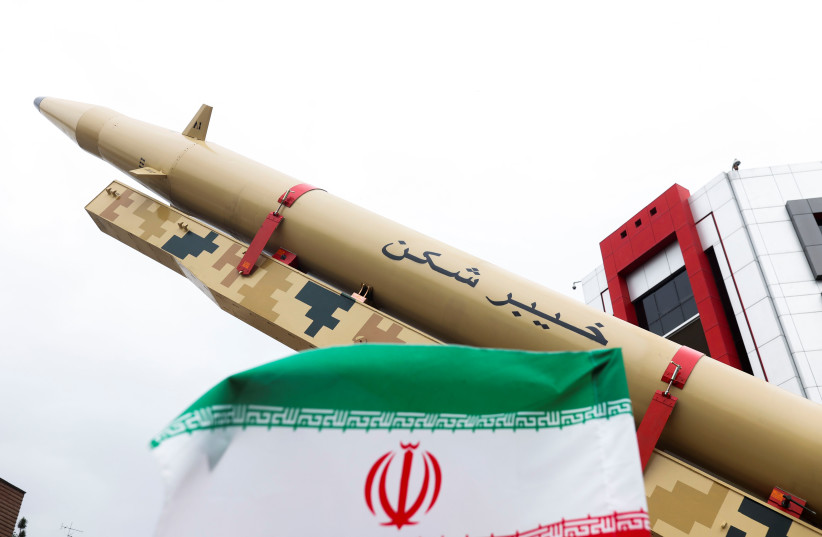
This imbalance shows up everywhere. Israel and its allies strike at the heart of enemy networks, taking out commanders, logisticians, and engineers whose absence changes the course of the fight. Iran, by contrast, aims for mass civilian terror, hoping chaos can substitute for competence. Israel acts with intelligence-driven precision. Iran makes noise that, in the end, moves nothing. What Tehran imagines as a rivalry is really a collision between a sophisticated military and a regime putting on a grim parody of one.
At the psychological level, Tehran’s leadership is gripped by a deep-seated denial. The regime’s war model is not built on doctrine, but on the refusal to face reality.
Iranian decision muddled by factional infighting
Modern warfare demands resilient command, integration across land, air, sea, space, and cyberspace, and the ability to adapt. Iran relies on rockets in tunnels, terrorists hidden in crowded cities, and secondhand drones cobbled together from foreign parts. Its decision-making is muddied by factional infighting, not driven by professional logic. This is the psychology of a regime haunted by its own myth – unable to let go of the revolutionary fantasies that gave it birth, incapable of evolving into something more formidable.
Inside Tehran’s corridors of power, the fear of acknowledging military weakness outweighs the fear of defeat. The regime’s legitimacy rests on a fantasy of strength, its identity on perpetual resistance. To admit vulnerability would unravel the basic narrative that holds the state together. This is not a sound strategy: it’s psychological self-preservation. Iran persists in confrontation not because it expects to win, but because admitting the alternative would destroy the myth of power that sustains the regime.
Israel cannot afford complacency. Not because Iran is on the verge of victory, but because a regime willing to sacrifice its own people and regional stability for the sake of mythology is inherently dangerous. Tehran will keep launching rockets, sending drones, and exporting disorder. But none of these actions can change the fundamental imbalance of capability, discipline, and intelligence that separates the two countries.
Israel operates with a sophistication that Iran cannot match, and as the gap widens with every precision strike and technological leap, the truth will become harder for Tehran to ignore: wars waged on denial and ideology cannot last. In this confrontation, reality is not on Iran’s side – and sooner or later, even the most stubborn regime must face it.
Dr. Michael J. Salamon is a psychologist specializing in behavioral analysis, trauma and abuse and director of ADC Psychological Services in Netanya and Hewlett, NY.
Louis Libin is an expert in military strategies, wireless innovation, emergency communications, and cybersecurity and is an adjunct professor at the US Military Academy.