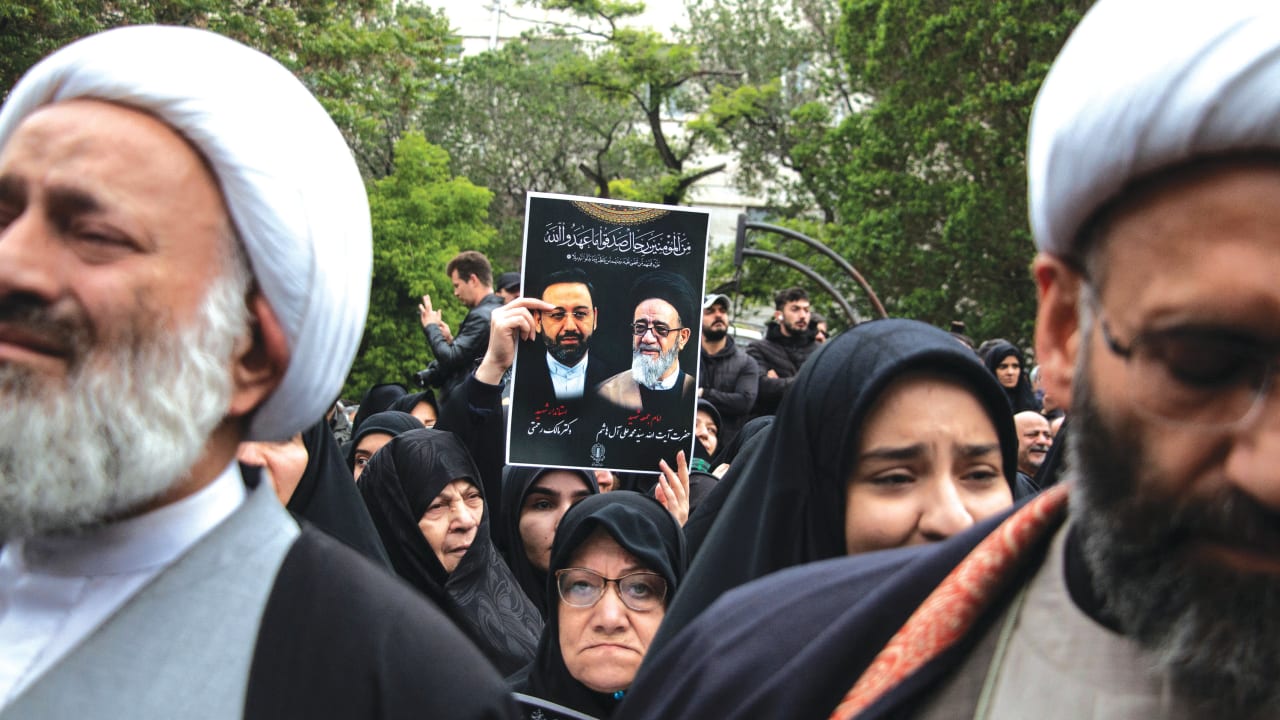
Recent reports indicate that Amid Murtuzov, an Azerbaijani citizen, was killed in an Iranian ballistic missile strike in Israel. At the same time, Iran has reportedly launched a third attack against Turkey, following earlier strikes on Nakhchivan International Airport and a school in Azerbaijan, which left four people wounded. These attacks are not isolated and form a broader pattern of escalating aggression by the Iranian regime.
These attacks are only part of a broader pattern of aggression. The IRGC has also plotted to target the Ashkenazi synagogue in Baku, the Israeli embassy, a Jewish communal leader, the main oil pipeline connecting Baku, Georgia, and Turkey, and even attempted to blow up several bridges in Baku to create chaos, fear, and instability in the Republic of Azerbaijan.
These plots were fortunately thwarted, but their intent is clear to destabilize the region and threaten civilian lives. As a South Azerbaijani, I cannot remain silent in the face of these reckless and dangerous actions by the Iranian regime. For many of us, this is not simply a matter of international politics. It is about the safety of our communities, the stability of our region, and the ongoing threat posed by a regime willing to extend violence far beyond its borders.
The people of South Azerbaijan constitute a distinct ethnoracial community within Iran, one that differs in important ways from the Persian-dominated political establishment that governs the country. We do not share the same language as the ruling regime, and our cultural traditions, history, and identity are closely connected to those of Azerbaijan north of the Aras River rather than to the dominant Persian nationalist narrative promoted by the state.
Azerbaijanis make up at least one-third of Iran’s population, making them the largest minority in the country. This demographic reality means that South Azerbaijanis are a significant social and political presence. Our homeland occupies a strategically important region in northwestern Iran, stretching from west of Tehran to the Turkish border and from Hamadan in the south to the frontier with the Republic of Azerbaijan.
South Azerbaijan’s struggle for cultural rights, regional autonomy
South Azerbaijan has long had a strong movement for ethnic and cultural rights. Many have struggled, and some have paid with their lives, for the basic right to work and study in their mother tongue, a right that continues to be denied. Even today, members of our community are imprisoned, tortured, and handed lengthy sentences simply for advocating the ability to learn and work in Azerbaijani Turkish.
After decades of such overt repression, political aspirations among South Azerbaijanis have begun to diverge. Some now advocate outright independence, while others seek a federal model for Iran that would grant meaningful regional autonomy, similar to the arrangement enjoyed by Iraqi Kurdistan.
South Azerbaijanis often view the Republic of Azerbaijan as a model because of its constructive relations with the West, Israel, and the rest of the world. Like our brethren in the North, many South Azerbaijanis strongly support women’s rights, secular governance, and basic human rights, and oppose the aggressive policies the Iranian regime has pursued toward neighboring countries.
Turkey is widely regarded as a brotherly nation, one that South Azerbaijanis believe would stand with them in difficult times. South Azerbaijanis are generally well-educated and highly aware of regional geopolitics. Many believe that any attack on Turkey or the Republic of Azerbaijan is, in effect, an attack on their own people. In the event of a direct armed conflict between Iran and the Republic of Azerbaijan, it is widely believed that many South Azerbaijanis would stand with Azerbaijan rather than with the Islamic Republic.
When Iran attacked Nakhchivan International Airport and an Azerbaijani school with drones, Azerbaijan’s President Ilham Aliyev demanded an explanation, an apology, and accountability for those responsible for what he described as a terrorist act. He warned that Iran would regret such actions and ordered Azerbaijan’s armed forces to prepare for an adequate response to Iran’s wanton actions.
Following this development, Iran’s President Masoud Pezeshkian issued an apology for the attack on neighboring Muslim countries and promised that such incidents would not be repeated. Many observers interpreted this apology as reflecting concern within Tehran about the potential consequences of confrontation with Azerbaijan, Turkey, and the large Azerbaijani population within Iran, which constitutes at least a third of the country’s population. His statement was reportedly criticized by elements within the Islamic Revolutionary Guard Corps (IRGC).
Although tensions continued and Iranian forces reportedly targeted other regional actors, it is notable that Azerbaijan has not been attacked again since that apology. Amid Murtuzov, though Azerbaijani, was killed in an Iranian missile strike on Israel rather than within Azerbaijan itself, meaning his death cannot be considered a direct attack on Azerbaijani territory.
Within South Azerbaijan, frustration with the Iranian regime has grown significantly. Many South Azerbaijanis have openly condemned the attack on Nakhchivan and expressed solidarity with the Republic of Azerbaijan. As a South Azerbaijani who supports Azerbaijan, I strongly condemn these attacks and believe that the people of South Azerbaijan must stand with Azerbaijan should a broader conflict emerge.
Many in the region also believe that the Iranian regime’s continued pursuit of ballistic missile and nuclear programs, combined with its confrontational regional policies, poses a serious threat to regional stability. Some argue that meaningful change in Iran may only come through major political transformation, and that the voices of Iran’s diverse ethnic communities should be part of any future political solution.
For this reason, many believe that the international community should engage more seriously with Iran’s ethnic minorities, which make up the majority of the population, and civil society actors when considering the future of Iran and the stability of the broader Middle East.
The writer is a South Azerbaijani dissident journalist and the head of Gunaz TV, a South Azerbaijani language tv channel based in Chicago.