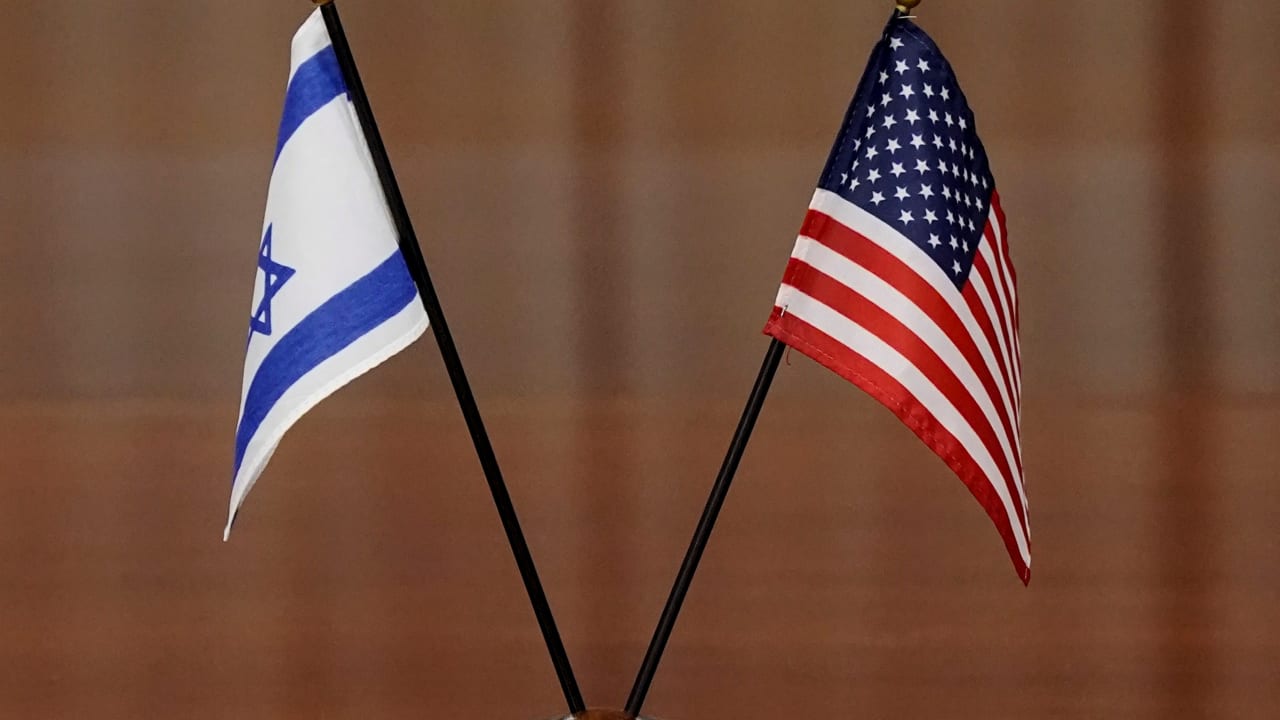
Iran fired a barrage of ballistic missiles into Israel on Sunday, and US President Donald Trump publicly ordered the prime minister of Israel “not to retaliate.” Trump also told the Financial Times that Benjamin Netanyahu “won’t have any choice” because the American president calls “all the shots.”
Bibi struck back anyway, no doubt feeling it was better to upset Trump than to show voters in an election year that “Mr. Security” was America’s weak lackey.
Just days earlier, CBS and The New York Times reported leaks out of the Pentagon that the Defense Intelligence Agency is investigating Israeli espionage against the United States.
It was a week in which the temperamental Trump told Bibi he’s “f***ing crazy” and “everybody hates Israel.”
A pair of recent Pew Research Center surveys emphasized the message. One found that “60% of Americans have an unfavorable view of Israel, up from 53% last year,” and another revealed that two in three people in most of the 36 countries surveyed hold unfavorable views of Israel and Netanyahu, while only 25% were favorable.

If there’s any bipartisanship left on Capitol Hill, it is the growing opposition to the war in Iran and to unfettered aid to Israel.
This comes as Israel’s 10-year, $38-billion aid agreement is coming up for renewal amid spreading bipartisan congressional criticism, while administration insiders search for a scapegoat to blame for the unpopular war and the failure to produce the results Trump promised.
Eighty-five House Democrats wrote to Trump, reminding him of his opposition to Israel annexing the West Bank and demanding he press Netanyahu to halt bulldozing Palestinian homes in the West Bank to build more Jewish settlements.
This can’t be shrugged off, as I’ve often been told; they all hate us anyway, so it makes no difference what we do. Nor is it simply a matter of habitually inept public relations by Israel and its friends here. Like it or not, Israel’s plunge in standing here and abroad is directly related to its policies, and especially its intensive war-making since October 7.
I don’t believe Israel committed genocide in Gaza, but I can see how many feel that way in light of the massive, indiscriminate bombing, enormous death toll among women and children and the elderly, the destruction of hospitals, schools and infrastructure, frequent blocking of humanitarian aid and food, and the open lust for revenge from top leadership.
Lebanon looks like a repeat of the costly mistakes of the 1982 war. Israel has again occupied the land south of the Litani River, sent over a million Lebanese fleeing their homes, and bombed Beirut (the reason Iran gave for its latest missile salvo).
Israel's PR problems
Little noticed in the fireworks was a speech given at The Jerusalem Post Annual New York Conference by Ronald Lauder, president of the World Jewish Congress, stating the obvious: Israel has an image problem and needs professional help.
He’s right, up to a point. The billionaire cosmetic heir is a personal friend of both Trump and Netanyahu. Both see themselves as PR mavens who share cluelessness about both cause and solution.
Public relations advice won’t solve their systemic problems, but Israel clearly needs help improving the substance of its message to the world if it is to begin digging out of the deep crater it has bombed itself into.
Way back in the last century, before I turned prematurely grey, I was briefing a Jewish audience about some friction between the president and the prime minister at the time (Ronald Reagan and Menachem Begin). The first question I was asked (and frequently through the years) was, “Why don’t the Israelis get some good PR advice?”
The answer was the same then as it is today: they get lots of good advice, but they think they know better.
As I said, PR isn’t the answer, but it is a start. Lauder’s first piece of advice is valid but just a small step: take the job out of the hands of amateurs and self-aggrandizing politicians whose talents seem to be self-aggrandizement and pushing from bad to worse.
Instead of trying to gag the press, Netanyahu should gag some of his ministers. Take Amichai Chikli, his diaspora minister who acts like the anti-diaspora minister. He has been called “remarkably ignorant about Diaspora Jewish life,” confrontational, and particularly disdainful of Reform Judaism. Like so many, he has been quick to equate criticism of his government’s policies with antisemitism.
Lauder wants Israel to replace politicians and amateurs with PR professionals. That’s not easy when the prime minister lures coalition partners with promises of their own ministries or other lucrative sinecures.
Part of the problem Israel faces is that in America, cabinet secretaries serve at the pleasure of the president. In Israel, the prime minister serves at the pleasure of coalition partners who have a penchant for threatening to bring down the government if he doesn’t meet their demands.
The haredi (ultra-Orthodox) parties are masters, demanding massive funding for their substandard schools that fail to provide an education vital to real-world survival and insisting on draft exemptions so their young men can study while everyone else must serve.
American Jewry
Lauder says Diaspora Jews must be partners. Netanyahu sees himself as the leader of the Jewish people around the world and, like his predecessors, speaks of a partnership. But they’re just blowing smoke. For all the years I’ve been observing, it has been the same – “We love you but keep your advice to yourself and send us more money and weapons.”
Many Jews and their representatives in Congress are drifting away. The settlement movement is highly unpopular among most Americans, and the Netanyahu government’s failure to deal seriously with settler violence against West Bank Palestinians is eroding Israel’s standing.
American Jews are uncomfortable with the most extreme right-wing government in Israel’s history; one dominated by nationalist and religious extremists who say the largest group of American Jews aren’t real Jews.
Bezalel Smotrich, the influential finance minister and leader of the Religious Zionist party, calls Reform Judaism a “fake religion.” Three other key Netanyahu partners share the view – Shas, United Torah Judaism, and Otzma Yehudit, as well as many in Netanyahu’s Likud.
That may be Israel’s toughest PR challenge. Most American Jews identify as Reform (37%) or Conservative (17%). Orthodox Jews are about 9%, and the rest say they are unaffiliated.
I agree with Lauder. Israel must do a better job of telling its story and make Diaspora Jews feel like partners.
But it will take more than hiring PR professionals. It demands fundamental changes. It is about how Israel governs itself, how it respects the rights of its minorities, how it treats the Palestinians and its neighbors, and how it relates to its fellow Jews.
Later this year, Israelis will go to the polls. I hope they elect a new leadership smart enough to stay out of partisan US politics, win back the trust and affection of American Jewry, reinforce its democracy, make peace with the Palestinians, and rebuild its international stature.
The challenge is not about how to shape Israel’s image but how to move toward policies that don’t alienate Israel’s natural friends. It may not be halachic, but you can’t put a kippah on a pig and call it kosher.
The writer is a Washington-based journalist, consultant, lobbyist, and former legislative director at the American Israel Public Affairs Committee.